

Maddy summaryThis bill would establish 18-year fixed terms for all Supreme Court justices, replacing lifetime appointments. It requires the President to nominate one justice every two years (during first and third years after presidential elections), with Senate confirmation within 90 days, and prohibits reappointments after a single term. Current justices would be phased out in order of seniority as new justices are appointed under this schedule. The bill directly affects all sitting and future Supreme Court justices by mandating term limits and a structured appointment process.
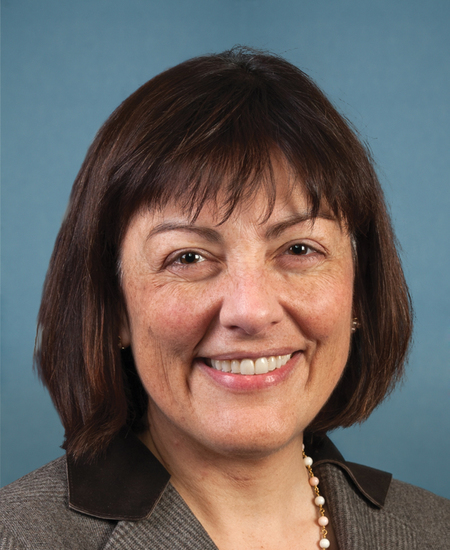
Rep. Suzan K. DelBene
Sponsored bills
Maddy summaryHR 3566, the ANCHOR for Military Families Act, requires the Department of Defense to provide military members and their families with comprehensive relocation assistance information at least 45 days before a permanent change of station. The bill mandates that this information cover educational resources for children (including school transitions, special education, and Individualized Education Programs), housing options, mental health support, spouse employment assistance, and legal/financial counseling. It directs the Secretary of Defense to integrate these details into accessible briefings, online resources, and materials at military installations. The law also requires annual reports to Congress on implementation progress and family awareness of available support programs. This bill directly affects active-duty service members and their families facing relocation due to military orders.
Maddy summaryThe Real Education and Access for Healthy Youth Act of 2025 would provide federal grants to support comprehensive sex education and sexual health services for young people aged 10-29. The bill establishes four grant programs: for K-12 schools and youth organizations, for colleges and universities, for educator training, and for sexual health services specifically targeting underserved youth. To qualify for funding, programs must be evidence-informed, medically accurate, inclusive of diverse gender identities and sexual orientations, culturally responsive, and trauma-informed. The bill appropriates $100 million annually for fiscal years 2026-2031, with specific funding allocations for each program type. It prohibits funding for programs that withhold health information, promote stereotypes, or fail to address the needs of specific groups like pregnant youth or survivors of violence.
Stronger Communities through Better Transit Act This bill requires the Department of Transportation (DOT) to establish a grant program to support operating projects for public transportation and related service improvements, particularly in underserved communities and areas of persistent poverty. Specifically, the bill requires DOT to allocate funding under the program for urbanized areas, states, and Indian tribes that are recipients of funds under either the Federal Transit Administration's (FTA's) Urbanized Area Formula Funding program or Formula Grants for Rural Areas program. Eligible recipients may use funding for operating costs associated with projects that improve public transportation service for transit-dependent populations and support increased transit ridership (e.g., service expansion, information technology enhancements, and workforce development). DOT must apportion the funding so that recipients receive funds that are proportional to their share of operating costs. The bill also provides for an increased federal cost share for operating assistance for projects or programs carried out in areas of persistent poverty or underserved communities. DOT must set up a multimodal access measurement interface for public agencies to aid transit agencies in determining and reporting on access to jobs and essential services. A grant recipient must (1) report specific information to the FTA for inclusion in the National Transit Database, and (2) survey transit riders and non-riding residents regarding transit service improvements. Further, the bill expands the purposes of the public transportation programs to include supporting public transportation's role in combating climate change through growing/retaining transit ridership.
Maddy summaryHR 3452, the "Six Assurances to Taiwan Act," formally codifies six longstanding U.S. policy commitments regarding Taiwan that were established in 1982. It reaffirms that the U.S. has never agreed to set a date for ending arms sales to Taiwan, consult with China on such sales, mediate between Taiwan and China, revise the Taiwan Relations Act, take a position on Taiwan's sovereignty, or pressure Taiwan to negotiate with China. The bill’s key mechanism requires the President to notify Congress before taking any action that could alter these assurances, giving Congress 30 days (or 60 days during a specific period) to review proposals through a joint resolution process. This applies to actions like pausing arms sales, negotiating with China on arms, or changing U.S. policy on Taiwan’s status. The bill directly affects U.S. executive branch decisions on Taiwan policy and Congressional oversight authority.
Maddy summaryThe CHER Act of 2025 bans the display, housing, management, and breeding of African and Asian elephants in U.S. zoos and safari parks after one year from its enactment. It requires existing elephants in these facilities to be transferred to authorized wildlife sanctuaries within three years. Authorized sanctuaries must be nonprofit, accredited, provide lifelong care without breeding or public entertainment, and meet specific space and veterinary standards. The bill also mandates a feasibility study and grant program to support the transition and care of elephants in sanctuaries.
Maddy summaryHR 3405 requires the Secretary of State to provide Congress with all documents and a detailed report within 30 days regarding negotiations between the U.S. and Qatar about transferring an aircraft to the U.S. government for eventual transfer to an entity controlled by former President Donald Trump. The report must detail any promises made to Qatar, potential private contracts, and legal reviews related to the transfer. The bill also prohibits federal funding for any action supporting the transfer of foreign-owned aircraft to the U.S. government, the President, or Trump’s presidential library. This applies specifically to aircraft transfers involving Qatar and Trump-controlled entities, focusing on transparency and funding restrictions.
Maddy summaryHRES 407 is a symbolic House resolution designating May 10, 2025, as "National Asian American, Native Hawaiian, and Pacific Islander Mental Health Day." It directly recognizes the mental health disparities faced by AANHPI communities, including lower service utilization rates and higher youth suicide rates. The resolution encourages federal, state, and local health agencies to improve mental health awareness and access for these communities. It does not create new laws or funding but formally supports efforts to address cultural barriers in mental health care. The designation aligns with May's existing observances of AANHPI Heritage Month and Mental Health Awareness Month.
Maddy summaryHR 3368, the "Born in the USA Act of 2025," prohibits federal funding for Executive Order 14160 (which aimed to restrict birthright citizenship for children born in the U.S.). The bill directly affects federal agencies that might implement the executive order by blocking their use of funds for that purpose. Its key provision is a funding ban targeting the executive order and any similar future policies, without changing citizenship law. The bill does not alter birthright citizenship rights but prevents federal resources from being used to enforce the controversial executive order. It is a procedural measure focused on funding, not a substantive policy change to citizenship rules.
Maddy summaryThe CHEERS Act creates a new tax deduction for restaurants, bars, and entertainment venues that purchase energy-efficient draft beer equipment. It amends tax code Section 179D to treat stainless steel or aluminum draft containers and tap systems as "qualified energy-efficient property," allowing businesses to deduct these costs. The deduction applies only to equipment used specifically for distributing and selling alcohol in eligible venues, meeting existing energy efficiency standards. The provision takes effect for equipment placed in service after December 31, 2024.