

Maddy summaryThe NO BAN Act (HR 9244) prohibits U.S. immigration authorities from denying visas or entry based on national origin, religion, or sex. It amends immigration law to explicitly ban such discrimination in visa decisions and tightens restrictions on the president’s power to suspend entry of certain groups under Section 212(f). The bill requires specific evidence, narrow tailoring, time limits, and congressional notification for any entry restriction, while mandating public reports on visa denials and waivers. It directly affects nonimmigrant visa applicants (e.g., students, workers) and federal agencies administering immigration policy.
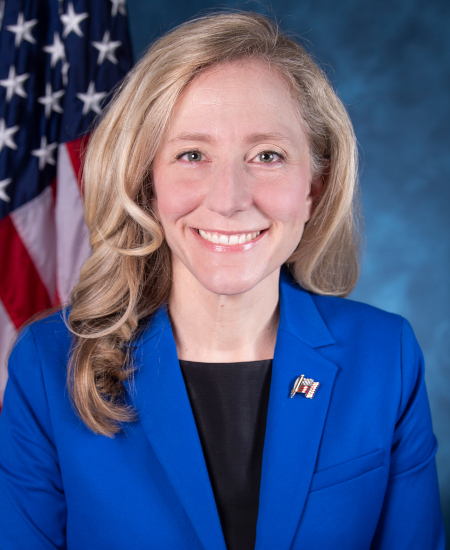
Rep. Abigail Davis Spanberger
Sponsored bills
Maddy summaryHR 9166, the RISE Act, requires the Small Business Administration, Appalachian Regional Commission, and Delta Regional Authority to create a coordination agreement within 120 days of enactment. This agreement aims to expand support for rural entrepreneurs and small businesses in the Appalachian and Delta regions by improving how these agencies work together. The bill mandates a joint report to Congress within two years detailing coordination efforts, the number of businesses assisted, and future collaboration plans. It does not create new funding but focuses on better coordination between existing federal agencies serving these specific rural areas.
Maddy summaryThis bill permanently removes a 2026 expiration date for a tax exclusion allowing employers to pay employees' student loans through educational assistance programs without those payments being counted as taxable income. It directly affects employees who receive employer-sponsored student loan repayment assistance and employers offering such programs. The key provision amends the Internal Revenue Code to make this tax exclusion permanent, applying to all future payments made after the bill's enactment. This change simplifies the tax treatment for both employers and employees participating in these student loan repayment programs.
Maddy summaryHRES 1381 is a symbolic resolution that commemorates the United States Olympic and Paralympic Teams' historical achievements, including over 5,300 total medals across past Games. It expresses congressional support for U.S. athletes competing in the 2024 Summer Olympics and Paralympics in Paris, France, and commends the Government of France for hosting the events. The resolution also commits to ensuring a safe environment for the 2028 Los Angeles Olympic and Paralympic Games. As a non-binding expression of support, it does not create new laws or allocate funds.
Maddy summaryThis bill requires the U.S. Postal Service (USPS) to meet specific on-time delivery performance standards for periodicals (newspapers and magazines) before the Postal Regulatory Commission can approve new rate increases for those services. It mandates annual public reports tracking USPS's on-time delivery performance for both in-county and out-of-county newspaper mail, with requirements for data collection if individual mail tracking isn't feasible. The bill also directs the Government Accountability Office (GAO) to study alternative pricing models for periodicals that don't cover their costs, with a report due within two years. These provisions directly affect USPS operations, newspaper publishers, and the postal rate-setting process, aiming to link service quality to financial decisions.
Maddy summaryHRES 1364 is a procedural resolution that sets the rules for considering H.R. 82 in the House of Representatives. It waives objections to the bill, limits debate to one hour equally divided between the sponsor and an opponent, and allows the bill to proceed directly to a final vote without further amendments. This resolution does not change Social Security policy itself but streamlines the process for evaluating H.R. 82, which would repeal the Government pension offset and windfall elimination provisions. The resolution affects House procedure and the timing of consideration for H.R. 82.
Maddy summaryHR 4581, the Maternal and Child Health Stillbirth Prevention Act of 2024, amends Title V of the Social Security Act to explicitly allow federal funds to support stillbirth prevention efforts. The bill directs states receiving Title V maternal and child health funds to use these resources for evidence-based programs and research aimed at reducing stillbirths, including tracking fetal movements, screening for growth issues, smoking cessation, and community support. It directly affects state maternal health programs by clarifying that existing funding can now cover specific stillbirth prevention activities previously not explicitly permitted. The law changes how Title V funds may be spent, adding clear provisions for research and programs targeting stillbirth reduction. This is a policy change that updates funding guidelines without creating new programs or mandates.
Maddy summaryHRES 1355 is a non-binding resolution supporting the designation of July 10 as Journeyman Lineworkers Recognition Day. It honors lineworkers who maintain electrical infrastructure under hazardous conditions, including during disasters, and commemorates Henry Miller, the first president of the International Brotherhood of Electrical Workers, who died on July 10, 1896, while troubleshooting an electrical outage. The resolution encourages public recognition of these workers' contributions but does not create new laws or policies.
Maddy summaryThe Focus on Learning Act (HR 8993) directs the U.S. Department of Education to study how mobile device use affects students in elementary and secondary schools, examining impacts on learning, mental health, classroom behavior, and school climate. It also establishes a pilot program where school districts can apply for grants to purchase secure containers for storing student mobile devices during school hours, creating a "school environment free of mobile devices." Schools participating in the pilot must maintain communication systems for staff, allow parental contact, and provide exemptions for health needs, students with disabilities, and English learners needing translation. The bill affects all public K-12 schools and requires parental notification before implementing device storage policies. The study results and pilot data will be reported to Congress and made public within two years of enactment.
Maddy summaryThe TAKE IT DOWN Act (HR 8989) creates new federal criminal penalties for publishing nonconsensual intimate images or deepfakes without consent, directly affecting platforms hosting user-generated content and individuals who share such material. It defines "deepfake" as AI-generated intimate content falsely depicting someone, and prohibits publishing these without consent - especially when the victim expected privacy - imposing fines or up to 3 years in prison for offenses involving minors. The bill also requires "covered platforms" (like social media sites) to establish a 48-hour removal process for reported nonconsensual content and shields platforms from liability when removing content in good faith. The Federal Trade Commission enforces these provisions as unfair or deceptive practices.