

Maddy summaryHRES 1330 is a non-binding resolution supporting Alzheimer’s and Brain Awareness Month in June. It recognizes the significant impact of Alzheimer’s disease on millions of Americans, including high prevalence among women and racial/ethnic minorities. The resolution encourages the public to educate themselves about Alzheimer’s, advocate for research and support services, and offer assistance to affected individuals, families, and caregivers. It does not create new programs, funding, or legal obligations. The resolution is directed at raising public awareness and fostering community support during the designated month.
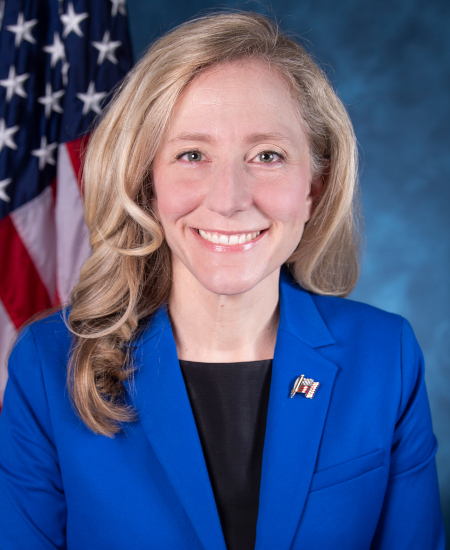
Rep. Abigail Davis Spanberger
Sponsored bills
Maddy summaryThis bill, the Virginia Plan to Reduce Gun Violence Act of 2024, establishes new requirements for firearm transfers, limits handgun purchases to one per 30 days for unlicensed individuals, and creates a national framework for extreme risk protection orders (ERPOs). It requires licensed dealers to facilitate transfers between unlicensed individuals, mandates reporting of lost or stolen firearms within 48 hours, restricts access to firearms by children under 14, and prohibits stalkers from possessing firearms. The bill also makes it unlawful for caregivers to enable children to gain access to firearms when they know the child poses a risk of violence. These provisions would directly affect firearm sellers, law enforcement agencies, individuals with firearm access issues, and caregivers of children.
Maddy summaryHRES 901 is a U.S. House resolution expressing support for democracy and human rights in Pakistan. It calls on the U.S. President and Secretary of State to collaborate with Pakistan to uphold democratic processes, human rights, and the rule of law. The resolution urges Pakistan to protect freedoms of speech, assembly, and press, and to avoid arbitrary detention or suppression of political participation. It also condemns efforts to undermine Pakistan's electoral or judicial systems, including harassment of citizens during protests or interference with elections.
Maddy summaryThe American Food Supply Chain Resiliency Act of 2023 establishes 12 regional resource centers to support small and medium agricultural producers and businesses. These centers will provide technical assistance, coordination, and grants to help businesses address supply chain challenges, expand operations, or start new ventures within their regions. At least one center must specifically focus on tribal supply chain issues faced by Indian tribes and Tribal organizations. The centers must coordinate with federal, state, and tribal agencies, and the Department of Agriculture will report on the program’s impact every two years.
Maddy summaryHR 8834, the Safeguarding Our Supply Chains Act, creates a Supply Chain Crime Coordination Center within Homeland Security to collect and analyze data on supply chain fraud and theft hotspots, including high-risk transportation routes and retail areas. It also establishes a multi-agency Task Force (including FBI, ICE, state/local law enforcement, and private sector partners) to coordinate efforts targeting organized crime groups stealing cargo, disrupting supply chains, and committing fraud. The Task Force will share intelligence, track theft trends, and work directly with affected businesses to address threats. The bill authorizes $100 million over five years for implementation and requires annual reports to Congress on the Task Force’s effectiveness in reducing these crimes. This law directly affects federal, state, and local law enforcement agencies, transportation and retail businesses, and supply chain operators.
Maddy summaryThe No Passport Fees for Heroes’ Families Act waives passport fees for spouses, domestic partners, children, parents, grandparents, and siblings traveling abroad to visit a military service member in a hospital or medical facility. This change, added through an amendment to the Passport Act, removes the standard fee requirement for these specific family members during medical visits. It directly affects military families needing international travel to support a service member in a medical setting overseas. The policy provides immediate financial relief for these travel scenarios without altering broader passport regulations.
Maddy summaryHR 5012 (SHINE for Autumn Act of 2023) authorizes federal funding to improve stillbirth research and data collection. It provides $5 million annually for states to collect standardized stillbirth data (including risk factors) while protecting privacy, $1 million annually for developing public educational materials and data collection guidelines, and $3 million annually for medical fellowships training pathologists in perinatal autopsy and stillbirth research. The bill directly affects state health departments, medical professionals (like obstetricians and pathologists), and families who experience stillbirth by improving data quality for future research. It requires federal reports on guidelines and program effectiveness within five years but does not provide direct medical care or financial assistance to families.
Maddy summaryHR 537 authorizes a Congressional Gold Medal to honor 60 diplomats who saved Jewish lives during the Holocaust by issuing visas and passports against their governments' orders, risking expulsion and personal danger. The medal will be presented to the next of kin of these diplomats, alongside representatives from their home countries, and permanently displayed at the United States Holocaust Memorial Museum. The bill also permits the sale of bronze duplicates to cover production costs, with proceeds going to the U.S. Mint. This legislation recognizes the diplomats' humanitarian actions without creating new government programs or altering existing laws.
Maddy summaryThis resolution (HRES 1286) supports continued U.S. funding for Gavi, the Vaccine Alliance, to expand access to vaccines in low-income countries. It directly aids children and communities in these nations by enabling immunization against preventable diseases like measles, malaria, and polio, which has averted an estimated 17.3 million deaths since 2000. Key provisions highlight Gavi's role in reducing child mortality from vaccine-preventable diseases by 70%, achieving a $54 economic return for every $1 invested, and strengthening health systems through cold-chain infrastructure. The resolution urges sustained U.S. financial commitments to maintain Gavi's market-shaping impact, support malaria vaccine rollout, and ensure global health security.
Maddy summaryHR 8639, the Warehouse Worker Protection Act, requires employers in covered warehouse facilities (including distribution centers, storage facilities, and delivery services) to provide workers with clear written descriptions of any quotas they're subject to, including how performance is measured and monitored. The bill prohibits quotas that interfere with breaks, safety compliance, or anti-discrimination protections, and mandates that employers provide employee work speed data in human-readable formats. It creates new anti-retaliation protections for workers who exercise these rights or file complaints, and establishes a Fairness and Transparency Office within the Department of Labor to oversee implementation. The act also amends the National Labor Relations Act to explicitly prohibit quotas that discourage workers from exercising their labor rights.