

Maddy summaryHJRES 44 is a congressional resolution seeking to block a 2021 rule by the Bureau of Alcohol, Tobacco, Firearms, and Explosives (ATF). The rule classified firearms with stabilizing braces as "short-barreled rifles," which would have required additional licensing and regulation. This resolution uses a specific legal process (under Title 5, U.S. Code) to formally disapprove the ATF rule, meaning the rule would no longer be in effect. It directly affects firearm owners, manufacturers, and dealers who would have been subject to the rule’s requirements.
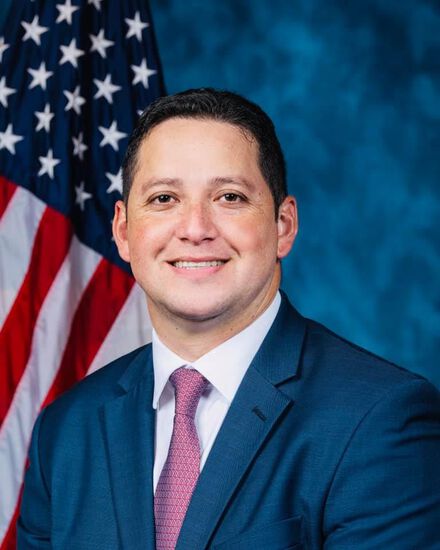
Rep. Tony Gonzales
Sponsored bills
Maddy summaryHRES 546 is a symbolic House resolution commemorating the one-year anniversary of the Supreme Court's June 24, 2022, Dobbs v. Jackson Women's Health Organization decision, which overturned Roe v. Wade. The resolution expresses support for the Court's ruling that the Constitution does not guarantee a right to abortion and celebrates the decision's impact on returning abortion policy authority to state legislatures. As a ceremonial resolution, it does not create new laws or directly affect any individuals or policies. The resolution focuses solely on marking the anniversary and affirming the position that unborn life should be protected.
Maddy summaryHR 277 would require Congress to approve major federal regulations before they take effect. Major rules are defined as those with significant economic impact ($100 million+ annually), major cost increases for consumers or industries, or significant adverse effects on competition, employment, or innovation. Agencies must submit detailed information about these rules to Congress, including cost-benefit analyses, before they can take effect. Congress would have 70 session days to approve the rule with a joint resolution; if they don't act within that timeframe, the rule would not take effect. This would increase congressional oversight of federal regulations and require more detailed information about proposed rules before they become law.
Maddy summaryHJRES 69 is a resolution seeking to disapprove an Environmental Protection Agency (EPA) rule published on June 5, 2023, which established a "Federal Good Neighbor Plan" for the 2015 ozone air quality standards. The rule aimed to address ozone pollution crossing state lines, particularly affecting southeastern states and industries subject to the 2015 ozone standards. This resolution would block the rule from taking effect by invoking the Congressional Review Act, preventing it from being enforced. If enacted, it would directly stop the EPA from implementing this specific plan, impacting states and businesses that would have had to comply with the rule.
Maddy summaryHR 4076 establishes a joint U.S.-Israel program to fund health technology development, authorizing $4 million annually (2024-2026) through the U.S. Health and Human Services Department. It requires Israel to match U.S. funding and focuses on collaborative projects in artificial intelligence, vaccines, telemedicine, diagnostic tests, and data-driven personalized medicine for emerging infectious diseases. The program can either build on an existing U.S.-Israel agreement or create a new one under a 2008 science cooperation framework. This bill directly affects U.S. federal health agencies and the Israeli government, with funds restricted to joint projects meeting specific technological and health priorities.
Maddy summaryThis proposed constitutional amendment would give Congress the authority to ban physical acts that desecrate the U.S. flag, such as burning or trampling. If ratified by 38 states (three-fourths of all states), it would allow federal laws prohibiting such acts. The amendment does not currently prohibit flag desecration but seeks to change the Constitution to permit it. It would directly affect individuals engaging in physical flag desecration. The bill is pending in the House Judiciary Committee and requires state ratification to become part of the Constitution.
Maddy summaryHR 4025, the Emi-Coke Accountability Act of 2023, establishes a national alert system to assist in locating victims of human trafficking, modeled after AMBER Alerts for missing children. It creates a Department of Justice Coordinator to develop voluntary guidelines for states on when to issue "Emi-Coke Alerts" (for trafficking victims), including criteria to limit overuse and protect privacy. The bill mandates annual reporting on alert issuance, success rates, and costs, while requiring states to follow minimum standards for alert dissemination without imposing mandatory participation. It authorizes $500,000 for the program and emphasizes privacy protections for victims, with no specific age requirements for eligibility.
Maddy summaryHRES 482 is a ceremonial resolution commending Raul L. Ortiz upon his retirement after 32 years of service with the U.S. Border Patrol. It formally recognizes his career, including his role as the 25th Chief of the Border Patrol (appointed August 2021), and acknowledges his leadership during his tenure. The resolution contains no policy changes or new laws; it is solely a gesture of appreciation from the House of Representatives. It does not affect any individuals or policies beyond expressing formal recognition of Ortiz’s service.
Maddy summaryHR 3855 establishes the National Digital Reserve Corps within the General Services Administration to recruit digital and cybersecurity professionals for temporary assignments to federal agencies. It requires participants to commit to a 3-year service term (minimum 30 days annually) with annual compensation capped at $10,000, while agencies receive support for needs like cybersecurity, data management, and digital project development. The program authorizes $30 million for implementation, mandates GSA to manage recruitment and assignments, and requires annual congressional reports tracking reservist numbers, agency requests, and assignment outcomes. Covered agencies include major departments like the U.S. Postal Service and the Executive Office of the President.
Maddy summaryHR 3792 extends U.S. security funding for Israel through 2028 (Section 3) and expands energy cooperation to include advanced nuclear technologies and carbon capture (Section 5). It requires annual reports on regional security partnerships involving Israel (Section 6) and ensures countries in the Abraham Accords can access U.S. development programs (Section 8). The bill also mandates reports on diplomatic efforts against ICC investigations targeting the U.S. and Israel (Section 10) and encourages people-to-people programs to strengthen the Abraham Accords (Sections 7, 9). These provisions directly affect Israel’s diplomatic engagement, security partnerships, and economic cooperation in the Middle East.