

Maddy summaryHR 9574, the Stop CARB Act of 2024, repeals federal provisions that allowed California to set stricter vehicle and engine emissions standards than the national baseline. It eliminates the waiver process under the Clean Air Act (specifically Section 209) that enabled California’s Air Resources Board (CARB) to establish its own rules for nonroad engines and vehicles. The bill also repeals Section 177 of the Clean Air Act, which authorized California’s unique new motor vehicle emission standards. As a result, California would no longer be permitted to implement its own vehicle emission requirements separate from federal standards.
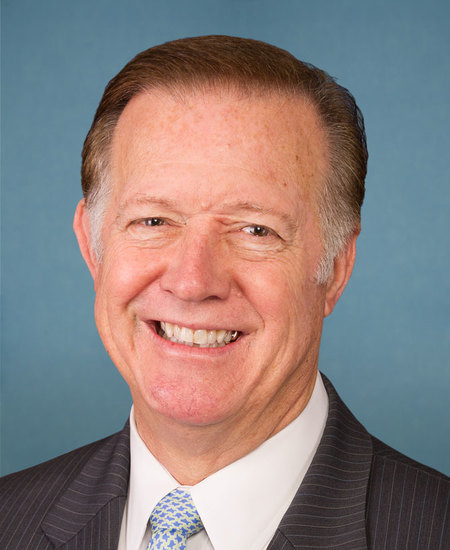
Rep. Randy K. Weber, Sr.
Sponsored bills
Maddy summaryHR 9586 prohibits federal funds from being used to provide or refer for specific medical procedures intended to change a person's physical characteristics to align with their gender identity. It directly affects individuals in U.S. Department of Homeland Security (DHS) or Department of Health and Human Services (HHS) custody, banning federal funding for procedures like hysterectomies, chest implants, puberty blockers, or hormone therapies at supraphysiologic doses. The bill defines "specified gender transition procedures" to include surgeries (e.g., mastectomy, phalloplasty) and certain medications, with "sex" defined by biological factors present at birth. This policy change restricts federal healthcare funding for these specific treatments within immigration and federal detention systems.
Maddy summaryHR 9575, the Affordable Housing for Veterans Act, directly affects veterans using Department of Veterans Affairs (VA) home loans by changing the timeline for eliminating loan fees. The bill amends VA regulations to end these fees by October 1, 2024 (instead of November 15, 2031), reducing costs for veterans securing VA-backed mortgages. It also includes a separate provision rescinding $4.8 billion in unobligated IRS funding from the Inflation Reduction Act. The core policy change is the accelerated elimination of VA home loan fees, impacting veterans seeking home purchases with VA financing. The rescission of IRS funds is unrelated to veterans' housing provisions.
Maddy summaryHR 9534, the National Constitutional Carry Act, would prohibit states and localities from banning or restricting the public carrying of legally owned firearms by eligible U.S. citizens. It directly affects all gun owners who meet federal and state possession requirements, removing the need for permits or licenses to carry in public spaces. Key provisions state that any state law restricting public carry - such as requiring permits or imposing financial barriers - would be invalidated, with exceptions for privately-owned businesses that clearly prohibit firearms or locations with security screening. The bill bases this on Supreme Court rulings affirming the constitutional right to carry firearms for self-defense outside the home.
Maddy summaryHR 8282, the "Illegitimate Court Counteraction Act," imposes U.S. sanctions on foreign individuals or entities supporting the International Criminal Court (ICC) in investigating or prosecuting "protected persons." Protected persons include U.S. military personnel, officials, and allied personnel (from non-ICC member countries) who are not under ICC jurisdiction. The bill requires the President to block assets and deny visas to targeted foreign persons and their immediate family members within 60 days of the ICC attempting such actions. It mandates congressional notification of sanctions and allows termination if the ICC ceases all such efforts against protected persons. The law focuses on restricting U.S. economic and travel access to ICC supporters targeting specific U.S. and allied personnel.
Maddy summaryThis bill requires U.S. agencies to prevent taxpayer funds from indirectly supporting the Taliban in Afghanistan. It mandates that State Department and USAID implement new reporting rules for aid recipients, requiring them to track and report all payments (including taxes, fees, and duties) made to the Taliban or Afghan government entities. Agencies must create these rules within 180 days and amend existing contracts to ban such payments. Recipients must submit detailed reports to Congress every six months, identifying who paid, to whom, and the amount.
Maddy summaryHRES 1420 is a disapproval resolution that stops a rule issued by the Department of Homeland Security regarding the "Keeping Families Together process." The resolution directs Congress to reject the rule, meaning it will have no legal effect and cannot be enforced. This resolution specifically targets a procedural rule related to immigration procedures, not new policy. It does not change immigration law or directly affect individuals but prevents the rule from being implemented. As a disapproval resolution, it is procedural and focuses solely on blocking the rule's enforcement.
Maddy summaryHR 9374, the Stand with Israel Act, prohibits U.S. federal funds from being used to support the United Nations or its entities if they restrict Israel's full participation as a member state. The bill specifically blocks funding for any UN body that expels, downgrades, or suspends Israel's membership or limits its ability to participate equally with other nations. This affects U.S. government contributions to the UN, requiring the Department of State and other agencies to halt funding for such UN actions. The key mechanism is a new provision in the UN Participation Act that mandates this funding restriction whenever Israel's UN participation is impaired.
Maddy summaryThe SAFER at the Border Act prohibits the U.S. Department of Homeland Security from temporarily admitting (paroling) certain individuals at the border. It defines "known terrorists" (those arrested, charged, or convicted for terrorism), "suspected terrorists" (reasonably suspected of terrorism), and "special interest aliens" (those with potential terrorism links based on travel patterns). The bill explicitly bans parole for these individuals, even for humanitarian reasons or public benefit, and also prohibits parole for refugees. Additionally, it allows states to sue the Department of Homeland Security if they suffer financial harm exceeding $100 from the parole of such individuals.
Maddy summaryThis bill adds "galactose-alpha-1,3-galactose" (alpha-gal) to the list of major food allergens under federal law. It requires food manufacturers to clearly label products containing alpha-gal, which is found in red meat and some other animal-derived foods, directly affecting consumers with alpha-gal syndrome (a meat allergy often triggered by tick bites). The law excludes certain mammal-derived ingredients (like those from alpha-gal-knockout animals) if they fall below a detectable limit. The new labeling requirement will take effect on January 1, 2026, giving manufacturers time to adjust. This change ensures clearer allergen information for people with this specific allergy.