

Maddy summaryThis bill increases funding for replacing potentially insecure telecommunications equipment from $1.9 billion to $4.98 billion under the Secure and Trusted Communications Networks Act. It appropriates $3.08 billion specifically for the Federal Communications Commission (FCC) to implement this program in fiscal year 2024. The bill mandates the FCC to conduct a spectrum auction for certain frequencies within one year of enactment, regardless of prior expiration deadlines for such auctions. This directly affects the FCC, telecom companies bidding on spectrum licenses, and national security networks requiring secure communications infrastructure.
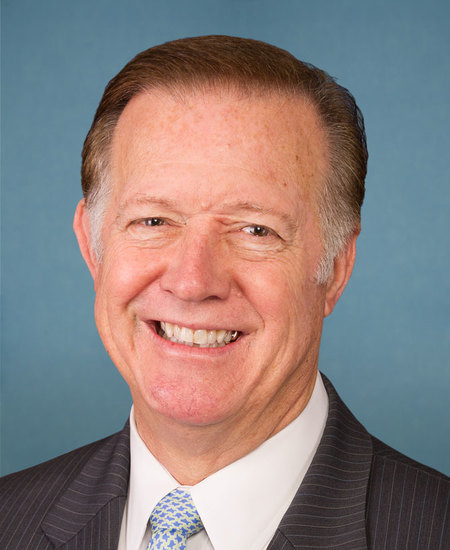
Rep. Randy K. Weber, Sr.
Sponsored bills
Maddy summaryHR 9277, the REG Act, prohibits federal agencies from considering "environmental justice" when creating rules or enforcing laws, unless required by existing law. It directly affects agencies like the EPA by restricting how they evaluate policies' impacts on minority and low-income communities during rulemaking. The bill repeals three key executive orders: E.O. 12898 (addressing environmental justice in vulnerable communities), E.O. 14008 (climate action), and E.O. 14096 (environmental justice commitments). This changes how agencies develop regulations by removing mandatory consideration of environmental justice in their processes.
Maddy summaryThis resolution aims to block a rule issued by the National Highway Traffic Safety Administration (NHTSA) that sets new fuel efficiency standards for passenger cars, light trucks (starting in 2027), and heavy-duty pickup trucks/vans (starting in 2030). If passed, it would prevent this specific rule from taking effect by disapproving it under a congressional review process. The rule directly affects vehicle manufacturers by requiring them to meet these updated fuel economy targets for future model years. This is a procedural resolution, not a new law, focused solely on halting the implementation of the existing NHTSA rule.
Maddy summaryHJRES 127 is a congressional disapproval resolution targeting a Securities and Exchange Commission (SEC) rule requiring public companies to standardize climate-related financial disclosures. It seeks to block the SEC’s March 2024 rule (89 Fed. Reg. 21668), which would mandate consistent reporting on climate risks for investors. If passed, this resolution would prevent the SEC rule from taking effect, directly affecting publicly traded companies required to comply with the proposed disclosure standards. The bill uses a specific congressional process under Title 5, U.S. Code, to nullify the rule without creating new regulations.
Maddy summaryHJRES 124 is a resolution seeking congressional disapproval of a rule issued by the Office of the Comptroller of the Currency (OCC) that required large financial institutions to adopt climate-related risk management practices. The rule, published in October 2023 (88 Fed. Reg. 74183), would have mandated major banks to assess and manage climate change risks in their operations. This resolution, if passed, would block the rule from taking effect by invoking the congressional disapproval process under Title 5 of the U.S. Code. It directly affects large banks and financial institutions that would have been required to comply with the climate risk management standards. The bill does not create new rules but aims to prevent the implementation of the OCC's existing proposal.
Maddy summaryHJRES 122 is a resolution seeking to block a rule by the Consumer Financial Protection Bureau (CFPB) that would have regulated credit card penalty fees. The rule, published on March 15, 2024, aimed to limit how credit card companies charge fees for late payments or other violations. If approved, this resolution would disapprove the rule under a specific legal process, preventing it from taking effect. This directly affects credit card issuers (banks and financial institutions) by allowing them to continue current fee practices without the proposed restrictions.
Maddy summaryHRES 1394 is a non-binding resolution celebrating the U.S.-India partnership based on shared democratic values, religious pluralism, and human rights, while highlighting the contributions of the Indian diaspora in the United States. It specifically recognizes the 50th anniversary of BAPS Swaminarayan Sanstha's community work, including its spiritual centers (mandirs) and volunteer efforts across the country. The resolution does not create legal obligations but formally acknowledges these ties and achievements.
Maddy summaryHR 9191, the "No Union Time on the Taxpayer's Dime Act," amends 5 U.S.C. § 7131 to eliminate paid "official time" for federal employees performing union-related activities. The bill requires that any work employees do for labor organizations must occur during non-duty hours, not during regular work time. This directly affects federal workers who are union members, as it would end the practice of using paid work hours for union business. The key provision changes the existing rule to ensure union activities are conducted outside of standard work schedules, shifting the cost from taxpayers to employees' personal time.
Maddy summaryHRES 1371 is a House resolution condemning the Biden Administration and Vice President Kamala Harris for failing to secure the U.S. border. It cites statistics including over 9.7 million illegal immigration encounters since 2021 and the end of the Remain in Mexico program as evidence. As a symbolic resolution with no policy changes, it publicly expresses the House's disapproval of current border policies without altering any laws or enforcement actions.
Maddy summaryThis bill prohibits U.S. federal agencies from recognizing the Taliban-controlled government in Afghanistan as legitimate, calling its takeover a coup. It requires the State Department to designate Afghanistan as a "state sponsor of terrorism" and the Taliban as a "foreign terrorist organization," while banning federal funding for any policies that could imply recognition. These provisions directly affect U.S. diplomatic, aid, and defense agencies by restricting their actions toward Afghanistan and freezing related funding. The law aims to formalize the U.S. stance that the Taliban regime is illegitimate due to its ties to terrorism.