

Maddy summaryThis bill provides stopgap funding to maintain pay and operations for specific government personnel if Congress fails to pass full-year budget bills by October 2024. It directly affects military members (including reserves), Defense and Coast Guard civilian staff, border agents (CBP), immigration officers (ICE), Transportation Security Administration staff, air traffic controllers, and Veterans Affairs employees processing benefits. Key provisions ensure continued salaries for these workers during funding gaps, covering mission-critical functions like border security, military support, and VA benefit delivery. The funding expires automatically on October 1, 2024, or earlier if regular appropriations are enacted.
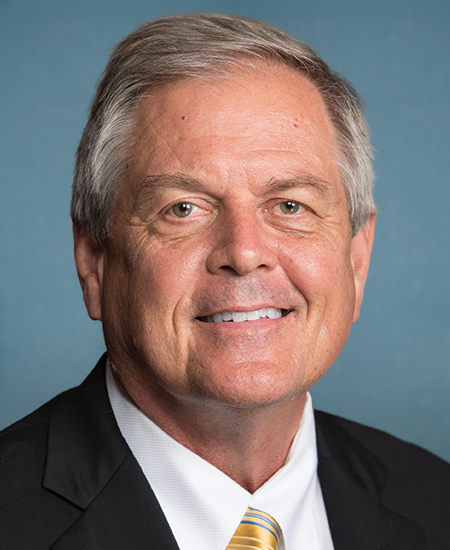
Rep. Ralph Norman
Sponsored bills
Maddy summaryHR 788, the Stop Settlement Slush Funds Act of 2023, prohibits federal agencies from entering settlement agreements that direct payments to third parties (other than the U.S. government) unless the payment directly reimburses actual harm caused by the defendant or covers services related to the case. It requires agencies to report annually on such settlements to Congress and mandates annual audits by agency Inspectors General to ensure compliance. The law applies to all federal agencies entering settlements after its enactment and includes a 7-year sunset provision. This directly affects how federal agencies handle settlements in civil cases, limiting their ability to divert settlement funds to external entities without clear, direct justification.
This resolution expresses the sense of the House of Representatives that the House should not adjourn until all of the annual appropriations bills for the current fiscal year have been enacted.
Maddy summaryHR 6744, the "No VA Resources for Illegal Aliens Act," prohibits the Department of Veterans Affairs (VA) from providing health care or processing health care claims for individuals unlawfully present in the United States who are not already eligible for VA health care under existing law. This bill directly affects undocumented immigrants who do not qualify for VA benefits through standard veteran eligibility criteria. The key provision explicitly bars VA resources from being used for any care or claims processing for such individuals. The bill does not alter VA eligibility rules for veterans but prevents the use of VA funds for non-eligible non-citizens unlawfully present in the U.S.
Maddy summaryThis bill raises the dollar threshold that determines when the National Labor Relations Board (NLRB) can handle labor disputes involving small businesses. It increases the threshold for 2023 to ten times the previous year’s amount and sets up an automatic annual adjustment using the Personal Consumption Expenditure Per Capita Index (starting in 2024) to keep pace with inflation. Small businesses with payroll below this higher threshold will no longer fall under the NLRB’s jurisdiction for labor disputes. The change directly affects small businesses and the NLRB’s ability to assert jurisdiction over their labor issues, shifting oversight away from the agency for smaller employers. The amendment applies to all NLRB decisions made after the bill’s enactment date.
Maddy summaryThe REMAIN in Mexico Act of 2024 would require the U.S. government to reinstate the Migrant Protection Protocols (MPP), a policy that forces certain asylum seekers to wait in Mexico while their U.S. immigration cases are processed. It directly affects asylum seekers from Mexico and Central America who are seeking entry to the United States and would be subject to the MPP under this law. The bill mandates implementation of the MPP as described in a 2019 policy memo by former Homeland Security Secretary Nielsen. This would reverse the current administration's decision to end the program, requiring asylum seekers to remain in Mexico during their immigration proceedings.
Maddy summaryHR 6941, the Criminalize Fleeing from Immigration Enforcement Act of 2024, would make it a federal crime for individuals to flee or evade law enforcement officers enforcing specific immigration laws, including unauthorized entry (INA §275), re-entry after deportation (INA §276), or document fraud (INA §274). It directly affects people who flee officers identified as enforcing these immigration provisions or flee immigration checkpoints. The bill would impose penalties of up to five years in prison or fines for fleeing, with up to eight years for fleeing in a vehicle exceeding the speed limit. This amendment to Title 18, U.S. Code, creates a new criminal offense without changing existing immigration enforcement procedures.
Maddy summaryThe Count Only Citizens Act requires the U.S. Census Bureau to include a citizenship or lawful presence question on the 2030 and future decennial census forms. It mandates that the Secretary of Commerce adjust population counts for congressional apportionment to exclude non-citizens and individuals not lawfully present in the U.S. This change directly affects how congressional seats are allocated among states, potentially reducing representation for states with large non-citizen populations. The bill does not alter census counts used for other purposes, such as federal funding distribution.
Maddy summaryHRES 952 is a procedural rule change for the U.S. House of Representatives. It would require the House Clerk to read the Congressional Budget Office's estimated cost of any bill immediately after the bill's title is read during the introduction process. This change applies to all bills considered under House rules and aims to make budgetary costs more visible earlier in the legislative procedure. The bill does not alter the content of legislation or the CBO's role in estimating costs.
Maddy summaryHR 6851, the "Cooperation with ICE Act," prohibits sanctuary jurisdictions from receiving federal funding under FEMA's Shelter and Services Program (SSP). A sanctuary jurisdiction is defined as any state or local government that blocks sharing of immigration status information or refuses to comply with lawful DHS requests regarding immigration holds or detainee notifications. The bill requires FEMA to revise SSP eligibility rules to deny funding to such jurisdictions while protecting local officials from legal liability for complying with DHS immigration requests. This directly affects cities and counties with policies restricting immigration cooperation, altering federal funding access based on immigration enforcement practices.