

Maddy summaryThis bill repeals a law (18 U.S.C. § 1715) that previously prohibited mailing firearms without a license. It directly affects the U.S. Postal Service, firearm sellers, and individuals mailing firearms by preventing the Postal Service from creating rules that would block firearm mailings or require disclosure of sensitive records like sales receipts or firearm serial numbers. Key provisions include removing the existing ban on mailing firearms and prohibiting the Postal Service from imposing new restrictions on firearm mailings or demanding customer transaction data. The bill ensures that firearm mailings can proceed without these specific federal restrictions, while applying to ongoing legal cases under the repealed law.
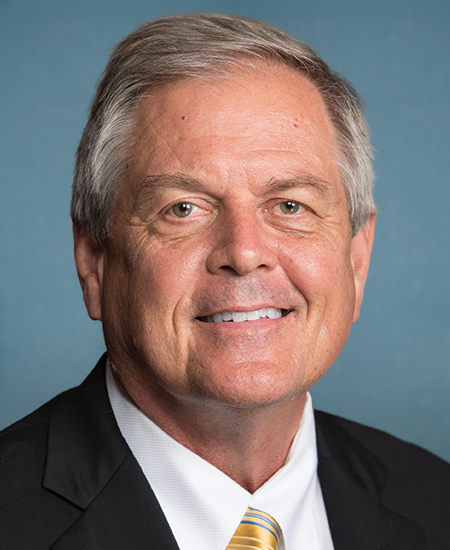
Rep. Ralph Norman
Sponsored bills
Think Tank and Nonprofit Foreign Influence Disclosure Act This bill requires tax-exempt charitable organizations to disclose in annual reports contributions and gifts exceeding $50,000 received from foreign governments and foreign political parties. The reports must disclose the names of such governments and political parties and the aggregate amounts of contributions and gifts. The bill requires the Department of the Treasury to make publicly available in a searchable database information relating to such gifts and contributions received from foreign governments and political parties and the aggregate amount received in each year from the the People's Republic of China, and (stated separately) from the Chinese Communist Party.
Stop Basel Endgame Act This bill requires the withdrawal of the proposed rule titled Regulatory Capital Rule: Large Banking Organizations and Banking Organizations with Significant Trading Activity . The proposed rule revises bank capital requirements and calculations, including by requiring banks to replace their use of internal credit risk models with a standardized approach generally in line with international standards set by the Basel Committee on Banking Supervision. The rule was proposed on September 18, 2023, by the Office of the Comptroller of the Currency, the Board of Governors of the Federal Reserve System, and the Federal Deposit Insurance Corporation.
Maddy summaryHR 7083, the RAZOR Act, prohibits federal agencies from removing or altering barriers (like fences or fences) built by states along the U.S. border to prevent unlawful crossings. It directly affects federal departments and agencies, such as the Department of Homeland Security, by restricting their ability to modify state-constructed border infrastructure. The key provision is a clear ban on any federal action that would change or remove these state-built barriers. This bill makes a specific policy change regarding federal-state border infrastructure authority without altering broader immigration law.
Maddy summaryHR 7014, the Protect Medicaid Act, prohibits federal Medicaid funding for the administrative costs associated with providing health benefits to noncitizens who are not lawfully admitted permanent residents and are ineligible for Medicaid due to immigration status. It directly affects states that currently offer health benefits to such noncitizens, requiring them to cover administrative expenses through state funds instead of federal Medicaid dollars. The bill amends federal law to add a specific prohibition on using federal funds for these administrative costs, while leaving the provision of medical care itself unaffected. Additionally, it mandates an Inspector General report analyzing how states separate administrative costs, ensure compliance, and finance these programs, including impacts on drug pricing. The law focuses solely on administrative funding, not on restricting medical benefits for eligible individuals.
Maddy summaryHRES 974 is a non-binding House resolution supporting the designation of January 21-27, 2024, as "National School Choice Week." It encourages parents to learn about K-12 education options - including public schools, charter schools, private schools, and homeschooling - and promotes public awareness of educational choice. The resolution does not create new laws or policies but formally expresses the House's backing for this annual observance. It directly affects parents and students by highlighting available education pathways and urging communities to host events celebrating school choice. The resolution was introduced by multiple House members and referred to the Education Committee.
Maddy summaryThe Death Tax Repeal Act would eliminate the federal estate tax and generation-skipping transfer tax for estates of people who die on or after the bill's enactment date, and for generation-skipping transfers made after that date. It would also establish a new $10 million lifetime gift tax exemption (adjusted annually for inflation) and replace the existing gift tax rate schedule with a revised structure. These changes would primarily affect high-net-worth individuals and their heirs, as the estate tax and gift tax typically apply to large estates or gifts exceeding the new exemption threshold. The bill's provisions would take effect on the date of enactment, with transitional rules for the year the bill is signed into law.
Maddy summaryThis bill requires the President's annual budget submission and congressional budget resolutions to include the ratio of public debt to estimated gross domestic product (GDP). It amends existing laws (31 U.S.C. §1105(a) and the Congressional Budget and Impoundment Control Act of 1974) to mandate this specific metric be reported. The change would standardize the inclusion of this ratio in federal budget documents, making it a formal part of fiscal planning. It is a procedural update to reporting requirements, not a policy change affecting debt levels or spending.
Crop Insurance Transparency Act This bill requires the Department of Agriculture (USDA) to publicly disclose specific information about farmers and insurance providers participating in the federal crop insurance program (FCIP). (The FCIP helps make insurance coverage available to farmers from private sector insurers to help mitigate potential financial consequences of adverse growing and market conditions.) Specifically, USDA must annually disclose information on an individual or entity that obtained a federally subsidized crop insurance, livestock, or forage policy or plan of insurance, including their name, the amount of the premium subsidy received, and the federal portion of indemnities paid toward insured losses. USDA must also annually disclose information on each private insurance provider participating in the FCIP, including their name, the underwriting gains earned by the provider through participation in the program, the amount paid to cover administrative and operating expenses, and the federal portion of indemnities and reinsurance costs. The bill excludes from the disclosure requirements information that is related to individuals and entities covered by a catastrophic risk protection plan. (These plans are the minimum level of coverage offered under the program.)
Maddy summaryThe Holding Prosecutors Accountable Act requires district attorneys in jurisdictions with 380,000+ residents receiving federal Byrne grants to submit annual reports on their handling of serious crimes, including murder, rape, robbery, and firearm offenses. The reports must detail cases declined for prosecution, plea agreements, and instances involving defendants with prior arrests, convictions, or pending cases for similar offenses. The Attorney General will standardize reporting formats and publish all data online for public access. Jurisdictions failing to submit reports or declining to prosecute two-thirds or more of referred serious crime cases will lose eligibility for Byrne grants.