

Maddy summaryThis bill permanently cancels unused funds from the Department of Commerce's Nonrecurring Expenses Fund, which were set aside under the 2023 Fiscal Responsibility Act. It specifies that this cancellation won't count toward federal budget caps or allocation rules under existing budget laws. The bill directly affects how leftover government funds are handled within the Commerce Department's budget, eliminating a specific account for nonrecurring expenses.
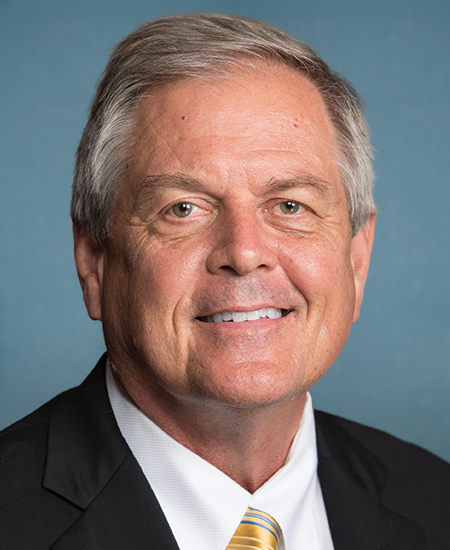
Rep. Ralph Norman
Sponsored bills
Maddy summaryThis bill would amend federal law to require the rejection of a state's electoral votes for president if a candidate nominated by a major political party did not appear on that state's ballot. It defines "major political party" using the IRS's criteria for "major party" status under the Internal Revenue Code. The change directly affects states' ability to certify presidential election results, as electoral votes from any state failing to include a major party candidate would be disqualified from counting. The bill does not alter voting procedures or ballot access but modifies the federal process for certifying electoral votes.
This bill allows creditors to consider an applicant’s immigration status for certain purposes when assessing an application for an extension of credit. In particular, considering an applicant’s U.S. immigration status for the purpose of determining the creditor's rights and remedies applicable to the particular extension of credit does not constitute discrimination.
Maddy summaryHR 4655, the "Businesses Over Activists Act," prevents the Securities and Exchange Commission (SEC) from requiring companies to include shareholder proposals or related discussions in their voting materials (proxy statements). This directly affects shareholders who seek to raise issues like environmental policies or executive pay at company meetings, as companies would no longer be obligated to include these proposals. The bill also clarifies that federal securities law does not override state laws governing shareholder proposals or voting materials. The key change is limiting the SEC's authority to mandate inclusion, shifting power toward companies and state regulations.
Maddy summaryHR 6813 blocks the Environmental Protection Agency (EPA) from finalizing, implementing, or enforcing a specific proposed rule about air emissions reporting. The bill directly targets the EPA Administrator, preventing action on the "Revisions to the Air Emissions Reporting Requirements" rule published in the Federal Register on August 9, 2023. This bill does not change current reporting rules but stops the EPA from moving forward with this particular revision. The key mechanism is a direct prohibition on the EPA's regulatory actions regarding this specific rule.
Maddy summaryThis bill, titled "SAFER Voter Act" but focused on firearms, amends federal law to require federal firearms licensees to verify that buyers of handguns (not shotguns or rifles) are at least 21 years old. It directly affects gun dealers and individuals under 21 seeking to purchase handguns. The key provision removes existing exceptions allowing sales of handguns to those under 21, requiring licensees to confirm age before transferring handguns. The bill does not address voting rights or voter registration, despite its misleading title. (Note: The bill's title conflicts with its actual provisions, which relate to firearm age restrictions.)
Maddy summaryThis bill clarifies the Consumer Financial Protection Bureau's (CFPB) authority to enforce rules against "unfair, deceptive, or abusive acts or practices" (UDAAP) affecting consumers. It defines "abusive" acts as those intentionally interfering with consumer understanding or taking unreasonable advantage of consumer vulnerabilities, requiring the CFPB to provide a clear definition within 180 days. Financial institutions must now receive written notice and 180 days to correct potential violations before penalties are imposed, and the CFPB must conduct cost-benefit analyses for new rules. The bill also prohibits the CFPB from treating discrimination as part of UDAAP enforcement and limits penalties for past conduct to the most recent compliance rating period.
Maddy summaryThe ACE Act expands tax-advantaged education savings by allowing 529 plan funds to cover homeschooling costs and additional K-12 expenses like tutoring, therapies, and curriculum materials. It doubles the annual distribution limit from $10,000 to $20,000 for these expenses and adds a $20,000 annual gift tax exclusion for contributions to 529 plans. The bill also restricts tax-exempt bonds for school construction to states meeting specific school choice program metrics, requiring at least 40% of students to be eligible for programs like vouchers or education savings accounts. These changes directly affect families using homeschooling or private education, states with school choice programs, and contributors to 529 plans.
Maddy summaryHR 6734 prohibits the use of federal funds to finalize, implement, or enforce the Bureau of Alcohol, Tobacco, Firearms, and Explosives' (ATF) proposed rule (2022R-17) defining "engaged in the business as a dealer in firearms." This bill directly affects the ATF by blocking funding for this specific regulatory rule, which was proposed in August 2023. The legislation does not create new requirements but prevents federal resources from being used to advance this particular ATF regulation.
Maddy summaryHR 357, the Ensuring Accountability in Agency Rulemaking Act, requires federal agencies to have rules signed by Senate-confirmed appointees (or senior appointees for initiation), aiming to increase oversight of regulatory decisions. It directly affects all federal agencies creating rules under standard procedures (covered by 5 U.S.C. § 553), ensuring higher-level accountability for rulemaking. Exceptions exist only if an agency head certifies that compliance would impede public safety/security, with required notifications to the OIRA Administrator and Federal Register publication. The Office of Information and Regulatory Affairs (OIRA) will monitor agency compliance with these requirements.