Maddy summaryHR 3492, the Protect Children’s Innocence Act, makes it a federal crime to perform genital or bodily mutilation or chemical castration on minors under 18, except for specific medical reasons. The bill broadly defines prohibited procedures to include gender transition-related surgeries (like hysterectomies or mastectomies) and medical treatments such as puberty blockers or cross-sex hormones administered to minors. It criminalizes these acts when they occur across state lines, involve payments, or use interstate commerce, while explicitly banning religious tradition as a defense. Exceptions include medically necessary procedures for health emergencies, childbirth, or conditions certified by a physician.
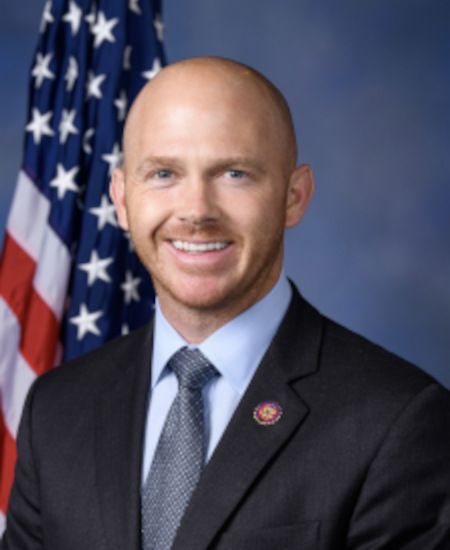
Rep. William R. Timmons IV
Sponsored bills
Maddy summaryHR 6792, the Foreign-Trade Zone Export Enhancement Act of 2025, modifies U.S. tariff rules to make it easier for businesses using foreign-trade zones (FTZs) to export goods to U.S. trade partners under the USMCA (or future agreements). It allows certain merchandise manufactured or altered within FTZs - specifically items classified under HTS 9801.00.95 - to enter the U.S. duty-free when exported directly to Canada or Mexico. This change aims to support U.S. manufacturing competitiveness and job retention by reducing costs for companies processing goods in FTZs for export to USMCA countries. The bill requires U.S. Customs and Border Protection to implement these tariff changes within 90 days of enactment.
Maddy summaryHR 5810, the Federal Supervisor Education Act of 2025, requires all federal supervisors to complete mandatory training on key management responsibilities. The bill mandates agencies to establish programs covering performance goal-setting, fair workplace practices, addressing harassment, disciplinary procedures, and probationary evaluations. Supervisors must complete initial training within one year of appointment and refresher training every three years. The law directly affects every federal supervisor, including management officials and designated employees, by requiring structured development aligned with agency missions and OPM guidelines. It also requires agencies to measure training effectiveness and provide supervisors with developmental opportunity resources.
Miracle on Ice Congressional Gold Medal Act This act provides for the award of Congressional Gold Medals to the members of the 1980 U.S. Olympic men's ice hockey team in recognition of the team's achievement at the 1980 Winter Olympic Games.
Maddy summaryHR 6661, the Staff Salary Schedule Improvement Act, modifies how House of Representatives staff are paid. It amends a 2002 law to allow the Chief Administrative Officer to pay House staff salaries twice per month (or on another schedule) if directed by the House Committee on House Administration. This change would take effect when the House upgrades its payroll system. The bill directly affects House staff members whose pay schedules could shift to biweekly payments under this new provision.
Maddy summaryHR 6466, the Forced Abortion Prevention and Accountability Act, prohibits non-consensual administration of abortion drugs (like mifepristone or misoprostol) to pregnant women without their informed consent. It criminalizes this act with penalties up to 25 years in prison and allows victims to sue for triple damages, psychological/physical injury compensation, and attorney fees. The bill directly affects pregnant women who might face coerced procedures and medical providers or others who administer such drugs without consent. Key provisions include criminal penalties for the act itself, enhanced penalties for serious injury or death, and a civil remedy framework for victims seeking compensation.
Maddy summaryHR 4431, the Improving Capital Allocation for Newcomers Act of 2025, changes rules for certain venture capital funds under the Investment Company Act of 1940. It raises the maximum number of investors allowed from 250 to 2,000 and increases the asset threshold from $10 million to $150 million for funds seeking an exemption. This directly affects venture capital funds that want to operate under the 3(c)(1) exemption, allowing them to pool capital from more investors and manage larger funds without full SEC registration. The bill makes these specific numerical adjustments to the existing exemption rules.
Give Kids a Chance Act of 2025 This bill expands the Food and Drug Administration’s (FDA’s) authority with respect to research on rare pediatric diseases, including by permitting the FDA to take enforcement action against drug sponsors that fail to satisfy pediatric study requirements and by reauthorizing programs that support pediatric research. Specifically, the bill modifies requirements relating to molecularly targeted pediatric cancer investigations to permit research on new drugs in combination with active ingredients that have already been approved, provided certain conditions are met; permits the FDA to take enforcement action against drug sponsors that fail to comply with pediatric study requirements, if such sponsors demonstrated a lack of due diligence in satisfying the requirement; renews the FDA’s authority to award priority review vouchers to sponsors of new products intended to treat rare pediatric diseases through September 30, 2029; and reauthorizes through FY2027 certain funding for the National Institutes of Health to support priority pediatric research. The bill also provides statutory authority for the FDA’s interpretation of the orphan drug exclusivity period. The bill specifies, consistent with FDA regulations, that the seven-year market exclusivity period for drugs for rare diseases or conditions (i.e., orphan drugs) prohibits the approval of the same drug for the same approved use or indication with respect to the disease or condition. (In Catalyst Pharmaceuticals, Inc. v. Becerra , a court rejected the FDA’s interpretation and held that orphan drug exclusivity extends to all uses or indications for the disease or condition.)

Maddy summaryHR 5800, the SAFE Drivers Act, requires commercial driver's license (CDL) applicants and renewers to pass a standardized English proficiency test approved by the Federal Motor Carrier Safety Administration (FMCSA). The test assesses reading road signs, understanding emergency communications, and writing required documentation - critical for safety in commercial driving. States must administer the test through their DMVs, report pass rates annually to the FMCSA, and face potential federal funding cuts if they fail to comply. The law applies to all new CDL issuances or renewals starting 12 months after enactment, directly affecting commercial drivers seeking or maintaining their licenses.
Maddy summaryHR 5563, the DRIVE-SAFE Act, creates a structured apprenticeship program for commercial drivers under age 21. It requires employers to provide a two-phase training program: a 120-hour probationary period focused on basic driving skills (like traffic navigation and safety awareness), followed by a 280-hour period covering advanced tasks (such as pre-trip inspections and load management). During both phases, apprentices must operate vehicles equipped with automatic transmissions, collision mitigation systems, and video capture, and must be accompanied by an experienced driver (26+ years old with no recent accidents or violations). The bill does not change existing commercial driver’s license requirements and mandates employers to maintain records and provide remediation for preventable accidents or violations during training.