

Safeguard American Voter Eligibility Act or the SAVE America Act This bill requires individuals to provide documentary proof of U.S. citizenship when registering to vote, and requires photo identification to vote, in federal elections. Specifically, the bill prohibits states from accepting and processing an application to register to vote in a federal election unless the applicant presents documentary proof of U.S. citizenship. The bill specifies what documents are considered acceptable proof of U.S. citizenship, such as identification that complies with the REAL ID Act of 2005 that indicates U.S. citizenship. Further, the bill (1) prohibits states from registering an individual to vote in a federal election unless, at the time the individual applies to register to vote, the individual provides documentary proof of U.S. citizenship; and (2) requires states to establish an alternative process to demonstrate U.S. citizenship. Each state must take affirmative steps on an ongoing basis to ensure that only U.S. citizens are registered to vote, which shall include establishing a program to identify individuals who are not U.S. citizens using information supplied by certain sources. Additionally, states must remove noncitizens from their official lists of eligible voters. The bill (1) provides for a private right of action for certain violations, and (2) establishes criminal penalties for certain offenses. Individuals voting in federal elections must present an eligible photo identification document. An individual who votes by absentee ballot must submit a copy of their identification document with both the request for, and the submission of, the absentee ballot.
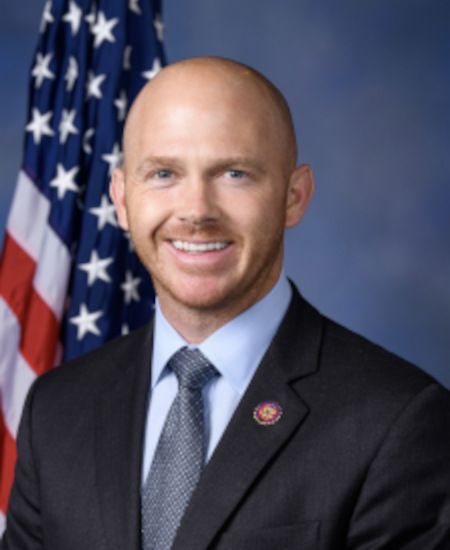
Rep. William R. Timmons IV
Sponsored bills
Maddy summaryHR 1295, the Reorganizing Government Act of 2025, amends federal law to streamline executive branch operations. It requires all executive departments (like the Departments of Defense or Education) to eliminate unnecessary programs, reduce federal employee numbers, and cut burdensome regulations that increase compliance costs. The bill updates deadlines for reorganization plans from 1984 to 2026 and explicitly mandates that all government operations must serve the public interest. These changes apply broadly across the federal government, focusing on efficiency and cost reduction.
Maddy summaryHR 7235, the "Protecting Motherhood Act," requires all federal agencies to stop using the term "birthing person" in official documents and instead use specific terms like "female," "mother," "pregnant woman," or "woman." It directly affects federal agencies that produce regulations, forms, or communications, mandating the use of these defined terms when referring to individuals based on biological sex. The bill provides detailed definitions for terms like "female" (based on biological sex at conception) and "pregnant woman" (an adult human female carrying a child). The law takes effect 30 days after enactment. This is a procedural change focused solely on terminology in government documents, with no direct impact on healthcare access or services.
Maddy summaryThis bill creates a tax credit for businesses selling products made with U.S.-grown cotton. The credit equals 24% of the cotton's market value if processed only in the U.S. or in countries with U.S. trade deals, or 18% for other processing locations. To qualify, cotton must be digitally traced from U.S. farms to finished products and certified by the USDA as meeting origin requirements. It directly affects clothing and textile manufacturers selling qualifying products in the U.S. market.
Maddy summaryThe AI OVERWATCH Act requires U.S. exporters to obtain a license for sending certain high-performance integrated circuits (defined by specific technical specifications like processing power or bandwidth) to countries designated as "concerns," including China, Russia, Iran, and North Korea. Before approving such licenses, the Commerce Department must submit detailed certifications to Congress, including assurances the export won’t support military/intelligence capabilities of the recipient country and won’t harm U.S. semiconductor availability or AI leadership. The bill also creates an exemption for U.S. companies meeting strict security and ownership standards ("trusted United States persons") to export these chips to non-target countries without a license. Additionally, it mandates a national security strategy assessing how such exports affect U.S. AI competitiveness, particularly regarding China’s semiconductor production and capabilities.
Maddy summaryHR 7156, the SCAM Act, would expand grounds for revoking U.S. citizenship (denaturalization) for naturalized citizens who commit specific offenses within 10 years of becoming citizens. It targets individuals convicted of defrauding federal, state, or local governments (e.g., $10,000+ in public benefit fraud), affiliating with foreign terrorist organizations, or committing aggravated felonies or espionage. If convicted in these categories, the government could automatically revoke citizenship retroactively (as if it never existed) based on evidence that the person lacked good moral character or loyalty to the U.S. at the time of naturalization. This bill directly affects naturalized citizens who commit these offenses within a decade of gaining citizenship, with revocation triggering immediate deportability.
Maddy summaryThis resolution (HRES 998) is a symbolic House of Representatives commendation honoring President Trump, U.S. military/intelligence agencies, and Justice Department personnel for the alleged success of "Operation Absolute Resolve" in apprehending Venezuelan leader Nicolás Maduro. It cites Maduro's charges (including narcoterrorism conspiracy) and the Maduro regime's alleged dismantling of Venezuelan democracy, state-sponsored drug trafficking, and human rights abuses. The resolution expresses support for Venezuela's democratic transition but contains no new policy, funding, or legal changes. As a procedural resolution, it does not directly affect any individuals or alter laws.
Maddy summaryHR 7025, the Evidence-Based Grantmaking Act, requires 15 federal agencies (including Education, Health and Human Services, and Housing and Urban Development) to use proven methods in awarding grants. It mandates that agencies clearly define grant goals in funding notices, prioritize applicants using evidence-based practices, and require grant recipients to implement such practices when delivering services. Agencies must also conduct regular evaluations of grant effectiveness, publicly share results, and use findings to improve future funding decisions. This law directly affects federal grant recipients and aims to ensure taxpayer funds achieve measurable outcomes through data-driven approaches.
Maddy summaryHR 3453, the Empower Charter School Educators to Lead Act, creates new federal grants to help educator-led teams plan and open charter schools. It provides up to $100,000 per team for pre-charter planning, targeting groups led by educators with at least 4.5 years of school-based experience (including after-school programs) and a demonstrated ability to lead. To qualify, teams must submit a community needs assessment and a plan showing how their proposed school will address those needs. The bill reserves 5% of relevant funding for these educator-led grants, adjusting existing ESEA grant formulas to prioritize this new support. This directly affects educators seeking to start charter schools and the communities where those schools would operate.
Maddy summaryHR 909, the Crime Victims Fund Stabilization Act of 2025, modifies how funds from the False Claims Act are deposited into the Crime Victims Fund. It specifies that from 2025 through 2029, certain False Claims Act proceeds (specifically those for qui tam plaintiff payments and government damage reimbursements) cannot be deposited into the fund. This change directly affects the composition of the Crime Victims Fund by excluding these specific revenue streams during the specified period. The bill does not create new benefits or alter victim services; it only adjusts fund allocation rules for existing False Claims Act revenues.