

Maddy summaryHR 7678, the Gun Owner Registration Information Protection Act, prohibits federal funding for state or local databases that track lawfully owned firearms or their owners. The bill allows federal funding for databases recording lost or stolen firearms but bans it for databases listing legal gun ownership. This means states cannot use federal money to create or maintain systems that compile information about legally owned guns. The bill directly affects state and local governments that rely on federal funds for firearm ownership databases.
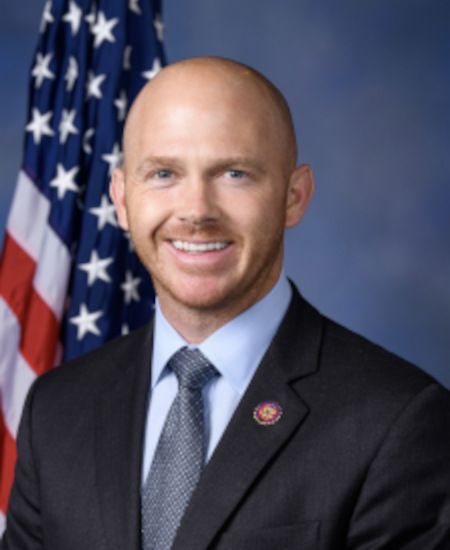
Rep. William R. Timmons IV
Sponsored bills
Maddy summaryThis bill amends a 1996 law to require federal financial regulatory agencies (like the Fed, FDIC, and OCC) to review regulations every 5 years instead of every 10 years. It adds a new requirement for agencies to conduct an internal review assessing how regulations impact consumers' access to financial products, business availability of services, credit access, and overall economic costs. Agencies must quantify regulatory costs and recommend eliminating outdated, duplicative, or unnecessarily burdensome rules. The bill directly affects federal financial regulators by mandating these comprehensive, regular assessments of regulatory impact. It aims to streamline the regulatory process through structured, evidence-based reviews.
Respect State Housing Laws Act This bill eliminates a provision that requires a 30-day notice period before a landlord may begin eviction proceedings against a tenant in federally assisted or federally backed housing.
Protection of Women in Olympic and Amateur Sports Act This bill requires certified national governing bodies (NGBs) of amateur sports (e.g., USA Gymnastics) to prohibit a person whose sex is male from participating in an amateur athletic competition that is designated for females, women, or girls. Under the bill, male means an individual who has, had, will have—or would have, but for a developmental or genetic anomaly or historical accident—the reproductive system that at some point produces, transports, and utilizes sperm for fertilization.
Maddy summaryThe SCAM Act requires online platforms that display paid advertisements (like social media sites) to verify advertiser identities, implement scam detection systems, and remove fraudulent ads within 24 hours of confirmation. It directly affects platforms that accept payment for ads, targeting scams such as fake giveaways, romance scams, and AI impersonations that cost consumers $195 billion in 2024 (per FTC data). Key mechanisms include mandatory identity checks for advertisers, active monitoring systems, and a 72-hour investigation window for reported scams. The law aims to reduce fraud by shifting responsibility to platforms, with enforcement by the FTC and state attorneys general.
Maddy summaryThis bill restructures the Federal Acquisition Security Council (FASC) to operate under the Executive Office of the President and establishes a Federal Acquisition Security Council Program Office within that office. It creates a process for the Council to issue "designated orders" that can exclude foreign entities posing national security risks from government contracts, with mechanisms for agencies to request temporary waivers under certain conditions. The Council must also report annually to Congress on security risks associated with covered sources of concern, directly affecting federal agencies and government contractors involved in procurement.
Maddy summaryThis bill modifies federal budget rules for unspent agency funds. It requires federal agencies to allocate 49% of unused funds to the next fiscal year, 49% toward paying the national debt, and 2% for retention bonuses (capped at 10% of an employee's base pay). Agencies must also limit future budget requests to the previous year's amount adjusted for inflation. The bill directly affects all executive branch agencies (excluding the Red Cross), altering how they manage leftover budget authority. It does not create new savings programs for individuals but changes government fiscal management procedures.
Maddy summaryThis bill prevents state or local governments from banning or restricting energy connections (like installation, modification, or access) based on the type or source of energy, such as electricity, natural gas, or renewable fuels. It directly affects consumers choosing energy providers and energy companies seeking to offer services. The key provision prohibits local laws, regulations, or policies that limit energy services sold in interstate commerce, covering all energy types listed in the bill’s definitions. It does not create new programs but limits regulatory authority at the state or local level. The law aims to ensure open access to diverse energy sources without source-based restrictions.
Maddy summaryThe No More SCAMS Act establishes a new Federal Fraud Interagency Task Force to investigate and combat fraud involving federal funds. It directly affects covered agencies like the Departments of Treasury, Defense, Health and Human Services, and others, requiring them to provide subject-matter expert members. The Task Force will coordinate fraud investigations across agencies, develop prevention best practices, and share data to recover misused funds. Annual reports to Congress and GAO audits will track investigations, funds recovered, and fraud trends across federal programs.
Maddy summaryThe Make Elections Great Again Act (HR 7300) would require voters to present photo identification to cast ballots in person or by mail for federal elections, with limited exceptions for religious objections or military voters. It would establish new requirements for proving U.S. citizenship during voter registration, including documentary proof of citizenship and proof of state residency. The bill would change mail-in ballot procedures by requiring voters to request mail-in ballots (rather than universal mail-in voting), implementing barcode tracking for mail-in ballots, and setting strict deadlines for ballot receipt. These provisions would apply to all states for federal elections held in 2027 or later, affecting how voters register, vote in person, and submit mail-in ballots for federal office elections.