

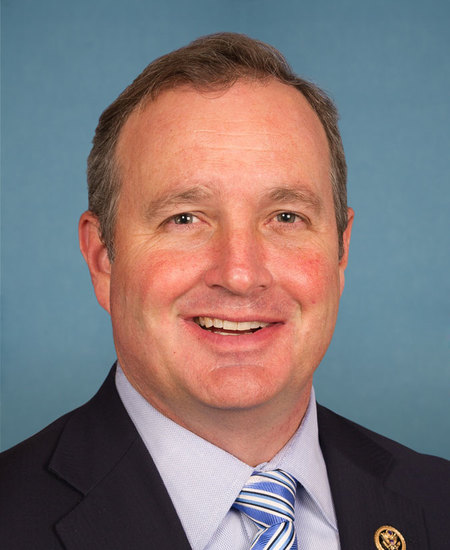
Photo of Jeff Duncan
R United States House · District 3 · South Carolina

Rep. Jeff Duncan

Compare
Total votes
2,168
all sessions
Attendance
98%
50 missed
Near the chamber average
With party
91%
of cast votes
Near the chamber average
Bipartisan score
5%
crosses aisle rarely
Higher than 75% of chamber peers
Sponsored
949
bills & resolutions
Near the chamber average
Committees
0
assignments
949 bills and resolutions

Sponsored bills

Total
949
Primary
55
Co-sponsor
894
This page
949
matching current filters
Co-sponsor HR 3328
In committee · United States House · Co-sponsor
Protecting Children From Experimentation Act of 2023

Maddy summaryHR 3328 (Protecting Children From Experimentation Act of 2023) prohibits healthcare professionals from performing or referring for gender transition procedures on minors under 18. The bill defines "gender transition procedures" to include puberty-blocking drugs, cross-sex hormones, and surgeries (like genital or non-genital procedures) aimed at altering physical characteristics to match a gender different from a minor’s biological sex. It excludes care for minors with medically verified disorders of sex development or conditions requiring urgent medical treatment. Violations could result in fines, up to 5 years in prison, or both for providers, while minors receiving such care cannot be prosecuted.

In committee May 15, 2023 1 co-sponsor
Co-sponsor HR 3308
In committee · United States House · Co-sponsor
Farm Operations Support Act

Maddy summaryThe Farm Operations Support Act maintains the minimum wage rate for H-2A agricultural workers at the level established in each state on December 1, 2022, through December 31, 2023. This directly affects agricultural employers who hire temporary foreign workers under the H-2A visa program and the workers themselves, by preventing the standard annual adjustment to the wage rate. The bill provides one-year stability in labor costs for employers without altering the underlying wage requirements.

In committee May 15, 2023 1 co-sponsor
Co-sponsor HR 2814
In committee · United States House · Co-sponsor
PRIME Act

Processing Revival and Intrastate Meat Exemption Act or the PRIME Act This bill exempts from federal inspection requirements animals and meats that are slaughtered and prepared at custom animal slaughter facilities for distribution within the state. Under current law, a custom slaughter exemption applies if the meat is slaughtered exclusively for personal, household, guest, or employee uses. Specifically, the bill expands the federal inspection exemption to include the slaughter of animals or the preparation of carcasses, meat, and meat food products that are slaughtered and prepared at a custom slaughter facility in accordance with the laws of the state where the facility is located; and prepared exclusively for distribution to household consumers in the state or restaurants, hotels, boarding houses, grocery stores, or other establishments in the state that either prepare meals served directly to consumers or offer meat and food products for sale directly to consumers in the state. The bill does not preempt any state law concerning (1) the slaughter of animals or the preparation of carcasses, meat, and meat food products at a custom slaughter facility; or (2) the sale of meat or meat food products.

In committee May 15, 2023 1 co-sponsor
Co-sponsor HR 3256
In committee · United States House · Co-sponsor
Preventing Executive Climate Overreach Act

Maddy summaryHR 3256, the Preventing Executive Climate Overreach Act, would eliminate the legal effect of Executive Order 14096. This order, issued by the President to advance environmental justice in federal programs, would no longer be enforceable. The bill's key provision directly states that the executive order "shall have no force or effect." As a result, the administration would be unable to implement environmental justice policies based on that order.

In committee May 12, 2023 1 co-sponsor
Co-sponsor HJRES 61
In committee · United States House · Co-sponsor
Providing for congressional disapproval under chapter 8 of title 5, United States Code, of the final rule of the Department of Labor relating to "Rescission of Implementing Legal Requirements Regarding the Equal Opportunity Clause's Religious Exemption Rule".

Maddy summaryHJRES 61 is a resolution seeking to block a Department of Labor rule published in March 2023. The rule would have removed legal requirements related to religious exemptions under the Equal Opportunity Clause in federal employment regulations. If passed, this resolution would prevent the rule from taking effect, maintaining the existing requirements for religious exemptions. It uses a specific congressional disapproval process under Title 5 of the U.S. Code to stop the rule without requiring presidential action.

In committee May 11, 2023 1 co-sponsor
Co-sponsor HR 3185
In committee · United States House · Co-sponsor
DCA Act of 2023

Direct Capital Access Act of 2023 or the DCA Act of 2023 This bill increases the number of daily round-trip flights allowed at Ronald Reagan Washington National Airport (DCA). Specifically, this bill adds 56 new slots at DCA to allow for 28 additional daily round-trip flights. (Airlines flying to and from DCA are subject to slot and perimeter rules set by federal law and regulation. The slot rules determine the total number of flight slots that can be handled in a given time period. In addition, a statutory perimeter rule limits nonstop flights to a 1,250-mile radius unless they are granted an exemption in law.) Current law limits DCA to a maximum of 67 hourly slots for flights both within- and beyond-perimeter; a round-trip flight serving DCA requires two slots (or a slot pair). Of those slots, 40 daily slots are exempt from the perimeter rule. Under the bill's slot increase, operations at DCA may not increase by more than eight flights per hour.

In committee May 11, 2023 1 co-sponsor
Co-sponsor HRES 339
In committee · United States House · Co-sponsor
Expressing the sense of the House of Representatives that an "all-of-the-above" energy strategy is the most viable approach to energy policy.

Maddy summaryHRES 339 is a non-binding House resolution expressing that an "all-of-the-above" energy strategy - including oil, gas, nuclear, coal, hydropower, and renewables - is the most viable approach to U.S. energy policy. It states this strategy would strengthen national security, lower consumer energy prices, and reduce reliance on foreign energy sources. The resolution highlights that domestic energy production supports infrastructure funding, job creation, and energy independence, while noting U.S. energy sources like Gulf of Mexico oil and nuclear power provide clean, reliable electricity. As a statement of congressional opinion, it does not create new laws or policy changes.

In committee May 5, 2023 1 co-sponsor
Co-sponsor HR 3115
In committee · United States House · Co-sponsor
Public Service Reform Act

Maddy summaryHR 3115, the Public Service Reform Act, changes employment rules for most federal career employees (non-political appointees) by establishing at-will employment, meaning they can be fired for any reason - including no reason - without needing cause. It abolishes the Merit Systems Protection Board (MSPB), replaces its role with agency-level procedures for removals (including a 14-day response window for employees), and limits appeals to the agency head or federal courts for specific claims like whistleblower retaliation. The bill also redirects certain appeals to the Equal Employment Opportunity Commission (EEOC) for discrimination cases and modifies whistleblower protections to allow direct court appeals for retaliation claims. These changes directly affect over 1 million career federal workers across executive agencies.

In committee May 5, 2023 1 co-sponsor
Co-sponsor HR 3111
In committee · United States House · Co-sponsor
Words Matter Act of 2023

Maddy summaryThe Words Matter Act of 2023 replaces the outdated term "mental retardation" with "intellectual disability" across numerous federal laws and regulations. It amends over 20 provisions in the U.S. Code, Social Security Act, and other statutes - including healthcare, disability programs, and legal definitions - to update terminology used in areas like nursing home care, criminal justice, and federal grants. The bill explicitly states this is a purely linguistic change, not a policy shift, and does not alter eligibility, benefits, or program requirements for individuals with intellectual disabilities. It affects all federal programs and legal references that previously used the terms "mental retardation," "mentally retarded," or "developmentally disabled."

In committee May 5, 2023 1 co-sponsor
Co-sponsor HR 3124
In committee · United States House · Co-sponsor
To amend the Internal Revenue Code of 1986 to remove private or commercial golf courses and country clubs from the list of uses for which certain proceeds cannot be used.

Maddy summaryHR 3124 removes a prohibition in the tax code that previously prevented certain tax-exempt bond proceeds from being used for private or commercial golf courses and country clubs. The bill amends Section 144 of the Internal Revenue Code by deleting the specific language barring these facilities from using such funds. This change directly affects private golf courses and country clubs by allowing them to access tax-exempt bond financing they were previously excluded from. The key mechanism is the straightforward deletion of the restriction from the tax code, with effective dates applying to new bond issuances and specific tax credit provisions after enactment.

In committee May 5, 2023 1 co-sponsor
Showing 301 to 310 of 949 bills
Previous 1 … 30 31 32 … 95 Next