

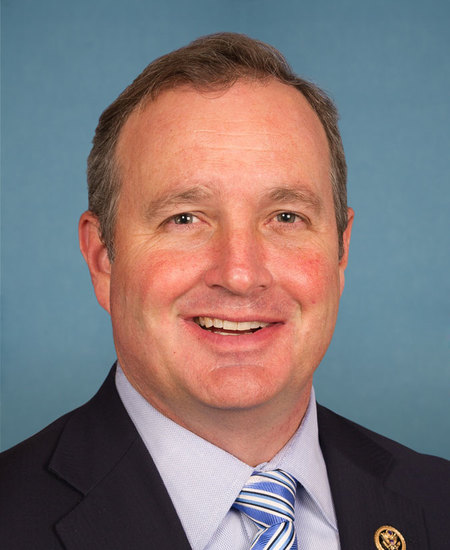
Photo of Jeff Duncan
R United States House · District 3 · South Carolina

Rep. Jeff Duncan

Compare
Total votes
2,168
all sessions
Attendance
98%
50 missed
Near the chamber average
With party
91%
of cast votes
Near the chamber average
Bipartisan score
5%
crosses aisle rarely
Higher than 75% of chamber peers
Sponsored
949
bills & resolutions
Near the chamber average
Committees
0
assignments
949 bills and resolutions

Sponsored bills

Total
949
Primary
55
Co-sponsor
894
This page
949
matching current filters
Co-sponsor HJRES 134
In committee · United States House · Co-sponsor
Providing for congressional disapproval under chapter 8 of title 5, United States Code, of the rule submitted by the Department of Labor relating to "Improving Protections for Workers in Temporary Agricultural Employment in the United States".

Maddy summaryHJRES 134 is a joint resolution seeking congressional disapproval of a Department of Labor rule titled "Improving Protections for Workers in Temporary Agricultural Employment." The bill targets the specific rule published in the Federal Register (89 Fed. Reg. 33898, April 29, 2024) that aimed to strengthen worker protections for temporary agricultural employees. If passed, this resolution would block the rule from taking effect, preventing the Department of Labor's new regulations from being implemented. The measure directly affects the rule's implementation, not the workers or employers it was designed to protect.

In committee May 1, 2024 1 co-sponsor
Co-sponsor HR 8211
In committee · United States House · Co-sponsor
FAUCI Act

Maddy summaryThe FAUCI Act (HR 8211) prohibits former top officials from the National Institutes of Health (NIH), Food and Drug Administration (FDA), or Centers for Disease Control and Prevention (CDC) from serving on boards of companies developing drugs, vaccines, or medical devices for eight years after leaving federal service. It also penalizes former officials who profit from drug or device approvals they previously helped determine, with fines up to $250,000 and potential prison time. The bill requires current and future top officials (GS-13 level or higher, or those involved in approvals) to disclose ownership of related patents within 90-180 days. These rules aim to prevent conflicts of interest between federal health regulators and the industries they oversee.

In committee May 1, 2024 1 co-sponsor
Co-sponsor HR 8208
In committee · United States House · Co-sponsor
Stop the BIS Rule Act

Maddy summaryHR 8208, the Stop the BIS Rule Act, blocks federal funding for the Bureau of Industry and Security (BIS) to finalize, implement, or enforce a proposed rule on firearms export controls. The rule, issued April 26, 2024 (89 Fed. Reg. 34680), aimed to enhance controls for firearms and related items. By prohibiting funds for this specific rule, the bill prevents the government from moving forward with the proposed regulations, which would have affected firearms exporters. The bill directly targets the BIS's ability to act on the rule, not the rule's content.

In committee May 1, 2024 1 co-sponsor
Co-sponsor HRES 1183
In committee · United States House · Co-sponsor
Commending the University of South Carolina Gamecocks women's basketball team for winning the 2024 National Collegiate Athletics Association Women's Basketball National Championship.

Maddy summaryThis resolution (HRES 1183) formally commends the University of South Carolina Gamecocks women’s basketball team for winning the 2024 NCAA Women’s Basketball National Championship. It recognizes their undefeated 38-0 season, record-breaking championship game TV ratings, and their second national title in three years. The resolution directs the House Clerk to send a copy to the university president, head coach Dawn Staley, and athletics director. As a ceremonial resolution, it has no policy impact or direct effect on legislation or funding.

In committee Apr 30, 2024 1 co-sponsor
Co-sponsor HR 8083
In committee · United States House · Co-sponsor
Defund NPR Act

Maddy summaryThe Defund NPR Act would prohibit all federal funding for National Public Radio (NPR) and any successor organization. This means public broadcast stations receiving federal funds could no longer use those funds to pay for NPR programming or dues. The bill would take effect upon enactment, eliminating federal financial support for NPR through any channel. It directly affects NPR and public broadcasters that rely on federal funds for programming partnerships.

In committee Apr 26, 2024 1 co-sponsor
Co-sponsor HR 8091
In committee · United States House · Co-sponsor
To prohibit Federal funding of National Public Radio and the use of Federal funds to acquire radio content.

Maddy summaryHR 8091 would prohibit federal funding for National Public Radio (NPR) and related activities, directly affecting NPR and public radio stations that rely on federal support for their operations. The bill bans federal funds for NPR's core activities, including producing, distributing, and acquiring radio programs for noncommercial educational stations, as defined in the bill. It explicitly excludes funding restrictions for the U.S. Agency for Global Media and the Defense Media Activity. This policy change would redirect existing federal funding streams away from NPR's program development and content acquisition, altering how public broadcasting receives federal support.

In committee Apr 26, 2024 1 co-sponsor
Co-sponsor HR 8066
In committee · United States House · Co-sponsor
Ammunition Supply Chain Act

Maddy summaryHR 8066, the Ammunition Supply Chain Act, requires the Secretary of the Army to submit a report to Congress within 180 days of enactment. The report must assess the U.S. supply chain for ammunition components like nitrocellulose and smokeless gunpowder, focusing on improving sourcing, avoiding single points of failure, managing global demand risks, and leveraging private sector capacity. This bill directly affects the Department of Defense and ammunition manufacturers by mandating a review of supply chain vulnerabilities. It is procedural in nature, establishing a reporting requirement without creating new regulations or funding.

In committee Apr 18, 2024 1 co-sponsor
Co-sponsor HR 8060
In committee · United States House · Co-sponsor
CALL Act

Maddy summaryHR 8060, the CALL Act, requires refugee resettlement agencies to notify specific elected officials before placing refugees in a community. It directly affects resettlement agencies and requires them to notify Senators from the state, the local House representative, and applicable state legislators prior to making a placement within a state. The key provision amends immigration law to mandate this pre-placement notification, replacing a previous requirement with a clearer, multi-tiered notification process. This change aims to ensure local elected officials are informed about refugee placements in their jurisdictions.

In committee Apr 18, 2024 1 co-sponsor
Co-sponsor HR 5947
Passed · United States House · Co-sponsor
To provide for the rescission of certain waivers and licenses relating to Iran, and for other purposes.

Maddy summaryHR 5947 terminates specific U.S. waivers and licenses related to Iran, ending a 2023 waiver that allowed funds transfer from South Korea to Qatar. It prohibits the Treasury Department from reissuing similar waivers or licenses for the same purpose and blocks the President from granting Iran access to certain designated financial accounts established under prior laws. The bill directly affects U.S. foreign policy implementation by restricting how Treasury handles Iran-related financial transactions. It enacts concrete policy changes by ending existing authorizations and preventing future approvals for Iran to access specific accounts.

Passed Apr 17, 2024 1 co-sponsor
Co-sponsor HR 3649
In committee · United States House · Co-sponsor
Veterans National Traumatic Brain Injury Treatment Act

Maddy summaryHR 3649 establishes a 5-year pilot program to provide hyperbaric oxygen therapy (HBOT) to veterans diagnosed with traumatic brain injury (TBI) or post-traumatic stress disorder (PTSD). The program, limited to three Veterans Health Administration networks, offers HBOT through VA-approved providers using FDA-approved or investigational medical devices. Funding comes solely from donations to a dedicated VA HBOT Fund, with no annual budget constraints. This bill directly affects eligible veterans seeking this specific treatment option, but does not guarantee long-term coverage beyond the pilot's five-year term.

In committee Apr 16, 2024 1 co-sponsor
Showing 131 to 140 of 949 bills
Previous 1 … 13 14 15 … 95 Next