

Maddy summaryHRES 1148 is a resolution passed by the U.S. House of Representatives that condemns the Iranian government for supporting terrorism, regional proxy conflicts, and internal suppression of dissent - including its crackdown on protests following Mahsa Amini's death in 2022. It specifically calls for maintaining sanctions against Iran, supporting the Iranian Resistance's Ten-Point Plan (which advocates for a democratic, secular, nonnuclear Iran), and protecting Iranian political refugees in Albania. The resolution also affirms the Iranian people's right to self-determination under international law and urges the U.S. to recognize their struggle for freedom. As a non-binding resolution, it does not create new laws but formally expresses congressional stance.
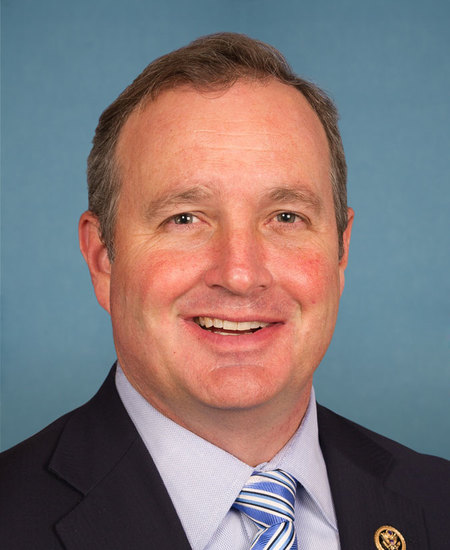
Rep. Jeff Duncan
Sponsored bills
Maddy summaryHR 8011, the Iranian Terror Prevention Act, requires the U.S. Secretary of State to designate 12 Iranian-affiliated military groups and any entity controlled by Iran's Revolutionary Guard Corps as Foreign Terrorist Organizations within 90 days. It mandates the President to decide within 60 days whether to impose sanctions under existing law (Executive Order 13224) on these groups, which would block their U.S. assets and restrict transactions. The bill also requires the Secretary of State to submit regular reports to Congress on new entities meeting designation criteria and the President to explain any decisions not to impose sanctions. This law directly affects the listed Iranian military groups and any new entities linked to Iran's Revolutionary Guard Corps.
Maddy summaryThe ROWATA Act requires federal agencies to notify applicants within 60 days whether a right-of-way application for federal lands is complete or needs additional information. This directly affects companies or individuals seeking to build infrastructure (like pipelines or roads) on public lands or National Forest System lands. The key provision mandates that the Secretary of the Interior (for public lands) or Secretary of Agriculture (for National Forests) must provide this notification within 60 days of receiving an application. The bill focuses on streamlining the application process with a clear timeline, without changing land use policies.
Maddy summaryHJRES 123 is a resolution seeking congressional disapproval of an Environmental Protection Agency (EPA) rule published on March 11, 2024, which would have required chemical facilities to implement new safety measures under the Clean Air Act to prevent accidental releases. The rule, titled "Accidental Release Prevention Requirements: Risk Management Programs Under the Clean Air Act; Safer Communities by Chemical Accident Prevention," aimed to strengthen existing risk management programs at chemical plants. If passed, this resolution would block the rule from taking effect by invoking a federal process for disapproving agency regulations. It directly affects the EPA's regulatory authority and the chemical industry's compliance obligations under the Clean Air Act.
Maddy summaryThis bill prohibits the use of federal funds to establish, implement, or enforce any requirement for wearing facial coverings to prevent COVID-19 spread. It directly affects federal agencies and any entities receiving federal funding that might enforce mask mandates. The key provision blocks all federal financial support for mask mandate enforcement, meaning no government money could be used to require or support such rules. This is a funding restriction, not a ban on mask mandates themselves, and applies only to federal resources.
Maddy summaryThis bill bans airlines from transporting non-citizens using three specific documents: the CBP One mobile app, DHS Form I-385 (Notice to Report), and DHS Form I-862 (Notice to Appear). It also prohibits the Department of Homeland Security from accepting these documents as valid ID for domestic air travel. The law directly affects airlines that might facilitate travel for individuals relying on these documents and travelers using them for flight boarding. Key provisions explicitly list the banned documents in federal law, removing them as acceptable identification for air travel under U.S. Code.
Maddy summaryThis bill would terminate 39 federal diversity, equity, and inclusion offices across multiple departments, including the State Department, Treasury, Health and Human Services, and Agriculture. It specifically prohibits cabinet-level agencies from developing or maintaining any diversity-related initiatives or plans. The law would take effect immediately upon enactment, eliminating these offices without requiring new funding or implementation steps. This is a structural change to federal agency operations, directly affecting how government departments manage workforce diversity programs.
Maddy summaryHR 7959, the SHIELD Act, adds trespass convictions to grounds for denying immigration entry or ordering deportation. It directly affects immigrants convicted of trespass under any state, local, tribal, or federal law, regardless of whether the trespass is classified as a misdemeanor or felony. The bill amends existing immigration law to make anyone convicted of trespass (or who admits to acts constituting trespass) inadmissible upon entry or deportable after entry. These provisions apply based on the jurisdiction where the trespass occurred, without considering the offense's classification under local law.
Maddy summaryHR 7873, the Firearm Due Process Protection Act, directly affects individuals denied firearm purchases through the National Instant Criminal Background Check System (NICS). The bill requires courts to hold hearings on challenges to NICS denials within 30 days and shifts the burden to the government to prove eligibility by "clear and convincing evidence." It also mandates annual FBI reports to Congress detailing the number of challenges processed, reversals of denials, and processing times. These provisions aim to expedite due process for people seeking to correct inaccurate NICS records affecting their firearm rights.
Maddy summaryHR 661, "Sarah’s Law," requires U.S. immigration authorities to detain certain immigrants charged with crimes causing death or serious injury. It applies to immigrants who entered without proper inspection, held revoked temporary visas, or fall under specific deportation categories, and who face charges for violent crimes. The bill mandates that immigration officials notify victims or their families (like parents or spouses) about the immigrant’s identity, immigration status, custody details, and removal efforts. This law does not change existing victim rights but adds specific notification requirements for these cases.