Make Energy Affordable Act This bill requires the President to report on the rising energy prices. In addition, the President must provide updates on residential energy price trends, impacts of energy prices on low-income households, and actions by federal agencies to mitigate energy price increases.
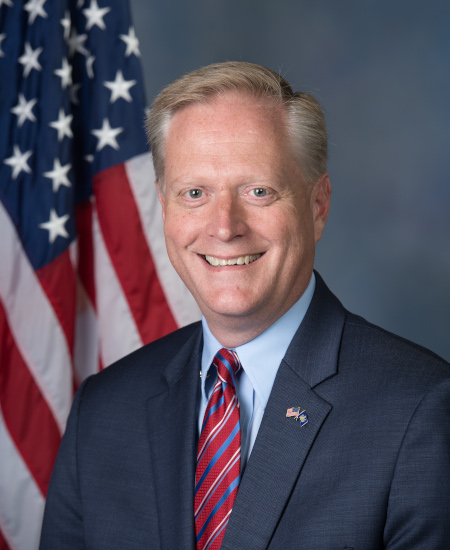
Rep. Fred Keller
Sponsored bills
This concurrent resolution expresses the sense of Congress that tax-exempt fraternal benefit societies provide critical benefits to the people and communities of the United States and their work should continue to be promoted.
This bill posthumously provides for the award of a Congressional Gold Medal in commemoration of the 13 service members who died on August 26, 2021, while stationed at Hamid Karzai International Airport in Afghanistan.
Maddy summaryHRES 855 is a symbolic resolution passed by the U.S. House of Representatives to support designating the first week of December 2022 as "National United States Miners Week." It does not create new laws or policies but formally recognizes miners' contributions to the economy and supply chains. The resolution highlights miners' role in providing critical minerals and coal, supporting over 500,000 jobs, and securing domestic resources for everyday products. It directly affects miners and their communities by offering a formal, non-binding acknowledgment of their work. This is a procedural resolution with no concrete policy changes or funding implications.
Food Donation Improvement Act of 2021 This bill expands liability protections for the donation of food and grocery products. Specifically, the bill expands the liability protections to include donations of an apparently fit grocery product or apparently wholesome food for which the recipient is charged a good Samaritan reduced price that is no greater than the cost of handling, administering, and distributing the food or product; or that is donated directly to a needy individual by a retail grocer, wholesaler, agricultural producer, restaurant, caterer, school food authority, or institution of higher education. The Department of Agriculture must issue regulations that clarify the quality and labeling standards that food products donated under the Bill Emerson Good Samaritan Food Donation Act must meet to be eligible for liability protection.
Chronic Wasting Disease Research and Management Act This bill directs the Department of Agriculture (USDA) to address chronic wasting disease afflicting deer, elk, and moose populations. Specifically, the bill directs USDA to establish a program to research and manage the disease. Under the program, USDA must offer to enter into agreements with state or tribal wildlife agencies and departments of agriculture, institutions of higher education, and research centers to support research on the transmission of, resistance to, and diagnosis of the disease. In addition, USDA must offer to enter into agreements with such agencies and departments to support state and tribal efforts to develop and implement management strategies that address the disease. USDA must also develop and maintain materials to inform the public on chronic wasting disease and techniques to help prevent the spread of the disease. In addition, USDA must solicit public feedback on potential updates and improvements to standards of the chronic wasting disease herd certification program.

Ocean Shipping Reform Act of 2021 This bill revises provisions related to ocean shipping policies and is designed to support the growth and development of U.S. exports and promote reciprocal trade in the common carriage of goods by water in the foreign commerce of the United States. Among other provisions, the bill sets forth requirements for operating a shipping exchange involving ocean transportation in the foreign commerce of the United States; requires ocean common carriers to report to the Federal Maritime Commission (FMC) each calendar quarter on total import and export tonnage and the total loaded and empty 20-foot equivalent units per vessel that makes port in the United States; requires the FMC to publish and annually update all its findings of false certifications by ocean common carriers or marine terminal operators and all penalties assessed against such carriers or operators; revises annual reporting requirements for the FMC on foreign laws and practices to include practices by ocean common carriers; prohibits ocean common carriers and marine terminal operators from retaliating or discriminating against shippers because such shippers have patronized another carrier, or filed a complaint; directs the FMC to establish rules prohibiting ocean common carriers and marine terminal operators from adopting and applying unjust and unreasonable demurrage and detention fees; authorizes the FMC to initiate investigations of an ocean common carrier's fees or charges and apply enforcement measures, as appropriate; directs the Department of Transportation to seek to enter into an agreement with the National Academy of Sciences to study the U.S. supply chain industry, including data constraints that impede the flow of maritime cargo and add to supply chain inefficiencies; and provides authority for the FMC to issue an emergency order requiring ocean common carriers or marine terminal operators to share directly with relevant shippers, rail carriers, or motor carriers information relating to cargo throughput and availability.
Employee Retention Tax Credit Reinstatement Act This bill provides for a reinstatement of the employee retention tax credit through 2021. The credit was established to compensate employers whose businesses were negatively impacted by the COVID-19 pandemic for wages paid to their employees.
This resolution supports the annual recognition of Interscholastic Athletic Administrators' Day. In addition, the resolution commends (1) athletic administrators for their commitment to secondary school student athletes, and (2) the National Interscholastic Athletic Administrators Association for providing continuous learning and preparation to athletic administrators.
Eliminating Global Market Distortions to Protect American Jobs Act of 2021 This bill addresses unfair trade practices by making various changes to U.S. antidumping and countervailing duty law. Antidumping provides relief to U.S industries and workers that are materially injured or threatened with injury due to imports of like products sold in the U.S. market at less than fair value, while countervailing duty provides such relief from imports of products subsidized by a foreign government or public entity. Specifically, the bill establishes a process for successive antidumping and countervailing duty investigations. Successive investigations may be concurrent (an ongoing investigation of the same product from different countries) or recently completed (not more than two years before the date of the initiation of the successive investigation). Further, the bill establishes a time line for the Department of Commerce to issue determinations in successive investigations. Among other provisions, the bill authorizes Commerce to apply countervailing duty law to subsidies provided by a foreign government or public entity to a company operating in a different country, use another method for calculating the cost of production in specific circumstances, and require importers to provide a certification that the imported merchandise is not subject to an antidumping or countervailing duty order. Additionally, the bill establishes procedures for Commerce to conduct circumvention inquiries, including by specifying the deadlines for preliminary and final determinations. The bill repeals the Softwood Lumber Act of 2008, which addresses the importation of softwood lumber and softwood lumber products.