

Halting the Use of Narcotics Through Effective Recovery Act of 2022 or the HUNTER Act of 2022 This bill prohibits the use of federal funds to purchase (or support the purchase of) pipes, syringes, or other paraphernalia that can be used to smoke, inject, or otherwise introduce into the body any controlled substance unlawfully. This includes funds made available through the American Rescue Plan Act of 2021 for overdose prevention, syringe services, and other harm reduction programs.
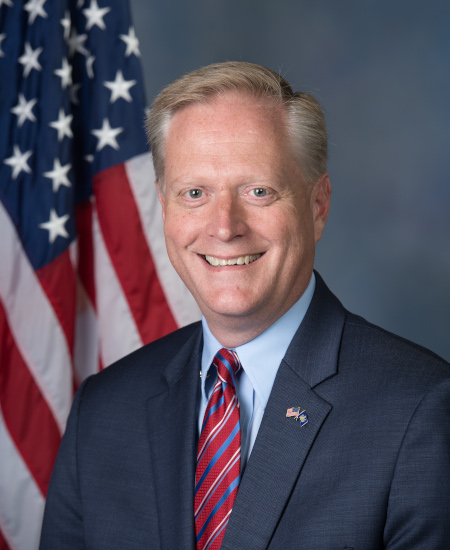
Rep. Fred Keller
Sponsored bills
This bill requires the Food and Drug Administration (FDA) to report to Congress on barriers to the domestic manufacturing of imported active pharmaceutical ingredients, finished drug products, and devices that are critical to public health. The report must recommend strategies to overcome such barriers. The FDA may, to the extent appropriate, implement the strategies.
Return to Work Act This bill requires the head of each executive agency to reinstate the telework policies in use by that agency on December 31, 2019.
Denying Regulatory Interference with Landowners and Legislatures Now Act or the DRILL Now Act This bill bars the Susquehanna River Basin Commission, the Delaware River Basin Commission, and the Interstate Commission on the Potomac River Basin from finalizing, implementing, or enforcing any regulation relating to hydraulic fracturing unless it is issued by the state in which the regulation is to be implemented or enforced.
DMEPOS Relief Act of 2022 or the DRA of 2022 This bill increases payment adjustments for certain items that were included in Round 2021 of the Medicare Durable Medical Equipment, Prosthetics, Orthotics, and Supplies (DMEPOS) Competitive Bidding Program but for which contracts were not executed. The bill applies to items that are furnished between January 1, 2022, and December 31, 2023, and that were not subject to the unadjusted fee schedule amount as of January 1, 2021. Under the DMEPOS Competitive Bidding Program, the Centers for Medicare & Medicaid Services (CMS) sets payment for certain durable medical equipment under Medicare based on a competitive bidding process with suppliers, rather than the fee schedule amount. The CMS included 16 product categories in Round 2021 of the program but ultimately did not award contracts for 13 of these categories (that were also in previous rounds) as the resulting payment amounts did not achieve expected savings.
GAO Audit Mandates Revision Act of 2022 This bill eliminates or modifies certain mandates of the Government Accountability Office (GAO). The bill's changes include repealing a requirement for periodic GAO audits of the loan and guarantee transactions of the Export-Import Bank, and repealing a requirement for the GAO to conduct financial audits at least annually of the Patient-Centered Outcomes Research Institute.
Stop Arduous Vaccine Enforcement Act of 2022 or the SAVE Act of 2022 This bill prohibits transplant centers from discriminating against an individual on the basis of COVID-19 vaccination status for purposes of determining eligibility or assigning priority for organ transplants.
Federal Information Security Modernization Act of 2022 This bill addresses federal information security management, notification and remediation of cybersecurity incidents, and the roles of the Office of Management and Budget (OMB) and the Cybersecurity and Infrastructure Security Agency (CISA). CISA must perform, on an ongoing and continuous basis, assessments of federal risk posture. The bill requires evaluation by each agency of whether additional cybersecurity procedures are appropriate at least once every three years. An agency, as expeditiously as practicable and without unreasonable delay, and within 45 days after it has a reasonable basis to conclude that a breach has occurred, must (1) determine whether notice to any individual potentially affected by the breach is appropriate based on a risk assessment; and (2) as appropriate, provide written notice to each individual potentially affected. Notification may be delayed under specified circumstances. Each agency must provide any information relating to a major incident to CISA, the OMB, the Office of the National Cyber Director, the agency's office of inspector general, the Government Accountability Office, and Congress. An agency's contractors and grant recipients must notify the agency of an incident involving federal information within a specified time frame. Each agency shall develop training for individuals at the agency with access to federal information or information systems on how to identify and respond to an incident. CISA must establish a program to provide ongoing, hypothesis-driven threat-hunting services on the network of each agency. The bill establishes specified pilot programs to enhance federal cybersecurity.
Sets forth the rule for consideration of the joint resolution (H.J. Res 65), Providing for congressional disapproval under chapter 8 of title 5, United States Code, of the rule submitted by the Department of Labor relating to "COVID-19 Vaccination and Testing; Emergency Temporary Standard".
Accelerating Access to Critical Therapies for ALS Act This bill establishes grant programs to address neurodegenerative diseases, such as amyotrophic lateral sclerosis (also known as ALS or Lou Gehrig's disease), and contains other related provisions. The Department of Health and Human Services (HHS) shall award grants to eligible entities for scientific research utilizing data from expanded access to investigational ALS treatments for individuals who are not otherwise eligible for clinical trials. The Food and Drug Administration (FDA) shall award grants to public and private entities to cover the costs of research and development of drugs that diagnose or treat ALS and other rare neurodegenerative diseases. HHS shall also establish the Public-Private Partnership for Neurodegenerative Diseases between the National Institutes of Health, the FDA, and at least one eligible entity (generally, an institution of higher education or a nonprofit organization). The partnership shall support the development and regulatory review of drugs that address ALS and other rare neurodegenerative diseases. The FDA shall publish on its website a five-year action plan for fostering the development of drugs that improve or extend the lives of people living with rare neurodegenerative diseases. The Government Accountability Office must report to Congress about the grants provided under this bill, including an analysis of the impact of such grants on research and development of treatments for ALS.