Restoring Benefits to Defrauded Veterans Act This bill requires the Department of Veterans Affairs (VA) to pay certain reissued benefits (i.e., benefits that were misused by a fiduciary) to a beneficiary's estate in situations where a beneficiary predeceases a payment. The VA must pay such benefits to an individual or entity in the following order: the estate of the beneficiary, a successor fiduciary serving the beneficiary when the beneficiary died, or the next inheritor determined by a court of competent jurisdiction.
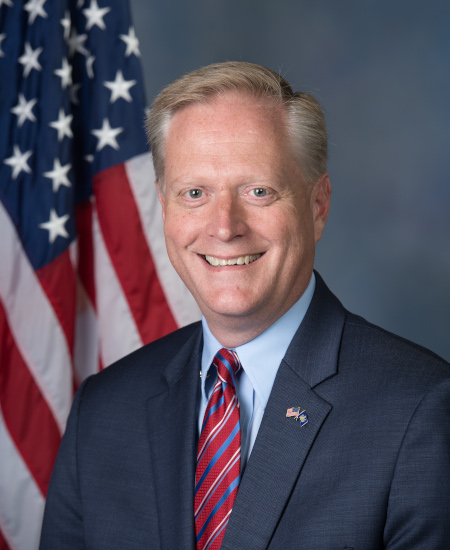
Rep. Fred Keller
Sponsored bills
Conscience Protection Act of 2021 This bill provides statutory authority for certain protections for health care providers that refuse to participate in abortions based on religious beliefs or other convictions. Health care providers include individual professionals, medical facilities, health insurance organizations, and social services providers that refer clients to health care services. The federal government and entities that receive federal funding for health-related activities, including state and local governments, may not discriminate against a health care provider that refuses to be involved in, or provide coverage for, abortions. Currently, similar requirements apply to various related activities, including certain employment or personnel decisions (the Church Amendments), abortion services training (the Coats-Snowe Amendment), qualified health plans offered through health insurance exchanges, and annual appropriations bills for the Department of Health and Human Services (HHS) and other federal agencies (the Weldon Amendment). The HHS Office for Civil Rights must investigate complaints of this kind of discrimination. Furthermore, HHS may terminate or reduce HHS funding for health-related activities if a person or entity fails to comply with nondiscrimination requirements. Additionally, the Department of Justice or any entity adversely affected by such discrimination may bring a civil action to obtain appropriate relief. A plaintiff does not need to seek or exhaust administrative remedies before bringing the action. A plaintiff may also bring an action, including one for money damages, against a governmental entity. In many cases, principles of sovereign immunity shield states and some localities from these kinds of actions.

Maddy summaryHRES 815 is a symbolic resolution introduced in the U.S. House of Representatives on November 18, 2021. It expresses congressional support for National Rural Health Day, which recognizes the importance of rural health care and celebrates providers serving rural communities. The resolution highlights challenges like hospital closures and access barriers faced by rural health facilities but does not create new laws or funding. It simply affirms commitment to improving rural health care accessibility through policy, without specifying concrete changes. As a procedural resolution, it has no binding effect on legislation or funding.
Parents Bill of Rights Act This bill outlines various rights of parents and guardians regarding the elementary or secondary school education of their children. Among other requirements, the bill (1) directs local educational agencies to publicly post the curriculum for each elementary and secondary school grade level; and (2) requires schools to notify parents and guardians of their rights, including the right to review the school's curriculum and budget.
This resolution modifies requirements for written statements required of nongovernmental witnesses who appear before standing committees of the House of Representatives. Specifically, the resolution eliminates a requirement that a witness disclose whether they are a fiduciary of an organization or entity that has an interest in the subject matter of the hearing, in favor of a requirement that they disclose whether they are a fiduciary of an entity that has received payments from a specified foreign entity. The resolution also requires nongovernmental witnesses to disclose in their written statement certain contracts with specified foreign persons or entities. If the committee determines that a witness knowingly and willfully failed to truthfully comply with such disclosure requirements, the witness is prohibited from testifying before the committee for three years.
Fairness for Federal Contractors Act of 2021 This bill prohibits executive agencies from requiring contractors to receive a COVID-19 vaccination. The bill also requires the Government Accountability Office to study the degree to which Executive Order 14042 (Ensuring Adequate COVID Safety Protocols for Federal Contractors) caused disruptions to federal contracts, supply chains, and transportation systems.
This joint resolution nullifies a Department of Labor emergency temporary standard for preventing the transmission of COVID-19 in employment settings. Under the standard issued on November 5, 2021, employers with 100 or more employees must require their onsite employees to either be fully vaccinated against COVID-19 or undergo weekly COVID-19 testing.
Restoring Brand USA Act This bill requires the Department of the Treasury to make $250 million available (out of unobligated balances remaining from certain fees collected by Treasury) for the Corporation for Travel Promotion, also known as Brand USA.
Maddy summaryThis bill removes a temporary expiration date for telehealth coverage in health insurance plans. It amends two sections of the Internal Revenue Code to permanently allow health plans to cover telehealth services without the prior deadline of December 31, 2021. The key change makes existing telehealth coverage rules permanent for health insurance plans under federal tax law. This directly affects health insurance plans that provide telehealth benefits, ensuring they can continue covering these services without needing to renew temporary provisions. The bill does not change what telehealth services are covered, only makes the coverage rules permanent.
Eliminating Barriers to Rural Internet Development Grant Eligibility Act or the E-BRIDGE Act This bill authorizes the Department of Commerce to award economic development grants for public-private partnerships and certain consortiums to carry out specified broadband projects. Such projects shall be to provide, extend, expand, or improve high-speed broadband service through (1) planning, technical assistance, or training; (2) land acquisition or development; or (3) acquisition, construction, or improvement of facilities. When reviewing grant applications, Commerce must take into account the geographic diversity of grant allocation, including consideration of underserved markets. Title to real or personal property acquired or improved with grant funds, or another acceptable possessory interest, must be vested in a public partner or eligible nonprofit organization or association for the useful life of the project. In addition, Commerce may provide credit toward the nonfederal share of a broadband project's cost.