

This concurrent resolution declares that Congress should not impose any new performance fee, tax, royalty, or other charge relating to the public performance of sound recordings on a local radio station for broadcasting sound recordings over the air, or on any business for such public performance of sound recordings.
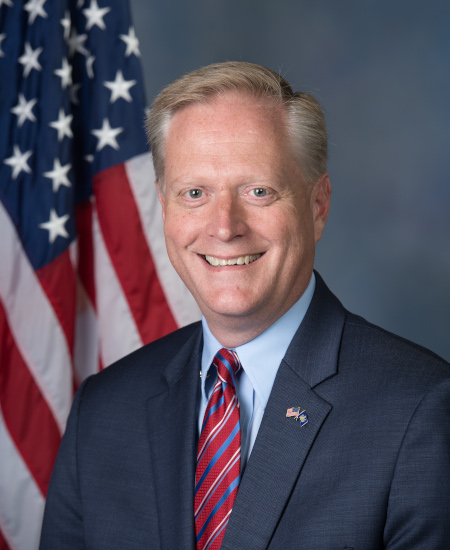
Rep. Fred Keller
Sponsored bills
This resolution expresses the sense of the House of Representatives that (1) U.S. policy should be to strengthen the Second Amendment rights of Americans, and (2) Congress should never stop fighting to protect the Second Amendment.
Federal Initiative to Guarantee Health by Targeting Fentanyl Act This bill places fentanyl-related substances as a class into schedule I of the Controlled Substances Act. A schedule I controlled substance is a drug, substance, or chemical that has a high potential for abuse; has no currently accepted medical value; and is subject to regulatory controls and administrative, civil, and criminal penalties under the Controlled Substances Act. Additionally, the bill prohibits the application of a mandatory minimum prison term for certain drug offenses involving fentanyl-related substances.
Temporary Family Visitation Act This bill establishes a new nonimmigrant visa classification for an alien temporarily entering the United States to visit a relative who is a U.S. citizen or lawful permanent resident. The maximum period of stay for a family visitor visa shall be 90 days. An alien seeking such a visa must have health insurance for the duration of the stay. An alien who holds such a visa may not change to another nonimmigrant visa classification except in certain limited instances. If an alien has been approved for a family-based immigrant visa and is waiting for one to become available, the alien may obtain a family visitor visa if the alien meets the eligibility requirements.
Eric's Law This bill modifies procedures with respect to capital sentencing hearings. If a jury at a capital sentencing hearing does not reach a unanimous recommendation on the defendant's sentence and there is a motion by the attorney for the government, the court must order a new special sentencing hearing and impanel a new jury. If the new jury at the special sentencing hearing does not reach a unanimous recommendation on the defendant's sentence, then the court is prohibited from imposing a death sentence.
Protect and Serve Act of 2021 This bill establishes a new criminal offense for knowingly assaulting a law enforcement officer and causing serious bodily injury (or attempting to do so) in circumstances that affect interstate commerce. It imposes criminal penalties—a prison term, a fine, or both—on a violator.
Rural Health Fairness in Competition Act This bill requires the Centers for Medicare & Medicaid Services (CMS) to establish a Medicare Rural Health Clinic Value-Based Care Program that exempts certain rural health clinics (e.g., those participating in Medicare quality programs) from payment limitations if they meet reporting requirements relating to quality measures and performance standards, as set by the CMS.
Fiscal State of the Nation Resolution This concurrent resolution requires the congressional budget committees to conduct an annual joint hearing to receive a presentation from the Comptroller General regarding (1) the Government Accountability Office's audit of the financial statement of the executive branch, and (2) the financial position and condition of the federal government.
Maddy summaryHRES 754 is a non-binding resolution expressing the House of Representatives' opposition to proposed "punitive natural gas taxes" on U.S. businesses, families, and workers. It cites claims that such taxes would raise average energy bills by 17%, reduce GDP by $9 billion, and eliminate 90,000 jobs, while disproportionately harming low-income households. The resolution argues that opposing these taxes supports U.S. energy security, national security, and continued leadership in reducing emissions through domestic natural gas production. As a procedural resolution, it does not create law but formally states the House's position against this policy approach.
Connecting Higher Opportunities In College Education Act or the CHOICE Act This bill makes certain job training programs eligible for federal student aid. To be eligible, a program must (1) provide at least 150 clock hours, 4 semester hours, or 6 quarter hours of instructional time over a minimum of 8 weeks; (2) have verified completion and placement rates meeting a minimum standard; and (3) provide training aligned with high-skill, high-wage, or in-demand industry sectors or occupations in the state or local area in which the program is provided.