

Maddy summaryHR 3841, the Healthcare Cybersecurity Act of 2025, requires the Cybersecurity and Infrastructure Security Agency (CISA) and the Department of Health and Human Services (HHS) to coordinate on improving cybersecurity for healthcare facilities. It mandates appointing a CISA-HHS liaison, updating a sector-specific risk management plan within one year (including analysis of impacts on rural and small facilities), and creating a biannually updated list of high-risk healthcare assets to prioritize support. The bill also directs CISA to provide training for healthcare providers on cybersecurity risks and mitigation. These provisions directly affect hospitals, clinics, and other healthcare entities handling patient data, aiming to reduce breaches and improve resilience against cyberattacks.
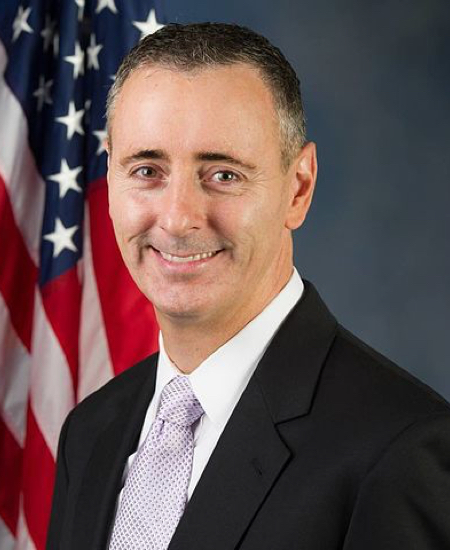
Rep. Brian K. Fitzpatrick
Sponsored bills
Maddy summaryThis bill requires all new Amtrak trains (purchased after enactment) to install baby changing tables in at least one restroom per train car, including in ADA-compliant restrooms. It mandates clear signage identifying these tables and defines a baby changing table as an elevated structure supporting children up to 30 pounds. The law directly affects parents traveling with infants on Amtrak, making diaper changes more accessible during train journeys. The requirement applies only to Amtrak-owned trains acquired after the bill becomes law.
Maddy summaryHRES 481 is a symbolic resolution condemning recent antisemitic attacks in the U.S., specifically referencing the June 1, 2025, Boulder, Colorado, assault on a Jewish community gathering and other incidents like the May 2025 Washington, D.C., embassy shooting. It formally recognizes a pattern of violence targeting Jewish individuals and institutions, including attacks during religious events. The resolution calls on law enforcement to thoroughly investigate and prosecute such incidents and urges elected officials to publicly oppose antisemitism and politically motivated violence. As a non-binding resolution, it does not create new laws or allocate funding but serves to affirm congressional stance against antisemitism.
Maddy summaryThis bill establishes a grant program allowing state, local, tribal, and territorial law enforcement agencies to hire retired officers for non-enforcement tasks like crime scene analysis, forensics, financial investigations, and IT support - excluding arrest or force authority. Agencies must verify retired officers have appropriate training or will complete continuing education and conduct background checks for disciplinary records using the National Decertification Index. The program requires annual Department of Justice audits to prevent fund misuse, with agencies having unresolved audit findings barred from receiving grants for two years. Priority for funding is given to agencies without unresolved audit findings over the past three years, and the Attorney General must report annual audit results to Congress.
Maddy summaryHRES 482 is a symbolic resolution recognizing June 8 as World Oceans Day and emphasizing the need to protect ocean resources. It highlights threats like plastic pollution, ocean acidification, and climate impacts without creating new laws or direct obligations. The resolution commits the House to increasing federal funding for ocean science research to support U.S. efforts under the UN Decade of Ocean Science for Sustainable Development. It does not directly affect individuals or entities but serves as a policy statement urging greater scientific investment in ocean health.
Maddy summaryThis bill requires drug labels to clearly state if a medication contains major food allergens (like peanuts, dairy, or shellfish) or gluten from grains (such as wheat, barley, or rye). It applies to human drugs sold in the U.S. and mandates manufacturers to identify these specific ingredients on labels. The requirement takes effect within two years of the bill's passage, giving companies time to update packaging. This directly affects drug manufacturers and helps people with allergies make safer choices by providing clear ingredient information.
Maddy summaryThis bill expands Medicare coverage for diabetes self-management training. It requires Medicare to cover 10 initial hours of training plus 2 additional hours annually for beneficiaries with diabetes, eliminating cost-sharing (like copays) for these services. The policy directly affects Medicare beneficiaries with diabetes by making essential education and training fully covered. The changes apply to services provided on or after January 1, 2027.
Maddy summaryThis bill expands Medicare coverage for mental health services provided by clinical social workers to seniors in skilled nursing facilities. It removes an exclusion that previously prevented these services from being covered under Medicare's skilled nursing facility payment system. The bill specifically adds defined mental health service codes (including those for assessment and treatment) to Medicare's coverage, ensuring seniors can access these services without additional barriers. These changes will take effect for services provided on or after January 1, 2026.
Maddy summaryThe VET PFAS Act (HR 3639) provides VA health care coverage for veterans and their family members exposed to PFAS chemicals at military bases, without requiring proof linking illness to exposure. Veterans who served at contaminated bases and family members who resided there (or were in utero while the veteran lived there) can now receive treatment for specific conditions like testicular cancer, kidney cancer, thyroid disease, and pregnancy-related hypertension. The law creates a presumption that these conditions are service-connected, streamlining access to VA benefits. Annual reports will track program usage, including the number of veterans and families receiving care and the conditions treated.
Maddy summaryHR 3560, the Veteran Wildland Firefighter Employment Act of 2025, creates a two-year pilot program to employ veterans in existing wildland firefighting roles within the U.S. Departments of Agriculture and the Interior. The program, administered by the Department of Veterans Affairs in coordination with Agriculture and Interior, will fill vacant positions for veterans transitioning from military service, focusing on roles like firefighting, forestry, and fire management. It requires quarterly reports tracking veteran applications, hires, and transitions to permanent federal positions, while incorporating best practices from existing VA training programs to identify cost-saving methods. The pilot aims to reduce veteran unemployment by connecting military skills to federal firefighting needs without creating new positions.