

Maddy summaryHR 3359, the Veterans’ Security and Pay Transparency Act, requires the Department of Veterans Affairs (VA) to publish an annual report on compensation for its police officers. The report must detail salaries, availability pay, recruitment bonuses, and other pay for specific VA police roles (like Chief of Police, Police Officer, and Dispatcher) broken down by VA facility. This law, effective six months after enactment, aims to increase transparency around how VA police officers are paid.
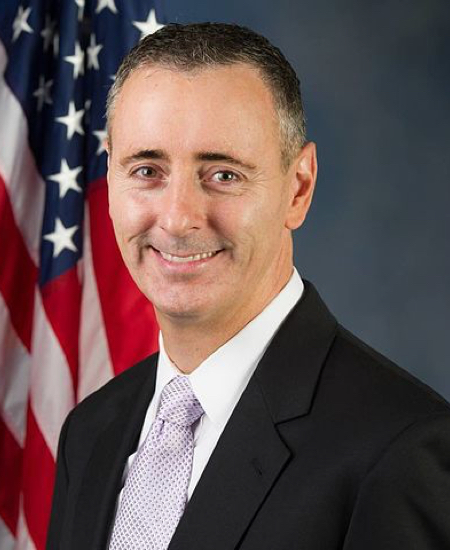
Rep. Brian K. Fitzpatrick
Sponsored bills
Maddy summaryThis bill establishes U.S. policy that sea level rise driven by climate change should not cause Pacific island nations to lose UN membership or their maritime rights under international law. It requires the State Department to submit a report within 120 days detailing U.S. diplomatic efforts to encourage other countries and international organizations to preserve maritime boundaries affected by rising seas. The report must assess cooperation with nations like the Pacific Islands Forum, identify barriers to policy adoption, and list countries supporting this approach. The bill directly supports small island nations' economic security by aiming to protect their existing ocean resource rights under the U.N. Convention on the Law of the Sea.
Maddy summaryHR 3793, the Minority Entrepreneurship Grant Program Act of 2025, establishes a Small Business Administration grant program to support minority student entrepreneurs at eligible institutions. It provides minimum $250,000 grants to minority-serving institutions (MSIs) and historically Black colleges or universities (HBCUs) to create or expand business development programs. These programs offer free legal, accounting, marketing, and capital resources to minority student entrepreneurs seeking to start or grow businesses. The bill requires annual reporting on program participation, businesses created, and grant usage, with a $50 million authorization for implementation.
Maddy summaryHR 3761 directs the Secretary of Defense to appoint a Coordinator for Engagement with Defense Communities Affected by PFAS within one year of enactment. This Coordinator will directly serve current and former military communities in the U.S. contaminated by PFAS chemicals (like those used in firefighting foam), along with local governments and advocacy groups. The bill mandates the Coordinator to improve the Department’s outreach, education, and communication about PFAS contamination and remediation, and to act as a dedicated liaison between the Department and affected communities. It does not create new funding or regulations but establishes a formal role to enhance coordination on ongoing cleanup efforts.
Maddy summaryHR 3783, the Plant Biostimulant Act of 2025, defines "plant biostimulant" as substances or microorganisms that improve plant growth, nutrient use, and stress tolerance without relying on nutrient content. It amends the Federal Insecticide, Fungicide, and Rodenticide Act to create this new category, excluding products primarily intended as nutrients or plant regulators. The bill requires the EPA to update regulations within 120 days and directs the Secretary of Agriculture to conduct a two-year study on how biostimulants improve soil health, reduce runoff, and support climate benefits like carbon sequestration. This directly affects farmers using biostimulants, manufacturers of these products, and federal agencies regulating agricultural inputs.
Maddy summaryHR 3773 (PROTECT Act of 2025) amends federal law to recognize tribal courts as having authority equivalent to state courts for certain electronic evidence cases. It requires that warrants for electronic communications stored 180 days or less must follow procedures from the Indian Civil Rights Act (25 U.S.C. 1302(a)(2)) when issued by tribal courts. The bill also expands tribal jurisdiction over controlled substance offenses (like drug trafficking or possession) and firearms offenses (such as possession by domestic violence offenders) by defining these terms for tribal courts. This directly affects tribal courts and tribal law enforcement by standardizing legal procedures for evidence handling and broadening their authority under federal law. The changes align tribal court processes with federal and state standards for digital evidence and criminal jurisdiction.
Maddy summaryThis bill amends the National Quantum Initiative Act to direct the National Institute of Standards and Technology (NIST) to establish partnerships with public and private entities. Specifically, it requires NIST to accelerate domestic development of quantum supply chains and reduce vulnerabilities in these supply chains. The bill also mandates NIST to identify key quantum technologies needed for U.S. competitiveness in quantum science and engineering. These changes directly affect NIST and its partners in the quantum technology sector, focusing on building domestic capabilities rather than creating new funding or regulations.
Maddy summaryThe HMAG Act of 2025 creates a new FEMA grant program to help state and local governments prepare for and respond to extreme heat events, such as heatwaves causing health risks or infrastructure damage. It requires applicants to submit assessments of past heat-related life loss, revenue impacts, and infrastructure vulnerabilities before receiving aid. FEMA must coordinate with NOAA to establish a formal temperature/duration threshold for qualifying heat events within 90 days of the bill's passage. This program allows funding for mitigation and emergency assistance without requiring a formal disaster declaration, directly supporting communities facing climate-driven heat risks.
Maddy summaryHR 649, the Whole Milk for Healthy Kids Act of 2025, amends the National School Lunch Act to allow schools participating in the program to offer students both organic and non-organic whole milk, in addition to reduced-fat, low-fat, and fat-free options. Key provisions include clarifying that milk fat in whole milk should not count toward saturated fat limits for meal compliance, prohibiting schools from purchasing milk from Chinese state-owned enterprises, and ensuring schools cannot be barred from offering the full range of milk types listed. The bill directly affects public and private schools serving the National School Lunch Program by expanding their milk options for students. It focuses on concrete policy changes to dietary offerings and sourcing restrictions within the school nutrition program.
Maddy summaryThis bill amends the WIC program to replace "drug abuse" with "substance use disorder" throughout its provisions, directly affecting WIC participants who may have substance use disorder. Key mechanisms include creating new nutrition education materials for pregnant individuals with substance use disorder and infants affected by prenatal exposure, establishing an online clearinghouse for these resources, and authorizing $1 million for fiscal year 2026. The changes aim to provide evidence-based, non-judgmental support through updated program materials and outreach. The bill specifically targets WIC participants impacted by substance use disorder, not broader population changes.