

Maddy summaryHR 3714, the Forage Fish Conservation Act of 2025, amends federal fisheries law to protect small schooling fish like herring, sardines, and anchovies that serve as critical food for larger marine species. It requires the Secretary of Commerce to define "forage fish" within 12 months and mandates that fishery management plans consider ecosystem needs - such as ensuring enough forage fish remain for predators like tuna and seabirds - when setting catch limits. The bill directs regional fisheries councils to identify unmanaged forage fish stocks and prohibit new commercial fisheries until conservation plans are approved, with specific timelines for action (e.g., adding river herring and shad to management plans within 180 days). These changes directly affect federal fisheries managers, commercial fishing industries targeting forage species, and marine ecosystems dependent on these fish. The law aims to prevent overfishing by linking catch limits to ecological roles, not just fishery yields.
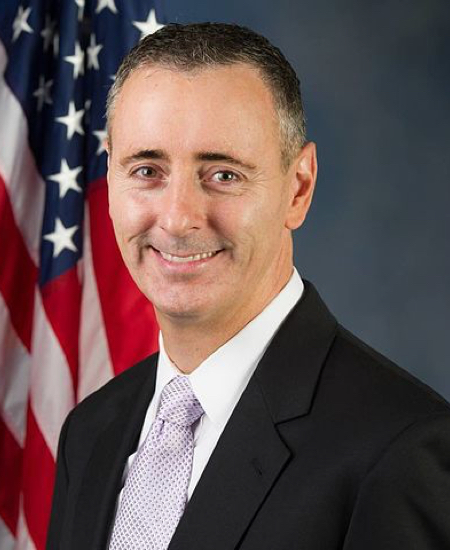
Rep. Brian K. Fitzpatrick
Sponsored bills
Maddy summaryThe BARK Act of 2025 protects donors, nonprofits, and local/government entities from liability when donating "apparently fit" pet food or supplies in good faith to help animals. It shields them from lawsuits related to minor issues like appearance, age, or packaging, as long as the items meet basic safety standards and aren’t defective. Donors must inform recipients about any flaws, and recipients must agree to recondition items to meet standards before distribution. This law does not cover cases of gross negligence or intentional harm, and it doesn’t override existing health regulations. The bill directly affects pet food donors, shelters, and animal welfare programs by reducing legal barriers to sharing surplus supplies.
Maddy summaryHR 1816, the WOSB Accountability Act, changes how the federal government counts women-owned small businesses (WOSBs) for contracting goals. It removes self-certified WOSBs (businesses claiming to be women-owned without formal SBA review) from federal goal calculations, requiring formal certification by the Small Business Administration (SBA) or an approved entity instead. The bill creates a transition period for businesses already self-certified before the law takes effect, allowing them to count toward goals until SBA reviews their applications. It also mandates quarterly reports to Congress on certification applications, processing times, costs, and outreach efforts to track implementation. This focuses on improving accountability in meeting federal contracting goals for women-owned businesses.
Maddy summaryThis resolution (HRES 459) is a symbolic gesture recognizing National Poppy Day, observed the Friday before Memorial Day. It supports the tradition of wearing red poppies as a symbol honoring U.S. military veterans who died in service, referencing the historical connection to World War I poetry and veterans' organizations. The resolution encourages all U.S. citizens, residents, and visitors to wear poppies on this designated day to express appreciation for those who died preserving freedom. It does not create new laws, funding, or obligations, but formally acknowledges the poppy's role in commemorating military sacrifice.
Maddy summaryHR 3694, the VALID Act of 2025, requires lenders to include specific information about VA loans in mortgage disclosures. It amends the National Housing Act to mandate that disclosures state the loan-to-value ratio and clarify that VA loans are available under Chapter 37 of Title 38 (veterans' benefits law), assuming prevailing interest rates. The bill also requires the Federal Housing Finance Agency to add a military service question to the Uniform Residential Loan Application form, placing it above the signature line within six months of enactment. This directly affects veterans and active-duty service members applying for VA-guaranteed mortgages, as well as the lenders processing those applications.
Maddy summaryThe Leveraging Educational Opportunity Networks Act creates a federal grant program to fund workforce training initiatives targeting workers without bachelor’s degrees, particularly those from low-income backgrounds, rural communities, historically disadvantaged groups, and formerly incarcerated individuals. Eligible organizations - such as non-profits, national training groups, and accredited institutions - would receive competitive grants to develop 12-week career programs that partner with employers in high-demand sectors (like healthcare, IT, and manufacturing), ensuring participants earn recognized credentials while receiving living wages and wraparound supports like stipends and job readiness coaching. Programs must prioritize enrollees reading at a 6th-grade level or below, guarantee at least 50% of participants come from underserved communities, and report annually on outcomes like earnings growth, employment rates, and credential attainment. The initiative allocates $30 million annually (2026-2029) to address labor shortages and support economic mobility through targeted, employer-aligned training.
Maddy summaryThis bill updates federal housing law to explicitly prohibit discrimination based on sexual orientation and gender identity. It amends the Fair Housing Act to include these characteristics as protected classes alongside race, color, religion, sex, and other existing categories. The law now covers discrimination against individuals due to their own sexual orientation or gender identity, or because of their association with someone who has these characteristics. This applies to all housing providers, including landlords, real estate agents, and mortgage lenders, making it illegal to deny housing or services based on these factors.
Maddy summaryThe FBI Animal Cruelty Taskforce Act of 2025 establishes a dedicated FBI unit to investigate federal animal cruelty crimes, specifically targeting dogfighting, cockfighting, and "crush videos." This taskforce will create training materials for local law enforcement to help them detect and investigate these offenses. It also requires the taskforce to coordinate with agencies like the Department of Agriculture and U.S. Customs, and to submit annual reports to Congress detailing filed charges, convictions, and unresolved investigations. The bill directly affects local police departments through new training resources and federal agencies through mandated coordination and reporting.
Maddy summaryHR 3689, the TREAT Youth Act, amends the SUPPORT for Patients and Communities Act to authorize specific annual funding for youth prevention and recovery programs. It sets mandatory funding levels from fiscal years 2026 through 2030, starting at $10 million in 2026 and increasing to $15 million by 2030. The bill does not create new programs but specifies exact funding amounts for existing youth-focused initiatives under the SUPPORT Act. It directly affects federal programs delivering prevention, recovery, education, and awareness services to young people. This is a procedural funding authorization, not a policy change altering program scope or eligibility.
Maddy summaryHR 3674, the Global Alzheimer’s Initiative Now Act, authorizes the U.S. government to contribute to the Davos Alzheimer’s Collaborative (DAC), a global public-private initiative focused on advancing Alzheimer’s research, prevention, and care. The bill requires U.S. funding to be matched by non-U.S. sources and caps U.S. contributions at 33% of DAC’s total funding from all sources during fiscal years 2026-2030. It mandates annual reports to Congress detailing U.S. financial commitments, governance participation, and how DAC aligns with U.S. global health strategies. The legislation directly affects U.S. foreign assistance programs and the DAC’s operations, aiming to support international efforts to address the growing global burden of Alzheimer’s disease.