

Maddy summaryHR 3931, the Kids on the Go Act of 2025, requires states to appoint a "Safe routes to school coordinator" for transportation projects. If a state hires such a coordinator, the federal government will cover 95% of eligible project costs under the relevant transportation program (previously a lower percentage). This bill directly affects state transportation agencies and school districts receiving federal funds for safe routes to school initiatives. The key change is the increased federal funding rate tied to the coordinator position, aiming to improve student safety during school commutes. The bill does not mandate hiring but offers a significant funding incentive for states that choose to implement this role.
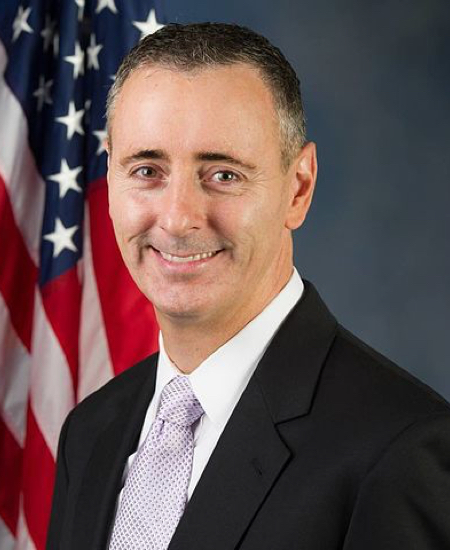
Rep. Brian K. Fitzpatrick
Sponsored bills
Maddy summaryThis resolution (HRES 501) amends House rules to allow two members - one from the majority party and one from the minority party - to jointly sponsor public bills or resolutions. It directly affects House members by changing the sponsorship process for legislative proposals. The key provision adds a new paragraph to Rule XII, permitting this cross-party sponsorship structure while updating related procedures for naming cosponsors and submitting constitutional statements. The change aims to facilitate bipartisan collaboration on legislative proposals within the House rules framework.
Maddy summaryHR 3331, the Mariner Exam Modernization Act, updates the process for reviewing and modernizing exams required for merchant mariners (ship crew members). It extends the Coast Guard's review timeline from 90 to 180 days, creates a new working group including at least two recent exam passers, and mandates the Coast Guard to develop a plan within 270 days to update exam content and testing methods. The plan must eliminate outdated topics, modernize testing procedures, and include data collection on pass/fail rates. This bill directly affects merchant mariners who take the exams and the Coast Guard, which administers the exams and implements the changes.
Maddy summaryHR 3259, the Post Quantum Cybersecurity Standards Act, requires the National Institute of Standards and Technology (NIST) to promote the voluntary adoption of quantum-resistant encryption standards. It directly affects critical infrastructure operators and digital infrastructure providers deemed high-risk for quantum-related cyber threats. Key provisions include NIST disseminating public guidance, offering technical assistance, and establishing a grant program to help these entities adopt new encryption standards and address vulnerabilities. The bill mandates collaboration with Homeland Security and sector-specific agencies but does not mandate compliance or create new regulatory requirements.
Maddy summaryThis bill requires private firearm transfers between individuals to go through a licensed dealer who must conduct a background check. It applies to most private sales but includes exceptions for transfers between family members (like parents and children), law enforcement, emergencies preventing harm, and temporary loans at shooting ranges or for hunting. Dealers must provide background check notices in both English and Spanish. The law aims to prevent prohibited individuals from obtaining firearms through private transactions while maintaining existing state authority on firearm laws.
Maddy summaryThe Runaway and Homeless Youth and Trafficking Prevention Act of 2025 amends federal law to provide funding for programs serving runaway, homeless, and at-risk youth, primarily aged 15-22 with some services extending to youth up to age 26. It establishes basic center grants for temporary shelter (up to 30 days) and transitional living programs that provide housing, counseling, and services tailored to youth's age, gender, and developmental needs. The bill requires programs to collect data on vulnerable populations including LGBTQ youth, youth of color, and those in the child welfare system, and mandates trauma-informed services for youth victims of trafficking. It authorizes $200 million annually for these programs, with specific funding allocations to support prevention services, street outreach, and coordination with education and child welfare systems.
Maddy summaryThe Resident Physician Shortage Reduction Act of 2025 would add 2,000 new residency positions annually from 2026 through 2032 (14,000 total), distributed to hospitals that meet specific criteria. The bill prioritizes distribution to rural hospitals, hospitals serving health professional shortage areas, and hospitals with accredited rural training tracks, while requiring hospitals to train at least 25% of residents in primary care and general surgery. Hospitals can receive up to 75 additional residency positions over the 7-year period, and the legislation also creates a new program to fund rural residency programs with $12.7 million annually from 2026-2030. The bill directly affects hospitals participating in medical residency training programs, particularly those in underserved areas seeking to expand their training capacity. It also includes provisions for a study on increasing diversity in the health workforce and technical assistance for rural residency programs.
Maddy summaryHR 3876, the LIHEAP Staffing Support Act, amends the Low-Income Home Energy Assistance Act to establish staffing requirements for the program. It requires the Secretary to employ at least 20 full-time staff dedicated to administering LIHEAP, limits contractors to no more than 40% of these staff, and mandates increasing staffing to at least 30 during declared emergencies (as defined under existing law). These provisions directly affect the administrative capacity of the LIHEAP program, which provides energy assistance to low-income households. The bill focuses on ensuring consistent staffing levels to support program delivery, with specific rules for emergency periods lasting up to 180 days.
Maddy summaryHR 3865, the PARTNER with ASEAN Act of 2025, would authorize the U.S. President to extend diplomatic immunity and privileges to the Association of Southeast Asian Nations (ASEAN) under existing U.S. law. This would allow ASEAN to receive the same diplomatic protections granted to other international organizations the U.S. participates with, such as through treaties or congressional appropriations. The bill does not create new programs or funding but adjusts diplomatic status to align with how the U.S. treats similar international bodies. It directly affects ASEAN as an organization, enabling its representatives to operate under standard diplomatic protocols in the U.S.
Maddy summaryHR 3873 (KO Cancer Act) directs the National Cancer Institute (NCI) to receive 25% more annual funding for cancer research in fiscal years 2026-2030 compared to 2022 levels, with these funds in addition to existing appropriations. It also requires the Department of Health and Human Services to study the causes of cancer drug shortages - including economic factors, supply chain issues, and regulatory delays - and submit a report with recommendations to Congress within one year of enactment. The bill directly affects the NCI, cancer researchers, and patients by increasing research funding and addressing drug access barriers. Its key provisions are a specific funding increase for NCI research and a mandated study on cancer drug shortages, aiming to improve treatment availability through evidence-based solutions.