

Maddy summaryHR 4003, the Economic Opportunity for Border Communities Act, directs the Commerce Secretary to create a national strategy aimed at boosting economic growth in communities within 15 miles of a U.S. border port of entry. The strategy must assess tax incentives, recommend policy changes to increase jobs in logistics, trade, manufacturing, transportation, and agriculture, and coordinate with other agencies on housing, infrastructure, and transportation programs. The Secretary must submit a report to Congress within one year detailing this strategy and its recommendations for achieving goals like strengthening manufacturing competitiveness and lowering trade costs. This bill establishes a framework for federal action but does not directly fund specific projects or alter existing programs.
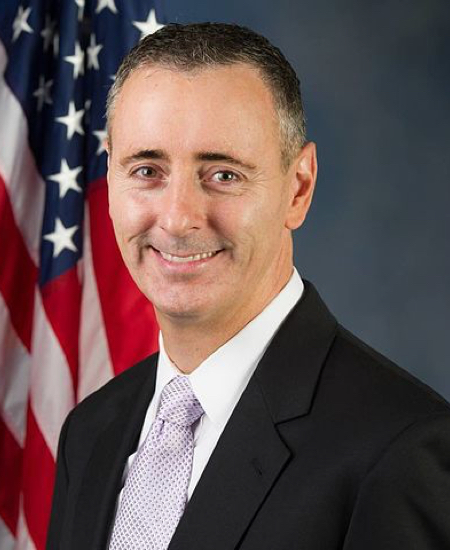
Rep. Brian K. Fitzpatrick
Sponsored bills
Maddy summaryHRES 513 is a symbolic resolution designating the second Friday of June as "National Service and Conservation Corps Day" to recognize over 150 existing organizations. These groups engage young adults (ages 16-25) and veterans (up to age 35) in conservation, disaster response, community projects, and workforce development through non-profit or government partnerships. The resolution supports expanding these programs but does not create new funding, laws, or policy changes - only offers symbolic recognition of their work.
Maddy summaryHR 3946, the FIGHT Act of 2025, amends the Animal Welfare Act to specifically prohibit gambling on animal fighting events and restrict the interstate transport of roosters used in such ventures. It defines "rooster" as male chickens over six months old and makes it unlawful to sponsor, exhibit, attend (for those under 16), or gamble on animal fighting events - whether in-person or broadcast. The bill creates a civil enforcement mechanism allowing any person to file a lawsuit to stop violations after providing 60 days' notice to authorities, with potential fines up to $5,000 per violation. It also establishes seizure of property used to facilitate violations and clarifies that state laws on animal fighting remain in effect unless directly conflicting with federal provisions.
Maddy summaryThis bill changes how federal Bureau of Prisons employees in the "Rest of U.S." pay locality receive compensation. It directs that employees whose official worksite is in "Rest of U.S." be treated as working in the nearest other pay locality (within 200 miles) with the highest comparability payment, rather than the default "Rest of U.S." rate. This adjustment applies to all Bureau of Prisons employees, including prevailing rate staff, and takes effect 180 days after enactment. The change directly affects federal correctional officers and staff working in remote locations currently covered by the "Rest of U.S." pay rate.
Maddy summaryThe RISE Act (HR 3939) streamlines documentation for college students with disabilities by requiring institutions to accept multiple forms of proof, including past Individualized Education Programs (IEPs), Section 504 plans, or licensed professional evaluations, instead of demanding current documentation. It mandates that colleges establish transparent, accessible processes for determining accommodation eligibility and share these policies with students, parents, and faculty. The bill also requires institutions to report specific data on students with disabilities (like enrollment numbers and accommodations used) to federal databases, while authorizing $10 million for a national support center. These changes directly affect colleges receiving federal aid and students seeking disability accommodations in higher education.
Maddy summaryHR 3985, the Helping Student Parents Succeed Act, requires colleges and universities participating in federal student aid programs to create and publicly share clear policies supporting expectant and parenting students. The bill mandates institutions to provide detailed information on lactation accommodations, processes for requesting pregnancy-related or parental accommodations, financial aid details (including dependent care allowances and dependency status changes), and access to support services like childcare, housing, healthcare, and counseling. This directly affects student parents at participating higher education institutions by standardizing and making accessible the resources they need. The law ensures schools disclose all available support without favoring specific services and outlines procedures for addressing complaints under Title IX and disability laws.
Maddy summaryHR 3991, the Research for Healthy Soils Act, authorizes federal research grants to study how microplastics and PFAS chemicals (like those in firefighting foam) in agricultural compost and biosolids affect farmland. It directs research on measuring these substances in soil, developing filtration methods for compost, assessing crop uptake, and finding ways to clean contaminated soil. The bill does not regulate or ban these chemicals but funds scientific study to understand their agricultural impacts. It also extends funding deadlines for existing research programs through 2031. This affects researchers, agricultural extension services, and farmers through future scientific findings, not immediate policy changes.
Maddy summaryHR 3974, the Protect Black Women and Girls Act, creates a federal task force to examine systemic challenges faced by Black women and girls (defined as individuals identifying as women, female, or femme). The task force, composed of agency representatives and community experts, will identify effective policies and programs across education, economic opportunity, healthcare, justice, and housing, then recommend improvements to federal, state, and local governments. Key mechanisms include studying issues like school discipline disparities, maternal health outcomes, economic barriers, and over-incarceration, and proposing solutions such as restorative justice programs, career training, and expanded healthcare access. The task force must report annually to Congress and submit final recommendations within two years, focusing on concrete policy changes to improve outcomes.
Maddy summaryHR 3981 would grant a federal charter to the Veterans Association of Real Estate Professionals (VAREP), a California-based nonprofit already recognized as a veterans service organization under IRS rules. This charter would formalize VAREP's status as a federally chartered entity under Title 36 of the U.S. Code, requiring it to maintain its tax-exempt status under the IRS Code to keep the charter. The bill outlines VAREP's purposes, including advocating for veterans' homeownership, providing financial literacy education, offering housing counseling, and connecting real estate professionals with veterans' needs, while prohibiting political activities, stock issuance, or profit distribution. This is a procedural bill focused on organizational structure, not policy changes.
Maddy summaryHR 3977, the Campus Housing Affordability for Foster Youth Act, removes a ban preventing foster youth in college from receiving housing assistance. It allows the Secretary to waive income requirements for students who are in foster care (or were formerly in foster care), or are court-emancipated minors, while living in on-campus housing at eligible colleges. The bill ensures that housing assistance provided through this waiver does not count as income when determining eligibility for federal student aid, work-study programs, or other support like living allowances or child support calculations. This directly affects foster youth in higher education who face housing barriers, making campus housing more accessible without jeopardizing their other financial aid.