

Maddy summaryHR 4083, the Marshall “Major” Taylor Congressional Gold Medal Act, authorizes the posthumous presentation of a Congressional Gold Medal to honor cyclist Marshall Walter "Major" Taylor (1878-1932), recognizing his pioneering achievements as a Black athlete who broke racial barriers in professional cycling during the late 19th and early 20th centuries. The bill directs the Secretary of the Treasury to strike the medal with his name and image, to be presented to Taylor’s great-granddaughter, Karen Donovan. It also permits the sale of bronze duplicates to cover costs, classifying all medals as national commemorative items under U.S. law. This is a ceremonial bill with no policy changes, solely focused on commemorating Taylor’s legacy.
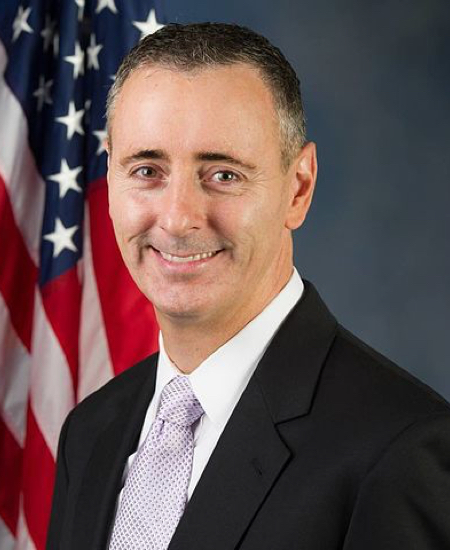
Rep. Brian K. Fitzpatrick
Sponsored bills
Maddy summaryHR 4074, the Optimizing Postpartum Outcomes Act of 2025, requires the Health and Human Services Secretary to issue guidance within one year on improving Medicaid and CHIP coverage for pelvic health services during pregnancy and the postpartum period (defined as up to 6 months after birth or during lactation). The bill directs the GAO to study coverage gaps for these services and mandates a new CDC-led education campaign to train healthcare providers and inform postpartum women about pelvic floor exams and physical therapy. Key provisions include standardizing terminology for pelvic health conditions, sharing state best practices for payment models, and authorizing $2 million annually for the education program through 2030. This bill directly affects postpartum women covered by Medicaid or CHIP by aiming to increase access to evidence-based pelvic health care.
Maddy summaryThe Autism Family Caregivers Act of 2025 creates a 5-year pilot program funding grants to community organizations for free, evidence-based skills training for family caregivers of children (ages 0-9) with autism spectrum disorder or other developmental disabilities or delays. The program requires training in communication, social engagement, daily living skills, and caregiver self-care strategies, with emphasis on cultural competence and coordination with local health, education, and community services. Grants must support at least 25 organizations across 15+ states, using $10 million annually (2026-2030), and mandate stakeholder committees including caregivers and local providers. It directly affects families caring for young children with these conditions by expanding access to structured support, while requiring programs to supplement - rather than replace - existing Medicaid, education, or insurance-covered services.
Maddy summaryHR 4060, the Service Member Housing Relief Act, adjusts housing stipend rules for active-duty military personnel. It lowers the threshold requiring housing cost relief from 20% to 15% of a service member's income, meaning more members will qualify for extra housing assistance when their rent exceeds this lower percentage. The bill removes an outdated provision (subparagraph C) from the existing law governing these stipends. This change directly affects uniformed service members facing high housing costs, providing broader access to financial relief through a simplified calculation.
Maddy summaryThis symbolic House resolution (HRES 521) expresses support for Israel’s military actions against Iran’s nuclear facilities, citing Iran’s nuclear enrichment progress (including 60% enriched uranium stockpiles nearing weapons-grade levels) and Iran’s attacks on Israeli civilians. It specifically endorses Israel’s "proportional" strikes on Iranian nuclear sites and military targets following Iran’s rejection of diplomatic efforts, while condemning Iran’s attacks that killed 24 Israelis and wounded 590. The resolution calls on Iran to halt nuclear enrichment and dismantle its program, reaffirms U.S. support for Israel’s security, and urges global condemnation of Iran’s nuclear activities. As a non-binding resolution, it does not enact policy but formally aligns the House with Israel’s actions against Iran’s nuclear program.
Maddy summaryHR 4045, the Vietnam Veteran Commemoration Fund Act of 2025, amends Section 598 of the 2008 National Defense Authorization Act to make the commemoration program for the 50th anniversary of the Vietnam War mandatory. The bill changes language from "may conduct" to "shall conduct" for the Secretary of Defense, requiring them to carry out the existing commemorative program starting November 11, 2025. This procedural change ensures the program continues without discretionary choice, directly affecting the Department of Defense's implementation of the commemoration. It does not create new funding or alter benefits, focusing solely on mandating the existing process.
Maddy summaryGio’s Law (HR 4019) creates a federal grant program to help state and local law enforcement agencies purchase epinephrine auto-injectors and other emergency epinephrine products, and to train officers on recognizing symptoms of severe allergic reactions (anaphylaxis) and correctly administering the medication. The bill requires the Attorney General to develop standardized training within 180 days of enactment and mandates that states certify officers are protected from civil liability when using epinephrine in good faith. It authorizes $25 million annually for fiscal years 2026-2030 to fund these grants and training. Additionally, the law requires an annual report tracking how often law enforcement officers administer epinephrine during emergencies.
Maddy summaryHR 4047, the Coastal Communities Ocean Acidification Act of 2025, amends the 2009 Federal Ocean Acidification Research and Monitoring Act to improve collaboration on ocean acidification issues. The bill requires the National Oceanic and Atmospheric Administration (NOAA) to establish ongoing input mechanisms for affected industries, coastal stakeholders, fishery councils, Indigenous groups (including Indian Tribes and Native Hawaiian organizations), and non-Federal scientists. It mandates specific tribal representation on the Advisory Board, directs NOAA to coordinate with tribes on vulnerability assessments and research planning, and prioritizes underserved coastal communities in resource allocation. These changes aim to integrate community and tribal knowledge into federal research and management efforts related to ocean acidification impacts on coastal economies and ecosystems.
Maddy summaryHR 4024, the Filling Public Safety Vacancies Act, allocates $162 million in federal funds for law enforcement agencies to hire or rehire additional officers under the Safe Streets Act. This funding directly affects state and local law enforcement agencies that receive grants under the program. Key provisions require agencies using these funds to conduct mandatory background checks and psychological evaluations for new officers, with the grant money covering these costs. The bill focuses on providing resources for officer recruitment while establishing specific hiring requirements for agencies utilizing the funds.
Maddy summaryThe Increasing Behavioral Health Treatment Act removes a Medicaid exclusion that previously blocked coverage for behavioral health services for individuals under 65 in psychiatric hospitals (also called "institutions for mental diseases"). It requires states to submit detailed plans to the federal government outlining how they will expand outpatient and community-based care for people transitioning from these facilities, including improved crisis services like mobile units and observation centers. States must also report annually on costs, patient outcomes, and the types of outpatient treatment provided after discharge, with specific requirements for coordinating care between health providers and first responders. This policy change directly affects Medicaid beneficiaries under 65 in psychiatric hospitals and state Medicaid programs, aiming to shift care toward less restrictive community settings.