

Protect Our Letter Carriers Act of 2025 This bill requires or authorizes certain actions related to the U.S. Postal Service (USPS). The bill requires the Department of Justice to appoint an assistant U.S. attorney in each judicial district to coordinate and supervise the investigation and prosecution of various crimes related to postal services (for example, assault on a postal service employee, breaking into a post office, or obstruction of mails). The bill also requires the U.S. Sentencing Commission to amend sentencing guidelines to provide that the assault or robbery of a postal employee shall be treated the same as the assault of a law enforcement officer. Additionally, the bill authorizes appropriations for the USPS to install high security collection boxes and replace older versions of the universal mailbox key with electronic versions.
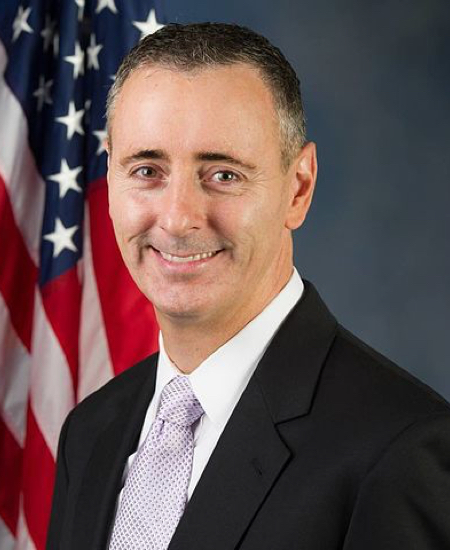
Rep. Brian K. Fitzpatrick
Sponsored bills
Maddy summaryHR 1046, the Marc Fischer Memorial Act, requires the Bureau of Prisons to implement digital mail scanning technology at all federal prisons to detect fentanyl and other synthetic drugs in inmate mail. It mandates a strategy within 90 days of an evaluation, including 100% scanning of all mail, digital copies of mail to inmates within 24 hours, and physical mail delivery within 30 days for non-contaminated items. The bill directly affects federal prison staff, inmates, and the Bureau of Prisons by aiming to reduce drug-related overdoses and alleviate staff workload tied to mail processing. Implementation must be completed within three years, with annual reports tracking detected drugs and strategy efficiency. The legislation focuses on concrete technological and procedural changes to enhance safety, referencing a successful pilot program at two facilities.
Maddy summaryThe Scientific Integrity Act requires federal agencies that fund, conduct, or oversee scientific research to adopt policies preventing political interference in scientific work. These policies must prohibit suppressing, altering, or delaying the communication of scientific findings and ensure hiring and decisions are based on expertise - not politics. Agencies must appoint a Scientific Integrity Officer to enforce the policies, handle complaints, and submit annual reports to Congress and the Office of Science and Technology Policy. The bill directly affects scientists and staff in covered agencies by safeguarding their ability to share research freely and maintain ethical standards in scientific communication.
Maddy summaryThis bill permanently extends the New Markets Tax Credit (NMTC), a federal tax incentive that encourages private investment in low-income communities. It directly affects community development entities (CDEs) that channel capital into underserved neighborhoods for projects like housing, healthcare, and businesses. Key provisions include permanently extending the credit beyond 2025, adding annual inflation adjustments to the credit amount starting in 2026, and ensuring the credit isn't reduced by the alternative minimum tax for investments made after December 2024. The changes apply to taxable years beginning after December 2024, providing long-term stability for community development financing.
Maddy summaryHR 1090, the Truth in Tuition Act of 2025, requires colleges and universities receiving federal financial aid to provide clearer tuition cost information to students. Specifically, institutions must offer either a multi-year tuition and fee schedule or a single-year schedule plus a nonbinding estimate of total costs after financial aid for the full program duration, showing year-by-year costs. The bill mandates that estimates include historical accuracy data on past projections versus actual costs. This applies directly to students enrolling in undergraduate or graduate programs at participating institutions, aiming to improve cost transparency for financial planning.
Maddy summaryThis bill creates a tax exclusion for landowners who sell certain property interests through the Defense Department's Readiness and Environmental Protection Integration (REPI) program. It excludes the gain from taxable income when selling "qualified real property interests" (including full ownership, remainder interests, or surface use restrictions) to a qualified organization under the REPI program, which protects military readiness areas while conserving environmentally sensitive lands. The exclusion does not apply if the property was purchased within three years prior to sale (except for family partnerships or family-owned entities). This policy change directly affects landowners participating in the REPI program by reducing tax liability on qualifying sales.
Maddy summaryHR 1102 establishes a commission to study the feasibility of creating a National Museum of Italian American History and Culture in Washington, D.C. The commission, composed of 8 members appointed by congressional leaders, will examine factors like location options, costs, fundraising potential, and impacts on existing museums, and must report back within 18 months. It will not create the museum itself but will develop recommendations for Congress on whether to proceed, with all funding coming from private sources - no federal funds may be used for the commission’s work. The bill focuses solely on the study process, not on building or operating the museum.
Maddy summaryHR 1075, the Tax Administration Simplification Act, makes three key changes to tax procedures. It establishes that electronically submitted tax documents or payments to the IRS are considered delivered on the date sent (not when received), applying to filings after December 31, 2025. It extends the deadline for S-corporation tax elections to the tax return due date (including extensions) and allows the IRS to treat late elections as timely if "reasonable cause" exists. It also shifts quarterly estimated tax payment deadlines for individuals from June/September to July/October for taxes due after December 31, 2025. These changes primarily affect small businesses filing electronically, S-corp owners, and individual taxpayers making quarterly payments.
Maddy summaryThe QUIET Act (HR 1027) requires that robocalls or text messages using artificial intelligence to mimic human communication must disclose at the beginning that AI is being used. It doubles penalties for violations involving AI impersonation intended to defraud, cause harm, or obtain value, applying to automated calls sent to stored numbers or generated randomly. The bill excludes calls requiring substantial human intervention, focusing on transparency and deterrence in AI-driven automated communications.
Maddy summaryHR 1012, the Spent Fuel Prioritization Act of 2025, amends the Nuclear Waste Policy Act to change how the federal government prioritizes accepting spent nuclear fuel and high-level radioactive waste from civilian power plants. The bill requires the Secretary to prioritize waste based on four specific factors: whether the reactor is decommissioned (highest priority), the population size of the surrounding area, the earthquake hazard level in the area, and national security risks related to local storage. This directly affects nuclear power plant operators and communities near reactors, as waste from plants meeting these criteria would be processed faster for disposal or storage. The law does not create new waste generation but changes the order in which existing waste is managed.