Maddy summaryHR 1024, the US-Kazakhstan Trade Modernization Act, terminates the application of Title IV of the Trade Act of 1974 to Kazakhstan. This means the U.S. will no longer apply special trade restrictions tied to Kazakhstan's emigration policies, as Kazakhstan has been found compliant since 1997. The bill allows the President to determine that Title IV no longer applies and extend normal trade relations (NTR) treatment to Kazakhstan's products. As a result, Kazakhstan's exports to the U.S. will be subject to standard U.S. trade rules rather than the specific Title IV provisions.
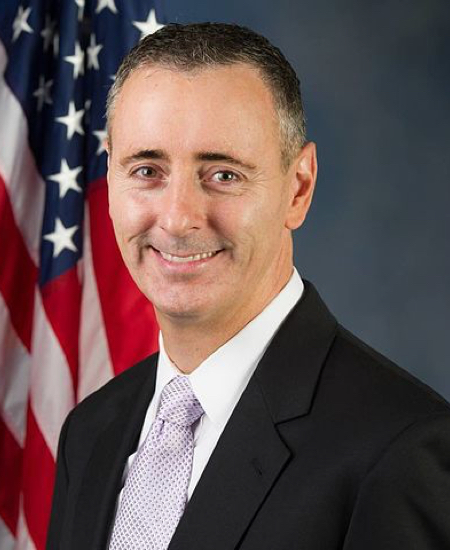
Rep. Brian K. Fitzpatrick
Sponsored bills
Maddy summaryHR 1007, the Antisemitism Awareness Act of 2025, clarifies how the Department of Education enforces Title VI of the Civil Rights Act of 1964 to address discrimination against Jewish individuals. It requires the Department to consider the International Holocaust Remembrance Alliance (IHRA) definition of antisemitism when investigating complaints involving discrimination based on actual or perceived Jewish ancestry or ethnic characteristics. This affects Jewish students and communities in K-12 schools and colleges receiving federal funding, as it ensures antisemitism is assessed under existing civil rights protections. The bill does not create new laws but specifies that the IHRA definition - already used by the Department since 2018 - must be applied in Title VI enforcement cases.
Combating Rural Inflation Act This bill requires the the Bureau of Labor Statistics of the Department of Labor to publish a monthly index of changes in consumer prices for individuals residing in rural communities.
Maddy summaryThis bill establishes a federal right to access contraception, protecting individuals' ability to obtain contraceptives and health care providers' ability to offer them without government interference. It prohibits states from banning or restricting contraceptive services, products, or information, including laws that force providers to deny care based on personal beliefs or limit access to specific methods. The law immediately overrides conflicting state regulations and ensures that contraception remains available regardless of factors like race, income, disability, or location. It applies to all individuals and providers, building on existing federal protections like the Affordable Care Act's coverage requirements.
Maddy summaryHR 835, the 9/11 Memorial and Museum Act, provides a one-time federal grant of $5-10 million to the National September 11 Memorial & Museum (operated by an IRS 501(c)(3) organization) for its operations, security, and maintenance. The bill requires the museum to offer free admission to veterans, first responders, and victims' families, plus weekly free public hours, and mandates annual financial audits and public reporting to Congress. Grant funds must be used to preserve the site, educate visitors, and increase access for economically disadvantaged groups. The funding is subject to annual appropriations and does not authorize ongoing federal support beyond the one-time grant.
Maddy summaryHRES 99 designates January 2025 as "National Stalking Awareness Month" to raise public awareness about stalking and encourage prevention efforts. The resolution directly affects victims of stalking, service providers, law enforcement, schools, and community organizations by urging them to increase education and support services. It does not create new laws or funding but calls on policymakers, criminal justice systems, and institutions to promote awareness and improve responses to stalking. The resolution acknowledges stalking's widespread impact, including high rates of victimization among young adults and technology-facilitated stalking, while emphasizing collaboration to support victims.
Maddy summaryHRES 98 is a symbolic resolution designating February 4, 2025, as "National Cancer Prevention Day." It expresses the House's support for raising public awareness about cancer prevention efforts, emphasizing the importance of reducing cancer risks to improve health outcomes. The resolution recognizes cancer's significant impact on families and communities while highlighting ongoing initiatives like the Cancer Moonshot. This procedural resolution does not create new laws or allocate funding - it serves only to formally acknowledge and promote awareness of cancer prevention.
Maddy summaryHRES 105 is a non-binding resolution affirming that Iran’s nuclear activities pose a threat to U.S. security and regional stability. It states that Iran’s pursuit of nuclear weapons capability - including enriching uranium to near-weapons-grade levels (60-83.7%) and expanding centrifuge infrastructure - threatens the United States, Israel, and allies. The resolution demands Iran immediately halt uranium enrichment, development of nuclear delivery systems, and nuclear warhead programs. It emphasizes all options should be considered to address the threat but explicitly states it does not authorize military force. This resolution serves as a formal congressional statement of concern, not a policy change.
Railway Safety Act of 2025 This bill addresses safety requirements for rail carriers and trains transporting hazardous materials. Specifically, the Department of Transportation (DOT) must issue safety regulations for trains carrying hazardous materials to require that rail carriers or shippers (1) provide state emergency response commissioners with advance notice and information about the hazardous materials; (2) reduce blocked rail crossings; and (3) comply with certain requirements regarding train length and weight specifications, track standards, speed restrictions, and response plans. DOT must also establish requirements for wayside defect detectors. These are used by railway systems alongside the tracks to detect defects and failures (e.g., wheel bearing failures). Current federal regulations do not require their use, but federal guidance does address their placement and use. Under the bill, DOT must issue regulations establishing requirements for the installation, repair, testing, maintenance, and operation of wayside defect detectors for each rail carrier operating a train carrying hazardous materials. The bill also increases the maximum fines DOT may impose on rail carriers for violating safety regulations; requires DOT to update rail car inspection regulations and audit the federal inspection programs; establishes a statutory requirement for freight trains to have at least two crew members, with exceptions; phases out certain railroad tank cars by May 1, 2027; expands training for local first responders; imposes a new fee on certain rail carriers; and authorizes grants to improve railway safety.

Maddy summaryThis bill prohibits U.S. federal agencies from taking any action that implies recognition of Russia's claimed control over Ukrainian territory, including airspace and territorial waters. It mandates that no federal department or agency may extend assistance or take steps suggesting the U.S. accepts Russia's sovereignty claims over any part of Ukraine's internationally recognized borders. The law directly affects all federal agencies, requiring them to align their actions with the stated policy of non-recognition. It does not alter existing sanctions or aid programs but explicitly bars any official U.S. conduct that could be interpreted as validating Russia's annexation.