

Stop the Wait Act of 2025 This bill phases out the initial waiting period for Social Security Disability Insurance (SSDI) benefits and eliminates the waiting period for certain disabled individuals to become eligible for Medicare. Under current law, individuals generally must wait five months after the onset of disability to begin receiving SSDI benefits. The bill would gradually reduce this waiting period before eliminating it entirely in the year 2030. Further, the bill would eliminate the 24-month waiting period for certain disabled workers and other individuals to become eligible for Medicare. Under current law, individuals under the age of 65 may generally enroll in Medicare after they have been eligible for SSDI or Social Security child’s, widow’s, or widower’s benefits by reason of disability for 24 months. The bill would eliminate this waiting period for individuals for whom the annual cost of certain medical insurance would exceed a specified percentage of their household income (i.e., those who cannot afford minimum essential coverage). Medicare eligibility for these individuals must be available retroactively to the first month that an individual qualified for SSDI or Social Security child’s, widow’s, or widower’s benefits by reason of disability.
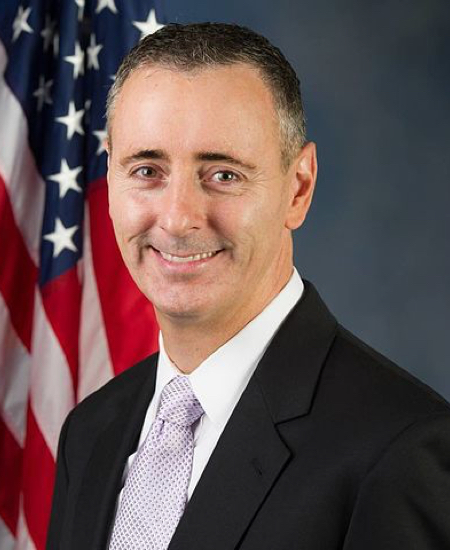
Rep. Brian K. Fitzpatrick
Sponsored bills
Maddy summaryHR 942, the "Banning SPR Oil Exports to Foreign Adversaries Act," prohibits the export of petroleum products drawn from the U.S. Strategic Petroleum Reserve to China, North Korea, Russia, Iran, and any entity owned or controlled by these countries or the Chinese Communist Party. The Secretary of Energy may grant a waiver for such exports if certified as serving U.S. national security interests, but must issue implementing rules within 60 days of enactment. This policy directly affects U.S. energy exports and entities seeking to purchase SPR oil from the listed adversaries.
Maddy summaryHR 957, the Parity Enforcement Act of 2025, strengthens enforcement of mental health and substance use disorder coverage parity requirements under federal law. It expands accountability for violations to include not only health plan sponsors but also service providers and administrators of group health plans. The bill adds civil monetary penalties for failing to meet parity rules, specifically targeting requirements related to mental health, substance use disorder coverage, and genetic information protections. These changes apply to health plans for years beginning one year after the bill's enactment. The law directly affects employers, insurers, and health plan administrators offering group health coverage.
Maddy summaryHR 914, the American CANS Act, requires importers of canned agricultural products to clearly mark the country of origin on the front label or top of the can. This applies specifically to agricultural products packaged in cans, as defined by existing law, and affects businesses importing these items into the U.S. The bill amends the Tariff Act of 1930 to mandate this labeling, effective 18 months after the bill's enactment. It does not change product content or pricing, only the required origin disclosure on packaging.
Maddy summaryThis bill reauthorizes the Dr. Lorna Breen Health Care Provider Protection Act, extending mental health support programs for healthcare professionals through 2030 (previously ending in 2024). It requires funded programs to specifically address reducing administrative burdens on healthcare workers while continuing to promote access to mental health and substance use disorder services. The legislation directly affects healthcare providers across the U.S. who may access these federally supported resources. Key provisions include extending funding periods and mandating that grant recipients focus on easing workplace administrative tasks, alongside maintaining existing awareness initiatives. The bill does not create new programs but continues and refines existing mental health support for the healthcare workforce.
Maddy summaryThe HOPE Act of 2025 creates tax-advantaged "HOPE Accounts" for individuals to pay qualified medical expenses. These accounts allow tax-free savings with annual contribution limits of $4,000 for self-only coverage or $8,000 for family coverage, and employers can contribute up to 50% of these limits. Distributions for qualified medical expenses are tax-free, but amounts used for non-medical purposes are taxed at ordinary rates plus a 30% penalty. The bill would take effect for taxable years beginning after December 31, 2025, and applies to individuals with minimum essential health coverage who don't participate in other similar accounts like HSAs or FSAs.
Maddy summaryThe Patriot Day Act (HR 911) designates "Patriot Day" as a federal holiday by adding it to the list of designated holidays in Title 5 of the U.S. Code. This change would require federal offices to close on Patriot Day, aligning it with other federal holidays like Labor Day. The bill does not establish a specific date for the holiday or alter existing holiday observances. It is a procedural measure to formally recognize Patriot Day as a day for federal holiday closure.
Maddy summaryThis bill is procedural and modifies a tariff classification note. It amends U.S. Note 2 to Chapter 62 of the Harmonized Tariff Schedule by removing the second sentence regarding water-resistant garment requirements. The bill does not create new regulations or directly affect consumers, manufacturers, or PFAS chemicals. Its sole purpose is to adjust the wording in the tariff schedule for administrative clarity. (1 sentence as it is procedural)
Maddy summaryHR 853 creates a new federal fund to reimburse local emergency responders after train incidents involving hazardous materials. It requires the Transportation Secretary to declare a "hazardous train event" within 3 days of a derailment or crash, triggering immediate $250,000 payments to fire departments, police, and emergency agencies in the affected area. The bill also mandates railroads to provide local emergency teams with advance notice and real-time tracking of trains carrying hazardous materials. Funding comes from annual fees paid by rail carriers and shippers of hazardous materials, with fees deposited directly into the new reimbursement fund.
Maddy summaryThe Expanding Access to High-Impact Tutoring Act of 2025 creates a federal grant program to fund evidence-based tutoring programs in K-12 public schools, requiring at least 30 minutes of daily tutoring, 3 days per week in math or reading, with a 3-to-1 student-to-tutor ratio. It allocates funds to state education agencies to distribute to school districts that must develop detailed plans, provide monthly progress reports, and partner with research organizations to evaluate program effectiveness. The bill establishes an Advisory Board to oversee implementation, approve tutoring models, and develop a nationwide tutoring workforce, with specific focus on schools serving students who have experienced academic setbacks, particularly those eligible for Title I services.