

Maddy summaryThis bill doubles key tax benefits for child care expenses. It increases the maximum child and dependent care credit from $3,000 to $6,000 per child (and $6,000 to $12,000 for two or more children) and doubles the dependent care assistance program limit from $5,000 to $10,000 annually. It also doubles the employer credit for providing child care from $150,000 to $300,000 per year. These changes directly affect working parents paying for child care and employers offering on-site or subsidized care, applying to tax years starting in 2025.
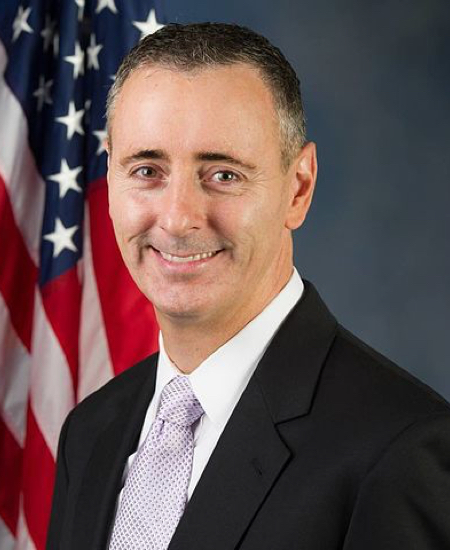
Rep. Brian K. Fitzpatrick
Sponsored bills
Maddy summaryHR 1410 expands access to mental health care for 9/11 responders and survivors by allowing licensed mental health providers (not just physicians) to conduct initial health evaluations and certifications under the World Trade Center Health Program. It adjusts the program’s funding formula to account for changing enrollment numbers by linking annual funding to the previous year’s enrollment ratio, and clarifies that deceased individuals are excluded from enrollment counts. The bill also extends the timeframe for adding new health conditions to the program’s list and requires a 2028 report assessing long-term funding needs through 2090. These changes aim to streamline eligibility, improve care access, and ensure sustainable funding for the program.
Maddy summaryHR 1436, the ENABLE Act, makes permanent key tax provisions for ABLE accounts - tax-advantaged savings accounts for people with disabilities. It removes the 2026 expiration date for increased contribution limits to ABLE accounts and allows rollovers from 529 college savings plans into ABLE accounts without tax penalties. These changes directly affect individuals with disabilities who use ABLE accounts for qualified expenses like housing, education, and medical costs. The bill ensures these financial tools remain available long-term, streamlining access to savings without requiring new legislative action each year.
Maddy summaryHR 1363 designates the "Honor and Remember Flag" (created by Honor and Remember, Inc.) as the official symbol honoring U.S. military members who died in service. It requires federal locations - including the Capitol, White House, military memorials, VA medical centers, and all post offices - to display this flag on specific days like Memorial Day, Veterans Day, and Flag Day. The bill mandates visible public display at these locations and sets deadlines for implementing the requirement (180 days for regulations, 30 days for flag procurement). It does not alter military benefits or create new programs, focusing solely on symbolic recognition through flag display.
Maddy summaryThis bill allows survivors of human trafficking to seek court orders to vacate convictions or expunge arrests related to non-violent crimes they committed while being trafficked. Survivors can file motions supported by affidavits from anti-trafficking service providers, and courts must determine if the crime was directly caused by trafficking. It applies to all past and future cases, including retroactive relief for convictions, and adds a new "human trafficking defense" in criminal trials. The law requires annual reports tracking how many survivors use this relief and the outcomes of their cases.
Goldie's Act This bill expands enforcement provisions under the Animal Welfare Act (AWA). Specifically, the bill directs the Department of Agriculture (USDA) to document and record detailed descriptions of violations of the act observed during inspections and investigations. USDA must provide a copy of all records documenting violations to state, local, and municipal animal control or law enforcement officials within 24 hours of such inspections or investigations. Inspections must be held at least once a year of each research facility, the premises of each animal dealer, and each exhibitor of animals. If violations are found during inspections, then USDA must conduct any necessary follow-up inspections until all the violations are corrected. Inspectors must confiscate or destroy in a humane manner animals found to be suffering physical or psychological harm as a result of failure to comply with the AWA. Violators are subject to civil penalties as outlined in the bill.
This concurrent resolution declares that Congress should not impose any new performance fee, tax, royalty, or other charge relating to the public performance of sound recordings on a local radio station for broadcasting sound recordings over the air, or on any business for such public performance of sound recordings.
Maddy summaryHRES 133 is a symbolic House resolution supporting the designation of February 15-22, 2025, as "National FFA Week." It recognizes the National FFA Organization’s role in developing student leadership through agricultural education and celebrates two milestones: the 90th anniversary of the New Farmers of America (which served Black students until merging with FFA in 1965) and the 75th anniversary of FFA’s federal charter (granted by Congress in 1950). The resolution has no policy impact or funding provisions - it simply expresses congressional support for these observances. It directly affects no individuals or entities, as it is a non-binding gesture honoring an educational organization.
Maddy summaryThis bill updates federal vehicle safety standards to permit pulsating light systems on high-mounted stop lamps, directly affecting vehicle manufacturers and safety regulators. It requires the Transportation Secretary to issue new regulations within 180 days establishing performance rules for these systems. The key provision defines a "pulsating light system" as one that emits rapid pulses (max 4 pulses within 1.2 seconds) when brakes are applied, then switches to steady light, with a mandatory 5-second lockout period before pulses can repeat after brake release. The bill amends Federal Motor Vehicle Safety Standard 108 to formally allow this technology under specific technical parameters.
Maddy summaryThis bill requires the Pension Benefit Guaranty Corporation (PBGC) to recalculate monthly pension benefits for retirees in six specific Delphi-related pension plans to reflect the full vested amount they would have received without prior benefit limits. It mandates lump-sum payments for past underpayments, including 6% annual interest, to eligible retirees and beneficiaries who received lower benefits than guaranteed under ERISA. The PBGC must fund these payments through a new Delphi Full Vested Plan Benefit Trust Fund established in the Treasury. This directly affects retirees in the Delphi Hourly-Rate, Delphi Retirement Program for Salaried Employees, PHI Non-Bargaining, ASEC Manufacturing, PHI Bargaining, and Delphi Mechatronic Systems pension plans. The law does not alter existing PBGC rules for other plans or change how the agency administers benefits generally.