

Maddy summaryThis bill would require states to create a simplified process for out-of-state healthcare providers to join Medicaid and CHIP programs. Qualified providers (those already enrolled in Medicare or another state's program with low fraud risk) could enroll without excessive screening and would be approved for five years. It directly affects children under 21 enrolled in Medicaid or CHIP by expanding access to providers outside their state, particularly in underserved areas. The change applies to all states' Medicaid programs but takes effect three years after enactment.
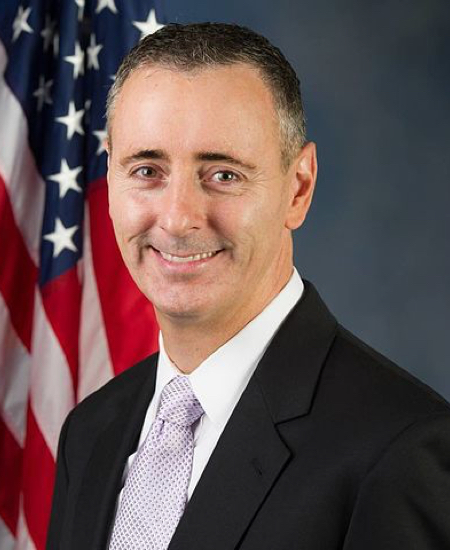
Rep. Brian K. Fitzpatrick
Sponsored bills
Maddy summaryHR 1500 requires federal agencies to prioritize native plants over non-native plants in landscaping projects at federal facilities (like military bases, parks, and government buildings), where feasible considering cost and maintenance. It mandates agencies to update design standards within 270 days, include native plant requirements in contracts, and consider benefits like supporting pollinators and reducing water use. Agencies must also report annually on implementation, including case studies and environmental impacts, starting two years after the law takes effect. This affects all federal projects involving landscape improvements across all states and territories.
Maddy summaryHR 1484 requires the Federal Aviation Administration (FAA) to commission the National Academies of Sciences to convene experts and issue a report on the health impacts of air traffic noise and pollution within 30 days of the bill's enactment. The report will summarize current scientific knowledge on these health effects and must be submitted to the FAA, Health and Human Services, the Environmental Protection Agency, and specific congressional committees. This bill creates a new study requirement but does not change existing regulations or funding; it solely mandates the collection of expert consensus on the health impacts of aviation noise and emissions.
Maddy summaryThis bill establishes a Veterans Affairs grant program to fund peer-to-peer mental health support for veterans. It provides up to $250,000 per grant to eligible organizations (like veteran nonprofits, service groups, or state agencies) to hire veterans as peer specialists who host nonclinical support groups and offer 24/7 mental health assistance. The program prohibits grant recipients from collecting or reporting veterans' personal information. It directly affects veterans seeking accessible, nonclinical mental health support through peer-led services.
Maddy summaryThis bill expands Veterans Affairs (VA) coverage for veterans with permanent and total service-connected disabilities needing medical care outside the U.S. It allows the VA to pay for hospital care and medical services abroad if the care meets U.S. medical standards and uses FDA-approved medications. Key provisions include requiring direct deposit for faster reimbursements, enabling digital submission and tracking of forms via VA mobile apps, and mandating a VA report to Congress within two years on implementation. The policy directly affects veterans with qualifying disabilities seeking necessary medical treatment overseas, modernizing how the VA handles foreign medical coverage.
Maddy summaryHR 1434 authorizes $200 million to $240 million annually (2026-2030) to fund summer youth employment programs for participants under 25, primarily targeting high-unemployment and high-crime communities. It provides competitive grants to states, local governments, or nonprofits to create or expand programs that include subsidized jobs (minimum wage, 4+ weeks), mentoring, career counseling, and post-program support - aimed at improving high school graduation, college enrollment, employment, and reducing crime rates. The bill prioritizes programs serving underserved youth (including rural/suburban areas) and requires grantees to implement specific elements like job training, digital literacy, and employer matching. An Advisory Board oversees grant reviews, evaluates program impact, and maintains a database of outcomes to ensure evidence-based improvements.
Maddy summaryHR 1440, the Discriminatory Gaming Tax Repeal Act of 2025, repeals Chapter 35 of the Internal Revenue Code, which imposed excise taxes on wagering activities. This repeal directly affects gambling businesses and individuals subject to these taxes, removing the federal tax obligation. The change takes effect for taxable years beginning after December 31, 2024, eliminating the tax requirement for future reporting periods. The bill focuses solely on repealing the existing tax provision without altering other gambling regulations.
Maddy summaryHR 1433, the Kids’ Access to Primary Care Act of 2025, sets a minimum Medicaid payment rate of 100% of Medicare’s rate for primary care services provided to children. It directly affects Medicaid-covered children and expands eligibility for providers to include pediatricians, family medicine physicians, nurse practitioners, physician assistants, certified nurse-midwives, and rural health clinics or Federally-qualified health centers (FQHCs) under specific conditions. Key provisions require Medicaid managed care plans to pay these providers at the minimum rate, with documentation requirements to verify compliance, and exclude emergency department services from the definition of primary care. The bill also mandates a study to track enrollment and payment rate changes across states after implementation.
Maddy summaryThe Poverty Line Act of 2025 updates how the federal poverty line is calculated to better reflect current costs of basic needs. It requires annual revisions using a 5-year average of household spending on food, housing, childcare, and healthcare (adjusted for inflation), with regional variations based on state or county data. This change directly affects households applying for federal assistance programs like SNAP or Medicaid, as eligibility will now align with more accurate, location-specific costs. The bill also mandates a public online tool to help determine poverty line thresholds and includes safeguards to prevent sudden eligibility changes during relocations.
Maddy summaryHR 1414, titled "Cameron’s Law," increases the tax credit for pharmaceutical companies developing orphan drugs (medicines for rare diseases) from 25% to 50% of qualified research expenses. This change directly affects drug manufacturers investing in treatments for conditions affecting fewer than 200,000 people in the U.S. The bill amends the Internal Revenue Code to implement this higher credit rate, effective for taxable years starting after the law’s enactment. It provides a concrete financial incentive to encourage research into rare disease treatments without altering eligibility criteria or adding new requirements.