Maddy summaryHR 1347, the AIMM Act, permanently extends a tax provision allowing businesses to deduct depreciation, amortization, or depletion when calculating their business interest expense limit. This change directly affects manufacturers and other businesses that use these deductions for tax purposes. The bill amends the tax code to remove the previous expiration date (which applied only to years before 2022), making the deduction rule permanent for all future taxable years. The key change is eliminating a temporary provision, providing ongoing certainty for business tax calculations.
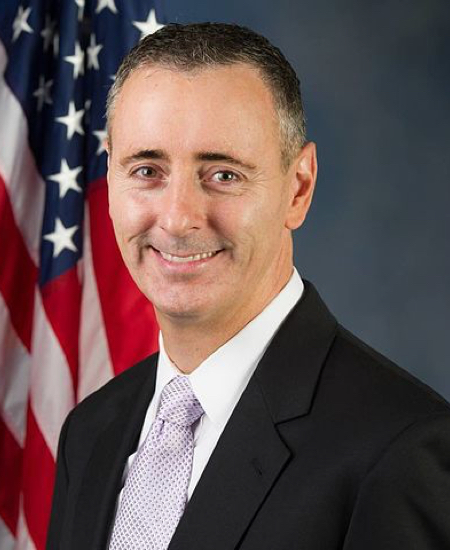
Rep. Brian K. Fitzpatrick
Sponsored bills
Border Enforcement, Security, and Trade Facilitation Act of 2025 or the BEST Facilitation Act This bill establishes a pilot program for positions within U.S. Customs and Border Protection (CBP) to review inspection images of vehicles and cargo entering or exiting the United States. Specifically, the bill establishes the position of image technician 1 within the CBP Office of Field Operations. An image technician must (1) review nonintrusive inspection images of vehicles and cargo entering or exiting the United States; (2) assess whether such vehicles and cargo contain contraband, illicit drugs, weapons, or persons seeking to unlawfully enter the United States; and (3) refer suspicious vehicles and cargo for further inspection by a CBP officer. These reviews must take place at one of five regional command centers established pursuant to this pilot program. The bill also establishes the position of image technician 2 with additional responsibilities, including receiving and reporting intelligence to the National Targeting Center about techniques used by malign actors to transport contraband, illicit drugs, weapons, and persons seeking to unlawfully enter the United States. Image technicians must be supervised by a supervisory CBP officer. The bill establishes annual training requirements for both positions, including training on privacy and civil liberties and how to analyze inspection images. This pilot program ends five years after the date of enactment of this bill. Individuals employed as image technicians at the end of the pilot program may transfer to comparable positions within CBP or the Department of Homeland Security.

Maddy summaryHR 1331 establishes a federal grant program to improve teacher and school leader preparation in high-need schools. It funds partnerships between high-need local educational agencies, institutions of higher education, and other stakeholders to support teacher and school leader residency programs and professional development. The bill requires eligible partnerships to prepare educators who are "profession-ready" to teach diverse students, with specific training in comprehensive literacy instruction, working with English learners, and supporting students with disabilities. It also establishes accountability measures, including evaluation plans that track educator retention, certification pass rates, and the percentage of profession-ready educators hired in high-need schools.
This bill expands the E-3 visa program to cover Irish nationals. The E-3 visa is a nonimmigrant visa currently only available to Australian nationals coming to the United States for employment in a specialty occupation. For Irish E-3 initial applications, the Department of State may approve each fiscal year no more than 10,500 minus the number of Australian initial applications approved the previous fiscal year.
Maddy summaryThis bill requires federal agencies administering water infrastructure funding (like the WIFIA program) to ensure projects have construction payment and performance security. It directly affects contractors working on federally assisted water projects and state/local governments with construction requirements. The key provision mandates that projects must have security covering at least 50% of the construction contract value - either through state/local rules or federal bonds meeting specific standards under 40 U.S.C. §3131(b). This aims to protect taxpayers by reducing the risk of unpaid subcontractors or project failures. The bill modifies existing federal requirements without creating new funding or altering project eligibility.
Maddy summaryHR 1330 establishes the Smithsonian National Museum of the American Latino, authorizing its location within the National Mall's "Reserve" area. The bill requires the Smithsonian Board to coordinate with federal agencies managing potential museum sites, including notifying relevant congressional committees before land transfers. It mandates that the museum's exhibits and programs accurately represent the diverse cultures, histories, and viewpoints of Hispanic and Latino communities in the U.S., seeking input from a broad range of community experts. The Smithsonian must also submit regular reports to Congress detailing compliance with these representation requirements.
More Homes on the Market Act This bill increases the amount of gain from the sale of a principal residence that an individual may exclude from gross income (for federal tax purposes). Under the bill, an individual may exclude from gross income gain from the sale of a principal residence of up to $500,000 (currently $250,000), and taxpayers who are married and file a joint federal income tax return may exclude up to $1 million (currently $500.000). The bill also requires these amounts to be adjusted annually for inflation.
Maddy summaryThis bill creates a 40% tax credit for U.S. companies investing in new or upgraded facilities manufacturing critical supply chain goods, including pharmaceuticals, medical devices, semiconductors, and aerospace equipment. It specifically targets facilities located in the U.S., Puerto Rico, or U.S. possessions, with additional incentives for projects in economically distressed areas (poverty rate ≥30% in qualified opportunity zones). The credit excludes investments by foreign entities from "covered nations" or those with significant foreign government control. Companies must meet strict definitions of "qualified property" and facility purpose to qualify, with the credit applying to property placed in service after 2024.
Maddy summaryThe MSD Act requires all public, private, and parochial elementary and secondary schools receiving federal education funding to develop emergency response plans and notify parents during covered emergencies like active shooters, bomb threats, natural disasters, or weapons incidents. It directs the Cybersecurity and Infrastructure Security Agency (CISA) to form a committee to create standards for reinforced school doors and issue a final rule requiring door modifications within six months of a congressional report. The law allocates $100 million from the Homeland Security Grant Program to fund these door installations over ten years. This bill directly affects schools receiving federal education funds by mandating specific safety protocols and infrastructure changes.
Maddy summaryThis bill reauthorizes the Delaware River Basin Restoration Program through 2032, extending funding for watershed restoration projects. It adds Maryland as a fifth Basin state (previously a 4-State program) and requires the program to prioritize projects benefiting small, rural, or disadvantaged communities. The bill also updates definitions and administrative provisions from the original 2016 program under the Water Infrastructure Improvements for the Nation Act. This affects restoration efforts across the Delaware River Basin states (Delaware, New Jersey, New York, Pennsylvania, and Maryland).