Maddy summaryThe PSLF Payment Completion Fairness Act (HR 2949) amends the Higher Education Act to clarify eligibility for the Public Service Loan Forgiveness (PSLF) program. It revises Section 455(m)(1)(B) by removing the phrase "is employed" and related text, replacing it with "has been" to focus solely on payment completion. This change ensures borrowers qualify for loan forgiveness once they've made 120 qualifying payments, regardless of current employment status. The bill directly affects federal student loan borrowers working in public service jobs who are seeking loan forgiveness under the PSLF program.
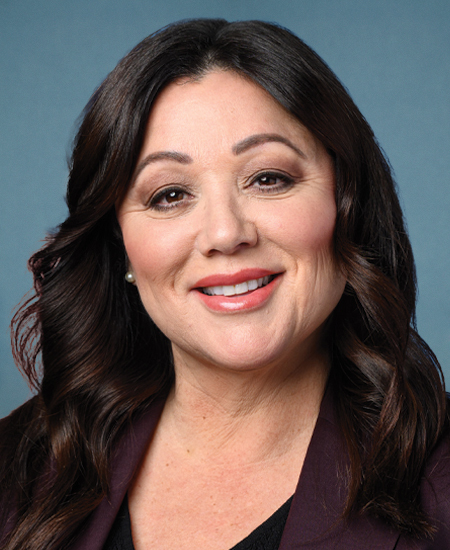
Rep. Lori Chavez-DeRemer
Sponsored bills
Maddy summaryThis bill creates a federally chartered National Center for the Advancement of Aviation to develop the U.S. aviation and aerospace workforce. The Center will provide grants for education and training programs, including scholarships, internships, and curriculum development for middle schools, high schools, and colleges focused on aviation careers. It will specifically support underrepresented groups and veterans transitioning to aviation careers while coordinating with government agencies to avoid duplicating existing programs. The Center must operate as a non-profit entity, maintain tax-exempt status, and submit annual reports to Congress on its activities.
Maddy summaryThe Flight Education Access Act increases federal student loan limits for students enrolled in eligible flight education programs, which prepare students for commercial pilot certification. It sets specific annual and aggregate loan limits based on a student's year of study (e.g., dependent students can borrow up to $111,000 total), and requires programs to meet a 70% completion rate after three years to maintain eligibility. The bill also creates a new $40 million annual grant program to support partnerships between educational institutions and aviation industry partners to diversify the pilot workforce and increase interest in aviation careers. It requires data collection on program completion rates and demographic information, with reports to Congress on the program's effectiveness.
Maddy summaryHR 2915, the Farm Workforce Support Act of 2023, requires the Comptroller General to study the H-2A visa program and submit a report to specific congressional committees within two years. The report must examine how the program affects hiring (including impacts on domestic and guest workers), challenges in providing housing for guest workers, wage rate effects on employer recruitment, economic impacts of lost wages for guest worker families, and compliance with working condition guarantees. This bill does not create new policy but mandates a detailed analysis of the existing H-2A program's operations and impacts. The study will directly inform Congress on the program's current functioning and potential issues.
Maddy summaryThis bill amends the Grand Ronde Reservation Act to clarify and preserve the hunting, fishing, trapping, and animal gathering rights of the Confederated Tribes of the Grand Ronde Community in Oregon. It ensures the existing 1986 "Grand Ronde Hunting and Fishing Agreement" remains in effect until replaced by new government-to-government agreements between the tribe and Oregon, requiring mutual consent for any changes. Future agreements cannot alter tribal rights (including treaty or aboriginal rights), limit Oregon’s ability to negotiate separately with other tribes, or be used in court to modify tribal treaty rights. All rights under new agreements would derive solely from Oregon’s authority, not tribal sovereignty.
Maddy summary# Summary of the National Apprenticeship Act of 2023 This proposed legislation establishes a comprehensive framework to modernize and expand apprenticeship programs in the United States, creating a National Apprenticeship System designed to address current workforce needs and increase opportunities for underrepresented populations. ## Key Provisions ### System Framework - Establishes clear quality standards for apprenticeship, pre-apprenticeship, and youth apprenticeship programs - Requires programs to meet specific criteria including: - Minimum 2,000 hours of on-the-job learning (with flexibility for some occupations) - Structured related instruction (minimum 144 hours per year for time-based programs) - Progressive wage scales - Safety training and equipment - Equal opportunity for participation ### Program Types - **Apprenticeship Programs**: Time-based, competency-based, or hybrid models for full-time workers - **Pre-apprenticeship Programs**: Designed to prepare individuals without meeting minimum qualifications for apprenticeship - **Youth Apprenticeship Programs**: For high school students, integrating academic and work-based learning ### Diversity & Inclusion Requirements - Requires programs to actively recruit and support nontraditional apprenticeship populations: - Women, minorities, individuals with disabilities - Long-term unemployed - Individuals impacted by the criminal or juvenile justice system - Foster and former foster youth - Individuals with barriers to employment ### Registration & Oversight - Requires formal registration of programs with a registration agency - Mandates annual performance data collection and reporting - Establishes procedures for program review, technical assistance, and deregistration ### Grant Program (Title II) - Authorizes $4 billion over five years ($400M-$800M annually) for competitive grants - Funds will support: - Creation and expansion of apprenticeship programs in high-demand sectors - Encouraging employer participation, particularly with small- and medium-sized businesses - Supporting intermediaries (national and local) - Strengthening educational alignment with secondary and postsecondary systems ### Evaluation Requirements - Mandates independent evaluations of grant programs - Requires collection of disaggregated data by program type and demographic factors - Focuses on measuring outcomes including: - Program completion rates - Employment rates in related fields - Wage growth - Increased participation of underrepresented groups ### Conforming Amendments - Repeals outdated sections of the American Competitiveness and Workforce Improvement Act of 1998 - Amends the Immigration and Nationality Act to align with the new apprenticeship system This legislation represents a significant investment in workforce development, aiming to create a more inclusive, high-quality apprenticeship system that responds to 21st-century labor market needs while expanding opportunities for historically underrepresented groups.

Maddy summaryHR 1756, the Dairy Pricing Opportunity Act of 2023, requires the U.S. Department of Agriculture to hold national hearings within 180 days of enactment to review the Federal milk marketing system, specifically focusing on the formula used to set the Class I skim milk price (the price for milk used in fluid products like milk and cheese). The bill mandates that the Secretary of Agriculture collect input from dairy producers and the industry on this pricing formula and other related matters during these hearings. It also amends federal law to require dairy processors to report detailed cost and yield information for all products made at their facilities, with the Secretary required to publish reports on this data every two years. This bill directly affects dairy producers, processors, and the regulatory framework governing milk pricing.
Maddy summaryThis bill adds law enforcement officers and firefighters to the list of groups eligible for free annual passes to national parks and federal recreational lands. It amends existing law to require the Secretary to provide these passes at no cost to qualifying officers (who prevent/detect crime or supervise offenders) and firefighters (who suppress fires, including wildland fires). Eligibility requires providing proof of employment with a federal, state, local, or tribal government entity. The pass covers access to national parks and federal recreational areas, directly benefiting these public safety workers.
Maddy summaryHR 734, the Protection of Women and Girls in Sports Act of 2023, amends Title IX to prohibit federally funded schools and athletic programs from allowing individuals assigned male at birth to participate in women's or girls' sports teams. The bill defines "sex" for this purpose as "reproductive biology and genetics at birth," making it a violation of federal law to permit such participation in designated women's or girls' programs. It allows males to train with women's teams only if no female is deprived of a roster spot, competition opportunity, scholarship, or other benefit tied to the team. This law directly affects public and private schools receiving federal financial assistance that operate athletic programs.
Maddy summaryHR 2802, the Improving Mental Health Access for Students Act, requires colleges and universities to include suicide prevention contact information on student identification cards. Specifically, institutions must list the National Suicide Prevention Lifeline, Crisis Text Line, and their campus mental health center on new ID cards. Schools that don't issue ID cards must post this information on their websites instead. The requirement takes effect one year after the bill's enactment.