

Prevent Family Fire Act of 2023 This bill allows through 2030 a new tax credit equal to 10% of amounts received from the first retail sale of a safe firearm storage device, not to exceed $400 per device. The bill defines safe firearm storage device as a device that is designed and marketed to deny unauthorized access to, or render inoperable, a firearm or ammunition, and is secured by a combination lock, key lock, or lock based on biometric information.
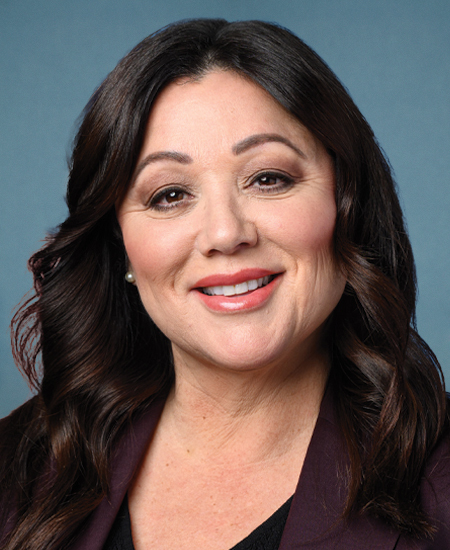
Rep. Lori Chavez-DeRemer
Sponsored bills
Maddy summaryHR 2785, the REEF Act, amends a 2020 law to change when certain payments from the Railroad Unemployment Insurance Account take effect. It retroactively applies changes to these payments as if they had been in place before the national emergency related to the COVID-19 pandemic ended. This directly affects railroad workers who receive unemployment benefits through this account, ensuring they receive payments under the revised timing. The bill's key change is making the effective date of these payment rules apply retroactively from before the pandemic emergency period.
Maddy summaryHR 2743 prohibits large financial institutions (over $100 billion in assets) from denying banking services to lawful businesses based on subjective political reasons, industry type, or reputational concerns. It requires these institutions to use objective, risk-based assessments for service decisions and provide written justifications for denials. The law applies to banks, credit unions, and payment networks, with civil penalties for violations including fines up to $10,000 per incident. It specifically ensures businesses operating legally under federal law receive fair access to financial services without discrimination. The bill mandates that denials be based on documented risk factors, not political bias or category-based exclusion.
Homeland and Cyber Threat Act or the HACT Act This bill allows claims in federal or state court against foreign states that conduct or participate in cyberattacks against U.S. nationals.
American Innovation and R&D Competitiveness Act of 2023 This bill eliminates the five-year amortization requirement for research and experimental expenditures, thus allowing continued expensing of such expenditures in the taxable years in which they are incurred.
Maddy summaryHR 2726, the Small Business Payment for Performance Act of 2023, requires U.S. government agencies to provide small businesses with interim partial payments when they unilaterally change construction contract terms. Specifically, it mandates that agencies pay at least 50% of the estimated additional costs requested by small businesses within the timeframe specified by the contract. The bill also requires small businesses to pass these interim payments to first-tier subcontractors and any lower-tier subcontractors who incurred increased costs due to the contract change. This law applies directly to small business concerns awarded federal construction contracts and takes effect by October 1, 2025, or the start of the next full fiscal year after enactment.
Maddy summaryThe Range Access Act (HR 1614) requires the Forest Service and Bureau of Land Management to identify existing target shooting ranges on federal lands and establish new ones where feasible. Within five years, agencies must construct or partner to build new ranges meeting specific safety standards (like berms, firing lines, and no user fees) that accommodate rifles, pistols, shotguns, and archery. The bill mandates public consultation with tribes, shooting clubs, and local governments before site selection, prioritizing proximity to recreational shooters while avoiding conflicts with existing private ranges. Annual reports to Congress will track progress toward ensuring public access to these ranges on federal lands.
Maddy summaryHJRES 27 is a congressional resolution seeking to block a federal rule that redefined which waterways fall under the Clean Water Act's protections. It targets a rule submitted by the Army Corps of Engineers, Department of Defense, and Environmental Protection Agency (EPA) on January 18, 2023, which aimed to revise the "Waters of the United States" definition. The resolution would formally disapprove this rule under a specific federal procedure (Chapter 8 of Title 5), preventing it from taking effect. This would directly affect how federal agencies regulate pollution and development near water bodies, including wetlands and smaller streams.
Harnessing Opportunities by Pursuing Expungement Act of 2023 or the HOPE Act of 2023 This bill authorizes the Department of Justice (DOJ) to make grants to states and local governments to reduce the financial and administrative burden of expunging convictions for state cannabis offenses. The bill also requires DOJ to study and report on (1) the effects on an individual of a criminal record report of a conviction for a criminal offense related to cannabis, and (2) the costs incurred for incarcerating an individual for a criminal offense related to cannabis.
Maddy summaryThis bill amends tax law to allow charitable organizations to fund collegiate housing projects without losing their tax-exempt status. Specifically, it permits 501(c)(3) charities to make grants for building, improving, or maintaining housing properties where full-time students live, as long as the housing is connected to a college or university. Grants cannot fund fitness facilities, and the bill clarifies that housing must primarily serve students (not incidental social activities). It directly affects charitable organizations and universities seeking tax-qualified funding for student housing infrastructure.