

Maddy summaryThe Veterans Equal Access Act (HR 2431) allows Department of Veterans Affairs (VA) health care providers to give recommendations and opinions to veterans about participating in state-legal marijuana programs. It directly affects veterans living in states, the District of Columbia, Puerto Rico, U.S. territories, or federally recognized tribes where marijuana is permitted under state law. The bill requires the VA Secretary to authorize VA physicians and staff to provide these recommendations, complete related forms, and override any conflicting federal restrictions that previously prohibited such advice. This change enables veterans to receive guidance from VA providers regarding state marijuana programs without fear of VA disciplinary action.
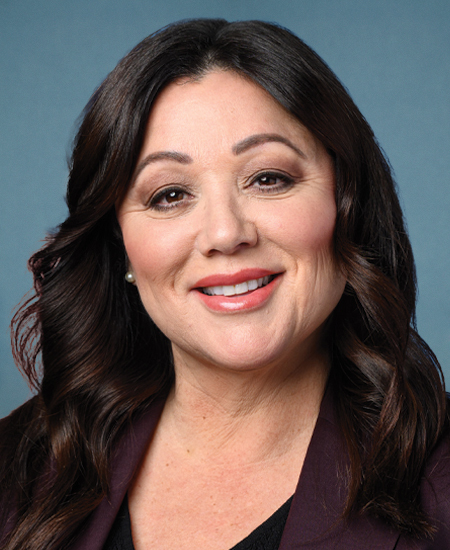
Rep. Lori Chavez-DeRemer
Sponsored bills
Maddy summaryThe PLUS for Veterans Act of 2023 clarifies and updates rules for veterans' benefit claims under the Department of Veterans Affairs. It sets a $12,500 annual fee cap (adjusted for inflation) for agents or attorneys representing veterans, prohibits charging fees for medical exams, and prohibits unauthorized fees with penalties including fines or up to one year in prison. The bill directly affects veterans seeking benefits, their legal representatives, and the VA by standardizing fee agreements, requiring VA reports on agent/attorney suspensions, and ensuring veterans can access free services from VA-recognized organizations. Key provisions include banning fees for medical reports and requiring clear fee disclosures to veterans.
Maddy summaryHR 1762, the Northwest Energy Security Act, requires the Secretaries of Interior, Energy, and Army (who manage the Federal Columbia River Power System) to operate dams and power facilities consistent with the 2020 Columbia River System Operations plan. It prevents any new restrictions on hydroelectric generation at FCRPS dams or Snake River navigation in Washington, Oregon, or Idaho without explicit new federal law. The bill allows the Secretaries to amend the 2020 plan only for public safety, grid reliability, or if requirements are no longer needed, using a specific process. This directly affects how federal agencies manage power operations and river traffic in the Pacific Northwest.
Maddy summaryHR 2584, the SAVE Act, creates a new federal criminal offense for assaulting or intimidating hospital employees while they're performing their duties, punishable by up to 10 years in prison, with enhanced penalties for using weapons, causing injury, or during public emergencies. The bill authorizes $25 million annually in federal grants to hospitals for violence prevention programs, including staff training, security technologies like panic buttons and video surveillance, and coordination with law enforcement. It defines "hospital" broadly to include various medical facilities such as long-term care hospitals, rehabilitation facilities, and critical access hospitals. The legislation directly affects hospital workers and medical facilities by establishing federal criminal penalties for violence against employees and providing funding to improve workplace safety. The law aims to address the rising problem of workplace violence against healthcare workers, which the bill states has increased since 2011.
Maddy summaryHR 2630, the Safe Step Act, requires group health plans and health insurance issuers to establish a clear, transparent process for patients or their doctors to request exceptions to medication step therapy protocols. These protocols typically force patients to try cheaper drugs first before covering more expensive alternatives. The bill mandates that plans must approve exceptions when prior treatments failed, delay would cause serious harm, a treatment is unsafe, or a patient is stable on a previously approved drug, with strict 72-hour (or 24-hour in emergencies) decision timelines. It also requires plans to publish the exception process online and limit documentation requests to only necessary medical information. This law directly affects health insurers, employers offering health plans, and patients using step therapy for prescription drugs.
Resident Physician Shortage Reduction Act of 2023 This bill increases the number of residency positions eligible for graduate medical education payments under Medicare for qualifying hospitals, including hospitals in rural areas and health professional shortage areas. Current law provides for an increase of up to 200 positions per fiscal year beginning in FY2023, with a total increase of 1,000 positions; each hospital may receive up to 25 additional positions. Current law also provides for an additional increase of up to 200 positions for FY2026, with at least 100 of these positions for psychiatry or related specialties; each hospital may receive up to 10 additional positions. The bill provides for an additional increase of 2,000 positions per fiscal year from FY2025-FY2031; during this period, each hospital may receive up to 75 additional positions in total under the bill and current law. Additionally, one-third of the positions that are made available under the bill must be allocated to hospitals that are already operating above applicable resident limits. The bill also requires the Government Accountability Office to report on strategies to increase the diversity of the health professional workforce, including with respect to representation from rural, low-income, and minority communities.
Maddy summaryHR 1839, the Combating Illicit Xylazine Act, makes the illicit use and distribution of xylazine a federal crime by adding it to the Controlled Substances Act. The bill broadly defines xylazine to cover numerous chemical variants and prohibits human use or non-licit distribution, while preserving legitimate veterinary and pharmaceutical uses. It requires tracking xylazine in drug supply chains and mandates two reports to Congress within 1 and 4 years on its prevalence, sources, and whether it should be rescheduled. The bill directly affects individuals distributing or using xylazine illicitly, including as an additive to drugs like fentanyl, and aims to address its public health risks. Congress declared illicit xylazine an "emerging drug threat" under existing law.
Maddy summaryHRES 277 is a non-binding resolution passed by the U.S. House of Representatives in April 2023 that urges the United States Postal Service (USPS) to restore mail delivery standards in effect as of July 1, 2012. It specifically calls for ending the 2015 service cuts that eliminated overnight first-class mail delivery and delayed other mail types, which the resolution states harmed businesses, rural communities, and the economy. The resolution cites the Postal Regulatory Commission’s finding that USPS could achieve cost savings without degrading service, emphasizing that returning to 2012 standards would improve delivery reliability without worsening USPS finances. As a resolution, it does not mandate action but expresses the House’s policy preference.
Maddy summaryHR 2510 makes the federal adoption credit for children with special needs refundable, meaning families who adopt such children can receive a cash refund even if they don't owe federal income tax. The bill directly affects adoptive parents who claim the credit for children with special needs, allowing them to get the full credit amount as a refund rather than just reducing their tax bill. Key provisions define "special needs adoption expenses" as qualified costs for these adoptions and adjust tax code language to treat this portion as a refundable credit. The changes apply to taxable years beginning after December 31, 2023.
Maddy summaryHR 1581, the America Works Act of 2023, modifies work requirement exemptions for the Supplemental Nutrition Assistance Program (SNAP). It expands direct exemptions to include individuals medically certified as unfit for work, parents or caregivers of children under 7, and pregnant women, while removing a specific enforcement clause (Section 6(o)(4)(A)(ii)). The bill adjusts existing exemption rules to clarify that certain exemptions apply retroactively to cases beginning before the bill's enactment date. These changes directly affect SNAP recipients who would otherwise face work requirements under federal law.