

Maddy summaryThe FEND Off Fentanyl Act (HR 3333) establishes new sanctions targeting foreign persons and transnational criminal organizations involved in fentanyl trafficking, specifically naming Mexican cartels like the Sinaloa Cartel and Jalisco New Generation Cartel. It authorizes the President to block transactions with individuals facilitating fentanyl trafficking and requires annual reports to Congress on enforcement actions. The bill also designates fentanyl-related transactions as a primary money laundering concern for financial institutions and extends the statute of limitations for sanctions violations to eight years. These measures aim to disrupt fentanyl trafficking networks by targeting both the drug flow and the financial mechanisms supporting them.
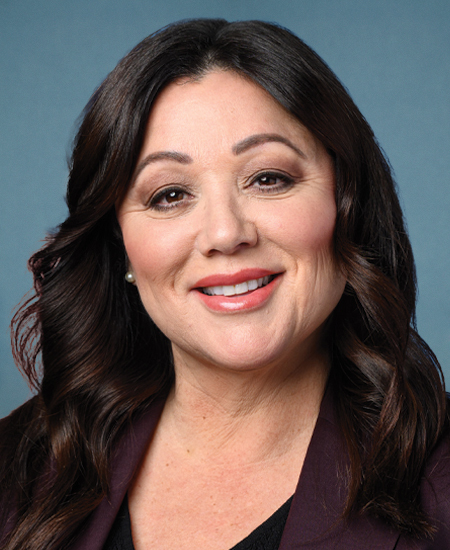
Rep. Lori Chavez-DeRemer
Sponsored bills
Maddy summaryThe FIGHT Act (HR 2742) amends the Animal Welfare Act to specifically target animal fighting events, such as cockfighting, by defining "rooster" as any male chicken over six months old and banning the live broadcasting (simulcasting) of such events. It prohibits using the postal service or interstate transport to move roosters for animal fighting purposes and adds civil enforcement tools allowing citizens to sue violators after a 60-day notice period. Fines up to $5,000 per violation may be imposed, and property used in animal fighting ventures can be seized. These changes strengthen enforcement against animal fighting by expanding legal remedies for the public and authorities.
Maddy summaryHR 3238, the Affordable Housing Credit Improvement Act of 2023, updates the Low-Income Housing Tax Credit (LIHTC) program to increase the availability of affordable housing across the United States. The bill makes several key changes including increasing state funding formulas, modifying tenant eligibility rules to better serve vulnerable populations (such as domestic violence victims and students), and expanding credit eligibility for projects in rural and Native American communities. Specific provisions raise the credit for properties serving extremely low-income households, clarify rules around tenant income increases, and require housing providers to protect victims of domestic violence. The bill also updates terminology from "low-income" to "affordable" throughout the tax code and enhances program transparency through data sharing requirements. These changes aim to make the LIHTC program more effective at creating and preserving affordable housing units for low-income households nationwide.
Maddy summaryHR 3179, the Supporting Apprenticeship Colleges Act of 2023, provides federal grants to colleges offering construction and manufacturing apprenticeship programs. It funds two key initiatives: (1) Community Outreach Grants to help colleges recruit students and partner with employers, especially in rural areas and for underrepresented groups like first-generation, minority, and nontraditional students; and (2) Student Support Grants to improve retention through services like career advising, mental health resources, and childcare. The bill allocates $5 million annually (2024-2028) for these programs, with each college receiving up to $500,000 per grant. It directly affects apprenticeship colleges, their students, and local employers by expanding access to skilled trades careers.
Maddy summaryThe HELPER Act of 2023 creates a new FHA mortgage insurance program specifically for first responders and K-12 teachers. It allows eligible first-time homebuyers in these professions to secure mortgages with 100% financing (no down payment required) for purchasing or repairing a primary residence. To qualify, applicants must be employed as law enforcement, firefighters, paramedics, or K-12 teachers, have completed housing counseling, and meet specific employment history requirements (e.g., 4 years in the role or disability-related release). The program authorizes $660,000 for fiscal year 2024 and $160,000 annually through 2030, with authority expiring after 5 years.
Maddy summaryHR 2757, the Puerto Rico Status Act, establishes a process for Puerto Rico to determine its political status through a plebiscite on November 2, 2025, offering three options: independence, sovereignty in free association with the United States, or statehood. If no option receives a majority in the initial vote, a runoff plebiscite would be held on March 8, 2026. The bill outlines transition processes for each option, including constitutional conventions, implementation steps, and provisions for citizenship, immigration, and economic benefits. It mandates bilingual voter education materials and requires oversight by the Elections Commission and the Attorney General to ensure fair representation of all options. This legislation directly affects Puerto Rico's residents by providing a structured process to choose their permanent political relationship with the United States.
Maddy summaryHR 3059, the Resilient Airports Act, updates federal definitions to improve funding for airport resilience after disasters. It specifically defines "critical airport infrastructure" as runways, taxiways, and aprons needed for commercial operations or general aviation airports designated as emergency staging areas (like Federal Incident Support Bases). The bill also expands "natural disaster" to explicitly include events like hurricanes, wildfires, and floods. These changes ensure airports can quickly resume operations under visual flight rules after disasters by clarifying which infrastructure qualifies for improvement funding. The bill directly affects airports, particularly smaller general aviation facilities used for emergency response coordination.
Maddy summaryThe SAFE Banking Act of 2023 would protect banks and financial institutions that provide services to state-legal marijuana businesses and hemp-related businesses by preventing federal regulators from taking adverse actions against them solely for serving these businesses. It clarifies that income from state-legal marijuana businesses can be considered for mortgage applications, and requires regulators to update guidance on suspicious activity reports related to these businesses. The bill does not require financial institutions to serve these businesses, but ensures they won't face penalties for doing so. It extends similar protections to hemp-related businesses, which have faced banking challenges despite being federally legal under the 2018 Farm Bill.
Scope 3 Act This bill prohibits any securities law requirement that an issuer of securities must disclose the greenhouse gas emissions of its value chain (i.e., scope 3 emissions).
Maddy summaryHR 2955, the Stop Institutional Child Abuse Act, establishes a Federal Work Group to improve data collection and best practices for youth in residential programs (like therapeutic schools, treatment centers, and group homes). The Work Group, composed of federal agency representatives and diverse stakeholders, must develop national data standards, create risk assessment tools, and issue biennial reports with recommendations to enhance safety, reduce restraints, and expand community-based alternatives. It directly affects youth with mental health, substance use, or disability needs placed in these facilities, as well as agencies overseeing them. The bill also mandates a National Academies study to examine funding, oversight, and barriers to community care. These mechanisms aim to standardize data tracking and promote less restrictive, trauma-informed care for youth in residential programs.