

Ocean Shipping Reform Act of 2021 This bill revises provisions related to ocean shipping policies and is designed to support the growth and development of U.S. exports and promote reciprocal trade in the common carriage of goods by water in the foreign commerce of the United States. Among other provisions, the bill sets forth requirements for operating a shipping exchange involving ocean transportation in the foreign commerce of the United States; requires ocean common carriers to report to the Federal Maritime Commission (FMC) each calendar quarter on total import and export tonnage and the total loaded and empty 20-foot equivalent units per vessel that makes port in the United States; requires the FMC to publish and annually update all its findings of false certifications by ocean common carriers or marine terminal operators and all penalties assessed against such carriers or operators; revises annual reporting requirements for the FMC on foreign laws and practices to include practices by ocean common carriers; prohibits ocean common carriers and marine terminal operators from retaliating or discriminating against shippers because such shippers have patronized another carrier, or filed a complaint; directs the FMC to establish rules prohibiting ocean common carriers and marine terminal operators from adopting and applying unjust and unreasonable demurrage and detention fees; authorizes the FMC to initiate investigations of an ocean common carrier's fees or charges and apply enforcement measures, as appropriate; directs the Department of Transportation to seek to enter into an agreement with the National Academy of Sciences to study the U.S. supply chain industry, including data constraints that impede the flow of maritime cargo and add to supply chain inefficiencies; and provides authority for the FMC to issue an emergency order requiring ocean common carriers or marine terminal operators to share directly with relevant shippers, rail carriers, or motor carriers information relating to cargo throughput and availability.
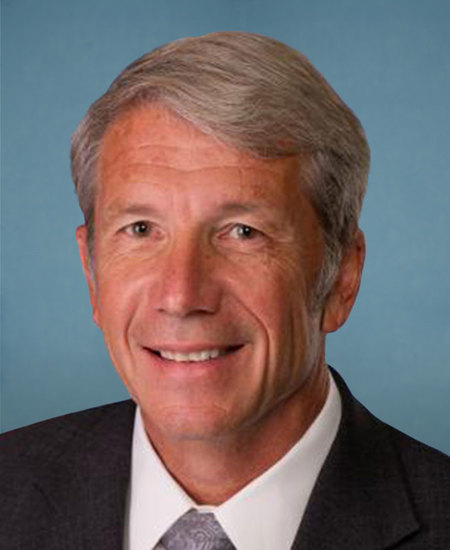
Rep. Kurt Schrader
Sponsored bills
Radiation Exposure Compensation Act Amendments of 2021 This bill expands two programs that compensate individuals who were exposed to radiation during certain nuclear testing or uranium mining and subsequently developed medical conditions, including cancers. First, the bill expands and extends a program that compensates individuals who were exposed to radiation from atmospheric nuclear testing or other sources and subsequently developed specified cancers. Under current law, this program compensates individuals who were present in a designated geographic area during a period of nuclear testing and certain individuals employed in uranium mining. The bill expands the designated areas to include Colorado, Idaho, Montana, New Mexico, and Guam and additional areas in Arizona, Nevada, and Utah; makes more individuals who worked in uranium mining eligible for the program; increases the amount of compensation awarded to and provides medical benefits for eligible claimants; and extends for 19 years following the bill's enactment the fund that supports this program and the statute of limitations for filing claims (currently, the program terminates on July 10, 2022). Second, the bill makes certain individuals employed in uranium mines or mills eligible for a program that compensates workers, including Department of Energy employees and contractors, for illnesses caused by occupational exposure to radiation and hazardous substances during development and testing of the nation's nuclear weapons stockpile. The bill also establishes a grant program in the National Institute of Environmental Health Sciences for institutions of higher education to study the epidemiological impacts of uranium mining and milling among individuals without occupational exposure.
Maternal Vaccination Act This bill includes a focus on pregnant and postpartum individuals in existing public health activities to increase vaccination rates. First, the Centers for Disease Control and Prevention must incorporate a focus on pregnant and postpartum individuals, including by disseminating information to obstetric health care providers, into its existing public awareness campaign about the importance of vaccinations. Second, the bill expressly allows certain project grants for preventive health services to be used for activities to increase vaccination rates of pregnant and postpartum individuals (and their children).
Maddy summaryHRES 815 is a symbolic resolution introduced in the U.S. House of Representatives on November 18, 2021. It expresses congressional support for National Rural Health Day, which recognizes the importance of rural health care and celebrates providers serving rural communities. The resolution highlights challenges like hospital closures and access barriers faced by rural health facilities but does not create new laws or funding. It simply affirms commitment to improving rural health care accessibility through policy, without specifying concrete changes. As a procedural resolution, it has no binding effect on legislation or funding.
IDEA Full Funding Act This bill provides permanent, mandatory funding for the grant program that assists states and outlying areas in providing special education and related services to children with disabilities.
This concurrent resolution declares that Congress should not impose any new performance fee, tax, royalty, or other charge relating to the public performance of sound recordings on a local radio station for broadcasting sound recordings over the air, or on any business for such public performance of sound recordings.
Fiscal State of the Nation Resolution This concurrent resolution requires the congressional budget committees to conduct an annual joint hearing to receive a presentation from the Comptroller General regarding (1) the Government Accountability Office's audit of the financial statement of the executive branch, and (2) the financial position and condition of the federal government.
Public Service Freedom to Negotiate Act of 20 21 This bill provides minimum collective bargaining rights and procedures for public employees and prohibits strikes by certain public safety workers. The Federal Labor Relations Authority (FLRA) shall determine for each state whether the laws of such state substantially provide for each of the minimum standard collective bargaining rights and procedures specified by this bill, including the right of public employees and supervisory employees to self-organize, form or join a labor organization, or collectively bargain. The FLRA must issue rules and take actions to establish and administer bargaining rights and procedures for those states that do not substantially provide for them. No employers, emergency services employees, or law enforcement officers may engage in a lockout, strike, or any other organized job action that is likely to result in a measurable disruption of the delivery of emergency or public safety services. Furthermore, no labor organization may be the cause of a violation of such prohibition.
State, Local, Tribal, and Territorial Fiscal Recovery, Infrastructure, and Disaster Relief Flexibility Act This bill allows states, tribes, territories, and localities to use certain COVID-19 relief funds for new categories of spending, including for natural disasters and infrastructure projects. It also makes changes to expenditure deadlines and other aspects of this funding. Specifically, recipients may use funds for emergency relief from natural disasters and associated negative economic impacts of natural disasters. In addition, recipients may use a portion of their COVID-19 relief funds for designated infrastructure projects, such as nationally significant freight and highway projects. Furthermore, the bill allows recipients to expend COVID-19 relief funds on these types of infrastructure projects until September 30, 2026. Under current law, recipients must expend the funds by December 31, 2024. Other changes in the bill include (1) modifying eligibility and allocation requirements for funding set aside for counties and Indian tribes that are near public lands, (2) allowing Indian tribes an additional year to expend their COVID-19 relief funds, and (3) establishing a process for government entities to decline COVID-19 relief funds and requiring any declined funds to be used to reduce the federal deficit.
Communications Security, Reliability, and Interoperability Council Act This bill provides statutory authority for a council that makes recommendations to the Federal Communications Commission regarding ways to increase the security, reliability, and interoperability of communications networks.