

DMEPOS Relief Act of 2022 or the DRA of 2022 This bill increases payment adjustments for certain items that were included in Round 2021 of the Medicare Durable Medical Equipment, Prosthetics, Orthotics, and Supplies (DMEPOS) Competitive Bidding Program but for which contracts were not executed. The bill applies to items that are furnished between January 1, 2022, and December 31, 2023, and that were not subject to the unadjusted fee schedule amount as of January 1, 2021. Under the DMEPOS Competitive Bidding Program, the Centers for Medicare & Medicaid Services (CMS) sets payment for certain durable medical equipment under Medicare based on a competitive bidding process with suppliers, rather than the fee schedule amount. The CMS included 16 product categories in Round 2021 of the program but ultimately did not award contracts for 13 of these categories (that were also in previous rounds) as the resulting payment amounts did not achieve expected savings.
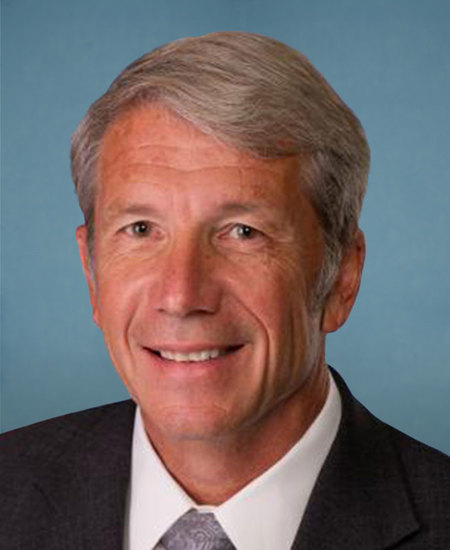
Rep. Kurt Schrader
Sponsored bills
Informed Lawmaking to Combat Inflation Act This bill requires the Congressional Budget Office to provide inflation estimates for certain legislation that is projected to cause an annual gross budgetary effect of at least 0.25% of the projected gross domestic product of the United States. The estimates must determine whether the legislation will have no significant impact on inflation, a quantifiable inflationary impact on the consumer price index, or a significant impact on inflation that cannot be quantified at the time the estimate is prepared. The requirement does not apply to legislation that (1) provides for emergency assistance or relief at the request of any state, local, or tribal government; or (2) is necessary for the national security or the ratification or implementation of international treaty obligations.
Leading Infrastructure For Tomorrow’s America Act or the LIFT America Act This bill establishes several programs and incentives to modernize the nation's communications, drinking water, energy, transportation, health care, and other related infrastructure. For example, the bill provides incentives to make broadband internet more accessible and affordable. It also establishes grants to implement next generation 9-1-1 services. In addition, it supports drinking water programs, including the drinking water state revolving fund program. Further, it provides grants to treat perfluoroalkyl or polyfluoroalkyl substances (commonly referred to as PFAS) in drinking water and to replace lead service lines. The bill establishes a variety of programs to support clean energy infrastructure and address climate change, including efforts to (1) modernize the electric grid and make it more resilient, efficient, and secure; (2) increase energy efficiency in buildings; and (3) support renewable energy infrastructure. Further, it provides incentives for vehicle infrastructure, such as incentives to develop infrastructure for electric vehicles and grants to reduce air pollution at ports by electrifying port infrastructure. Additionally, the bill establishes grants and programs for health care infrastructure, including by providing support for the Centers for Disease Control and Prevention, laboratories, and state, local, tribal, and territorial health departments. Finally, the bill reauthorizes grant programs to remediate brownfield sites (i.e., sites contaminated with hazardous substances) through FY2026.
PrEP Access and Coverage Act This bill requires private health insurance plans to cover prescription drugs that prevent HIV, including related screenings, diagnostic procedures, administrative fees, and clinical follow-ups, without any cost-sharing obligation for the plan holder. Further, insurance plans must not impose any preauthorization requirement for this coverage. These coverage requirements also apply to public health insurance programs, including Medicare, Medicaid, and the Children's Health Insurance Program. Additionally, the bill prohibits denying, limiting, or qualifying coverage or increasing premiums for disability insurance, long-term care insurance, or life insurance policies based on an individual taking medication for HIV prevention. The bill further requires the Department of Health and Human Services to award grants to states, or directly to eligible local organizations, to provide uninsured individuals and underinsured individuals access to prescription drugs and related services that prevent HIV. The Centers for Disease Control and Prevention also must develop a public awareness campaign that focuses efforts in communities with a high need for HIV prevention treatment.
Cures 2.0 Act This bill addresses pandemic preparedness and public health issues, caregiver and patient engagement, drug development, insurance coverage, and biomedical research. The Department of Health and Human Services (HHS) must undertake research and other activities concerning COVID-19 and develop a strategy for future pandemics and declared emergencies. Additionally, the bill specifies actions to combat antimicrobial resistance. HHS may award grants for caregiver training. The bill also addresses diversity in clinical trials, collecting patient experience data during clinical trials, and coverage for care related to participation in specified clinical trials. The bill modifies the timeframe and requires additional guidance relating to expedited approval of certain breakthrough drugs, devices, or products. It also establishes two intercenter institutes within the Food and Drug Administration (FDA) focused on particular diseases that meet specified criteria. The bill also addresses (1) coverage in Medicare, Medicaid, and the Children's Health Insurance Program for telehealth, genetic and genomic testing, and other services; (2) electronic prescribing standards for Medicare drug benefits; and (3) access to Medicare and Medicaid claims data by certain registries. Furthermore, the bill prohibits the use of geographic tracking or biometrics in Medicaid electronic visit verification systems. The bill establishes the Advanced Research Projects Agency for Health (ARPA-H) within the National Institutes of Health to accelerate biomedical research and innovation through grants, contracts, cash prizes, and other means. The FDA may work with ARPA-H to expedite the development of medical products through specified activities.
This bill provides a process by which the Confederated Tribes of Siletz Indians and Oregon may negotiate to amend or replace the existing agreement defining the tribe's hunting, fishing, trapping, and animal gathering rights. The current agreement, which was made effective by a May 2, 1980, consent decree by the U.S. District Court for the District of Oregon, serves as the exclusive and final determination of the tribe's hunting, fishing, trapping, and gathering rights. This bill instead allows an April 22, 1980, agreement between the United States, Oregon, and the tribe (known as the Siletz Agreement) to define the tribe's rights until and unless it is amended or replaced upon mutual agreement of the tribe and Oregon. The bill allows the tribe and Oregon to return to the U.S. District Court for the District of Oregon to request the modification or termination of the May 2, 1980, consent decree.
This bill provides a process by which the Confederated Tribes of the Grand Ronde Community of Oregon and Oregon may negotiate to amend or replace the existing agreement defining the tribe's hunting, fishing, trapping, and animal gathering rights. The current agreement, which was made effective by a January 12, 1987, consent decree by the U.S. District Court for the District of Oregon, serves as the exclusive and final determination of the tribe's hunting, fishing, trapping, and gathering rights. This bill instead allows a December 2, 1986, agreement between the United States, Oregon, and the tribe (known as the Grand Ronde Hunting and Fishing Agreement) to define the tribe's rights until and unless it is amended or replaced upon mutual agreement of the tribe and Oregon. The bill allows the tribe and Oregon to return to the U.S. District Court for the District of Oregon to request the modification or termination of the January 12, 1987, consent decree.
ACO Assignment Improvement Act of 2021 This bill establishes additional requirements for assigning Medicare fee-for-service beneficiaries to accountable care organizations (ACOs) under the Medicare shared savings program. Under current law, the program enables ACOs to receive payments for savings stemming from care coordination and management. The bill requires the basis for assignment to reflect beneficiaries' utilization of not only primary care services provided by ACO physicians, but also those provided by other ACO practitioners—specifically, physician assistants, nurse practitioners, and clinical nurse specialists.
This concurrent resolution expresses the sense of Congress that tax-exempt fraternal benefit societies provide critical benefits to the people and communities of the United States and their work should continue to be promoted.
Taiwan Preclearance Act This bill requires the Department of Homeland Security to report to Congress on various issues, including (1) a plan for establishing a U.S. Customs and Border Protection preclearance facility in the Indo-Pacific region; (2) an analysis of the feasibility and advisability of establishing a preclearance facility in Taiwan; and (3) an assessment of the impact that a preclearance facility will have on trade, tourism, and the security partnership between Taiwan and the United States. (Preclearance facilities are stations in designated foreign airports that inspect travelers prior to boarding U.S.-bound flights.)