

Maddy summaryThis bill prohibits financial institutions (like banks and credit card processors) from using special transaction codes that separately identify firearm or ammunition sellers. It directly affects gun retailers and the financial services they use, ensuring these businesses are treated the same as other merchants for payment processing. The key provision amends the Truth in Lending Act to ban covered entities from categorizing firearm transactions differently, requiring uniform handling of all business types. This changes how payment systems classify transactions but does not alter gun ownership laws.
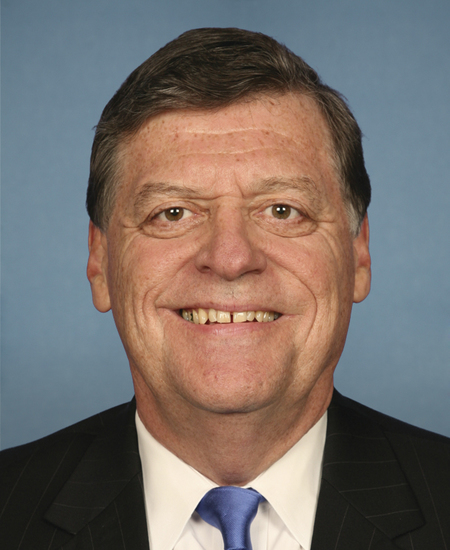
Rep. Tom Cole
Sponsored bills
Maddy summaryThis bill protects living organ donors from insurance discrimination by prohibiting life, disability, and long-term care insurers from denying coverage, raising premiums, or altering policy terms solely because someone donated an organ while alive. It also updates the Family and Medical Leave Act to include recovery from organ donation surgery as a qualifying health condition, allowing donors to take protected leave for this purpose. Additionally, the bill requires the Health and Human Services Secretary to update public educational materials about living donation benefits, risks, and insurance protections within six months of enactment. These changes directly affect living organ donors, insurers, employers, and healthcare systems by ensuring fair access to insurance and workplace leave.
Maddy summaryThe Employee Rights Act (HR 2700) amends key labor laws to strengthen employee rights in collective bargaining and privacy. It requires employers to use secret ballot elections for selecting bargaining representatives and to provide labor organizations with voter lists containing employee names and one form of contact information (chosen by the employee) within two business days of an election. The bill prohibits employers from using employee personal information for non-organizing purposes and mandates written authorization for using union dues on non-bargaining activities, with authorizations expiring after one year. Additionally, it clarifies joint employment standards to prevent misclassification and adds tribal sovereignty protections to labor law definitions.
Protect American Election Administration Act of 2023 This bill generally prohibits a state from soliciting, receiving, or expending any payment or donation of funds, property, or personal services from a private entity for the purpose of administering a federal election. For example, the bill prohibits the use of these payments or donations for programs related to voter education, outreach, and registration. The prohibition shall not apply to a state's acceptance and use of a private entity's donation of space to be used for a polling place or an early voting site.
Maddy summaryHRES 327 is a procedural resolution that sets the rules for the House to debate and vote on two specific legislative measures: H.R. 2811 (a bill to responsibly raise the federal debt ceiling) and H.J. Res. 39 (a resolution disapproving a Department of Commerce rule on duties and liquidation procedures). It waives all procedural objections to these measures, limits debate time (two hours for H.R. 2811, one hour for H.J. Res. 39), and designates committee leaders to control discussion. This resolution does not change the content of the bills but streamlines their legislative process by establishing clear timing and debate rules.
Maddy summaryThis bill reauthorizes $150 million annually in federal funding for diabetes prevention and treatment programs serving American Indian and Alaska Native communities, extending the existing program through fiscal year 2028. It directly affects tribal health programs and Native American communities by ensuring continued access to critical diabetes care services. The key provision adds a new funding allocation of $150 million per year for 2024-2028 to the Public Health Service Act, with funds remaining available until fully spent. This maintains current program levels without altering eligibility or service requirements.
Maddy summaryThis bill extends the Special Diabetes Program for Type 1 diabetes through 2028, continuing existing federal funding that supports research, prevention, and treatment initiatives. It directly affects people living with Type 1 diabetes by ensuring ongoing access to critical resources funded under the Public Health Service Act. The key provision amends Section 330B(b)(2)(D) to update the program's funding period from ending in 2023 to ending in 2028. This is a straightforward reauthorization of current funding levels without new program requirements or eligibility changes.
Maddy summaryHJRES 27 is a congressional resolution seeking to block a federal rule that redefined which waterways fall under the Clean Water Act's protections. It targets a rule submitted by the Army Corps of Engineers, Department of Defense, and Environmental Protection Agency (EPA) on January 18, 2023, which aimed to revise the "Waters of the United States" definition. The resolution would formally disapprove this rule under a specific federal procedure (Chapter 8 of Title 5), preventing it from taking effect. This would directly affect how federal agencies regulate pollution and development near water bodies, including wetlands and smaller streams.
Maddy summaryHR 2665 delays Medicaid payment reductions for safety net hospitals by two years, changing the effective date from 2024 to 2026 under Section 1923(f)(7)(A) of the Social Security Act. This bill directly affects hospitals that serve high numbers of low-income and uninsured patients, providing them with additional time before facing reduced federal Medicaid payments. The key mechanism is a technical amendment to existing law, postponing an already scheduled payment adjustment without altering funding levels or eligibility. As a procedural bill, it does not create new programs or change hospital requirements.
Maddy summaryHR 2630, the Safe Step Act, requires group health plans and health insurance issuers to establish a clear, transparent process for patients or their doctors to request exceptions to medication step therapy protocols. These protocols typically force patients to try cheaper drugs first before covering more expensive alternatives. The bill mandates that plans must approve exceptions when prior treatments failed, delay would cause serious harm, a treatment is unsafe, or a patient is stable on a previously approved drug, with strict 72-hour (or 24-hour in emergencies) decision timelines. It also requires plans to publish the exception process online and limit documentation requests to only necessary medical information. This law directly affects health insurers, employers offering health plans, and patients using step therapy for prescription drugs.