

Tax Fairness for Disaster Victims Act This bill allows individual taxpayers living in a disaster area to use earned income from a preceding taxable year for purposes of calculating the earned income tax credit. The bill applies if current year income is disrupted by a disaster and is less than the income of the preceding taxable year.
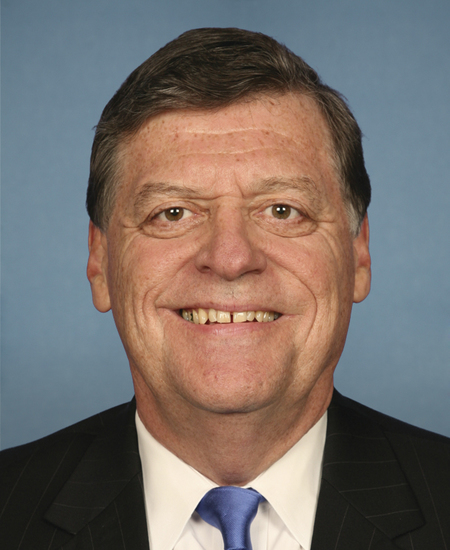
Rep. Tom Cole
Sponsored bills
Resident Physician Shortage Reduction Act of 2023 This bill increases the number of residency positions eligible for graduate medical education payments under Medicare for qualifying hospitals, including hospitals in rural areas and health professional shortage areas. Current law provides for an increase of up to 200 positions per fiscal year beginning in FY2023, with a total increase of 1,000 positions; each hospital may receive up to 25 additional positions. Current law also provides for an additional increase of up to 200 positions for FY2026, with at least 100 of these positions for psychiatry or related specialties; each hospital may receive up to 10 additional positions. The bill provides for an additional increase of 2,000 positions per fiscal year from FY2025-FY2031; during this period, each hospital may receive up to 75 additional positions in total under the bill and current law. Additionally, one-third of the positions that are made available under the bill must be allocated to hospitals that are already operating above applicable resident limits. The bill also requires the Government Accountability Office to report on strategies to increase the diversity of the health professional workforce, including with respect to representation from rural, low-income, and minority communities.
Maddy summaryHR 2380, the Cellphone Jamming Reform Act of 2023, allows state and federal correctional facilities (like prisons and jails) to operate cellphone jamming systems to block wireless signals from contraband devices or communications involving individuals held in the facility. The bill restricts the Federal Communications Commission (FCC) from blocking such jamming systems, but requires facilities to limit jamming only to housing areas, have state facilities cover all costs, and consult with local law enforcement before implementation. It defines "jamming systems" broadly to include all necessary equipment and installation details. This bill directly affects correctional facilities seeking to prevent cell phone use by inmates, particularly for security purposes related to contraband. The law does not create new restrictions on cellphone use but changes how facilities can deploy jamming technology.
Maddy summaryHR 1139, the GUARD VA Benefits Act, amends federal law to strengthen penalties for individuals or organizations charging veterans unauthorized fees when helping with VA benefit claims. It directly affects veterans seeking assistance with VA claims and the representatives (like advocates or attorneys) who might charge them fees. The bill adds a new provision making it a violation to solicit, charge, or receive any fee for preparing, presenting, or prosecuting VA claims, punishable by fines under Title 18. This change specifically targets unauthorized fee-charging while excluding fees covered under existing exceptions in sections 5904 or 1984 of the law.
Maddy summaryHR 1794 authorizes the minting of commemorative coins to honor the 2028 Los Angeles Olympic and Paralympic Games. It specifies four coin types ($5 gold, $1 silver, half-dollar clad, and proof silver $1) with defined weights, sizes, and mintage limits (e.g., up to 100,000 gold coins). A surcharge is added to each coin sale (e.g., $35 for gold coins), with all surcharge funds directed to the U.S. Olympic and Paralympic Properties to support legacy programs and the Games' operations. The coins must be issued only during 2028 and are legal tender, though the bill focuses solely on commemorative coinage, not policy changes.
Maddy summaryHR 1777 establishes a $50 million annual fund (2024-2028) for collaborative defense research between the U.S. and Israel in emerging technologies like artificial intelligence, cybersecurity, directed energy, and automation. The bill directly supports U.S. and Israeli military forces by enabling joint development of new warfare capabilities to address current and future defense challenges. Key provisions include authorizing $50 million per year for collaborative projects, building on existing U.S.-Israel defense partnerships like counter-tunnel and counter-drone systems. This funding aims to strengthen bilateral defense innovation without altering existing military aid structures.
Maddy summaryHR 1637 establishes a Medicare pilot program called the Dementia Care Management Model to improve care for beneficiaries with Alzheimer's disease or related dementia. It requires participating providers to offer comprehensive services - including continuous monitoring, personalized care plans, medication management, and caregiver support - while excluding hospice care. Payments are made monthly based on patient needs (with pathways for uncomplicated vs. complex cases) and include quality-based bonuses, with no cost-sharing for beneficiaries. The model tests whether this approach improves health outcomes, care quality, and caregiver support while reducing Medicare spending, targeting Medicare beneficiaries not in nursing homes or hospice who meet specific diagnosis and enrollment criteria.
Maddy summaryHR 1725, the "End Zuckerbucks Act," amends the Internal Revenue Code to prohibit 501(c)(3) organizations (like charities and nonprofits) from providing direct or indirect funding - including subsidies, scholarships, or below-cost services - to official election organizations, including state or local government election entities. This restriction applies to all funding provided in taxable years beginning after December 31, 2023. The bill directly affects tax-exempt nonprofits that previously could support election-related activities through financial assistance. It does not change existing rules for other types of organizations or public funding.
Maddy summaryThe BADGES for Native Communities Act (HR 1292) creates a Tribal facilitator within the National Missing and Unidentified Persons System to improve tracking of missing persons, unclaimed remains, and unidentified remains cases involving Native Americans. It establishes a demonstration program to streamline background checks for Bureau of Indian Affairs law enforcement officers and creates a grant program to help tribes and states coordinate responses to missing and murdered Indigenous people cases. The bill also requires annual reports on law enforcement staffing needs in Indian country and mandates a study on evidence collection practices by federal law enforcement agencies. Additionally, it directs coordination between health and justice agencies to provide mental health resources for law enforcement officers serving Native communities. This legislation directly benefits Indian Tribes, Bureau of Indian Affairs personnel, and tribal law enforcement agencies by addressing systemic gaps in safety and response systems.
Maddy summaryHR 1503, the Prescription Information Modernization Act of 2023, allows drug manufacturers to provide FDA-approved prescribing information exclusively via digital means (like email or online portals) to doctors and pharmacists, while requiring them to still offer paper copies upon request at no extra cost. The bill directly affects drug manufacturers and distributors, who must implement this change by 2025 (or when regulations take effect), and ensures prescribers and dispensers can choose their preferred format. Key provisions include mandating manufacturers to honor paper requests promptly without additional fees and requiring the Health Secretary to issue implementing regulations within one year. The law aims to modernize how medical information is shared while maintaining accessibility for healthcare providers.