

National Law Enforcement Officers Remembrance, Support and Community Outreach Act This bill directs the Department of Justice (DOJ) to establish a National Law Enforcement Officers Remembrance, Support, and Community Outreach Program. The bill further directs DOJ to award a grant under the program to the National Law Enforcement Officers Memorial Fund for the expenses associated with community outreach, public education, and officer safety and wellness programs operated by the of the National Law Enforcement Officers Memorial Fund and National Law Enforcement Museum.
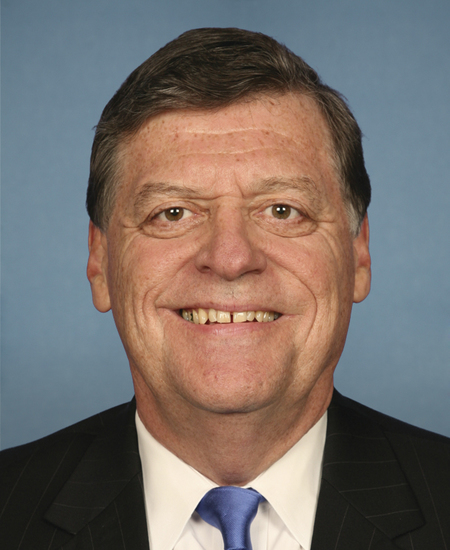
Rep. Tom Cole
Sponsored bills
Maddy summaryHRES 363 is a resolution expressing support for recognizing National Police Week, an annual observance established by law to honor law enforcement officers who have died in the line of duty. The resolution acknowledges 556 officers killed in the line of duty during 2022 and calls for ensuring law enforcement officers have necessary equipment, training, and resources to protect both themselves and the public. It encourages the American public to observe National Police Week by honoring law enforcement personnel and recognizing their essential mission in serving communities across the United States. This resolution does not create new law but formally expresses congressional support for an existing observance.
Maddy summaryHJRES 61 is a resolution seeking to block a Department of Labor rule published in March 2023. The rule would have removed legal requirements related to religious exemptions under the Equal Opportunity Clause in federal employment regulations. If passed, this resolution would prevent the rule from taking effect, maintaining the existing requirements for religious exemptions. It uses a specific congressional disapproval process under Title 5 of the U.S. Code to stop the rule without requiring presidential action.
Maddy summaryHR 3235 grants a federal charter to the National American Indian Veterans, Incorporated, a nonprofit organization. This bill creates a new chapter (1504) in the U.S. Code governing the organization's structure, purposes, and restrictions. The charter allows the group to operate as a federally chartered entity with specific requirements, including maintaining tax-exempt status, prohibiting stock or dividends, and submitting annual reports to Congress. The organization will advocate for American Indian veterans' needs, promote their welfare, and provide technical assistance to tribal veterans services, without receiving federal funding or endorsement.
Maddy summaryHR 3238, the Affordable Housing Credit Improvement Act of 2023, updates the Low-Income Housing Tax Credit (LIHTC) program to increase the availability of affordable housing across the United States. The bill makes several key changes including increasing state funding formulas, modifying tenant eligibility rules to better serve vulnerable populations (such as domestic violence victims and students), and expanding credit eligibility for projects in rural and Native American communities. Specific provisions raise the credit for properties serving extremely low-income households, clarify rules around tenant income increases, and require housing providers to protect victims of domestic violence. The bill also updates terminology from "low-income" to "affordable" throughout the tax code and enhances program transparency through data sharing requirements. These changes aim to make the LIHTC program more effective at creating and preserving affordable housing units for low-income households nationwide.
Maddy summaryThe Pay Our Correctional Officers Fairly Act adjusts pay for Bureau of Prisons employees currently assigned to the "Rest of U.S." pay locality. It directs that if an employee's worksite is within 200 miles of another pay locality, they will be paid according to the nearest locality with the highest pay rate - replacing the lower "Rest of U.S." rate. This applies to correctional officers and other Bureau of Prisons staff, but excludes employees whose worksite is more than 200 miles from any other locality. The change takes effect 180 days after the bill is enacted.
Maddy summaryThis bill resolves a long-standing land dispute involving the Prairie Band Potawatomi Nation's historic reservation in Illinois. It confirms the Tribe's ownership of 129 acres they already purchased (Repurchased Lands) while ending tribal ownership rights to the remaining 1,280-acre reservation area. The bill provides $50 million over five years to the Tribe as full settlement for historical claims, and confirms land ownership for non-Indian occupants (including Illinois, Dekalb County, and private parties) who have held the land since 1849. It also establishes a 1,151-acre "Replacement Area" near Shabbona for future tribal land acquisition using settlement funds.
Maddy summaryHR 3125 raises the IRS reporting threshold for slot machine winnings from $1,200 to $5,000 per single play. This means casinos and other businesses operating slot machines no longer need to report winnings under $5,000 to the IRS for individual plays. The $5,000 threshold will automatically adjust annually for inflation starting in 2025. The bill affects casinos' reporting obligations but does not change tax liability for gamblers. It becomes effective for winnings after December 31, 2023.
Maddy summaryHR 3046 establishes a federal grant program to support medical education focused on primary care in underserved areas. It provides funding to eligible public colleges in states with severe primary care physician shortages, prioritizing institutions in regions with significant Indian Tribes and public-private partnerships. Grants require schools to use funds for hands-on community training, telehealth integration, mental health care coordination, scholarships, and programs specifically preparing students to serve Tribal, rural, or medically underserved communities after residency. The program authorizes $150 million annually for fiscal years 2023-2025 to expand this training pipeline.
Maddy summaryThis bill removes a restriction that previously barred people in jail or prison while awaiting trial from receiving Medicaid health benefits. It directly affects individuals in custody pending legal proceedings by allowing states to provide Medicaid coverage for their medical care during this time. The bill also allocates $50 million in planning grants to help states develop systems to enroll these individuals, recruit healthcare providers who can serve them, and establish electronic billing for services provided in correctional facilities or through outpatient care. Key provisions require states to assess healthcare needs, eliminate policy barriers, and create plans to increase provider participation in Medicaid for this population.