

Maddy summaryHR 898 establishes two grant programs to address aviation noise and pollution impacts on communities near airports. First, it creates a 3-year EPA-funded research initiative (with $2.5-$5 million grants) to measure noise and emissions using advanced technology, producing neighborhood-level data to identify disproportionately affected areas. Second, it launches a mitigation grant program prioritizing communities identified in the research, funding projects like noise-reducing home retrofits, health services, and environmental programs for disadvantaged groups. The bill requires grantees to collaborate with local communities and report annually on services provided, demographic impacts, and how the work addresses environmental justice concerns.
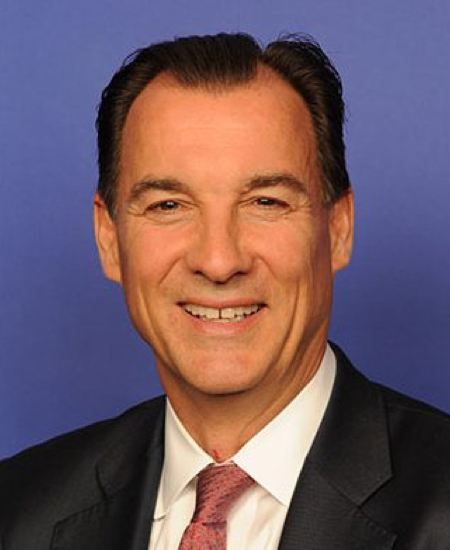
Rep. Thomas R. Suozzi
Sponsored bills
Maddy summaryHRES 88 is a symbolic House resolution designating January 31, 2025, as "Earned Income Tax Credit Awareness Day." It supports raising public awareness about the EITC - a refundable federal tax credit for low- and moderate-income workers - and calls on government agencies, nonprofits, and employers to promote access to the credit and free tax filing assistance. The resolution does not create new law or change eligibility; it solely aims to encourage more eligible workers to claim the credit they qualify for. Approximately 20% of eligible individuals currently do not claim the EITC, per the resolution’s background statements.
Medicare Patient Access and Practice Stabilization Act of 2025 This bill increases certain payment adjustments under the Medicare physician fee schedule for services furnished between April 1, 2025, and January 1, 2026.
Maddy summaryThe Fighting Budget Waste Act requires the President and the Office of Management and Budget (OMB) to consider the most recent Government Accountability Office (GAO) report on reducing government waste when preparing the annual federal budget. Specifically, it mandates review of the GAO's findings about cutting fragmentation, duplication, and overlap in federal programs - such as the report titled *Additional Opportunities to Reduce Fragmentation, Overlap, and Duplication and Achieve Billions of Dollars in Financial Benefits* - to identify potential savings. The OMB must also submit a separate report to Congress detailing how it incorporated the GAO's recommendations into the budget submission. This law aims to make the budget process more transparent by formally integrating the GAO's waste-reduction analysis into federal fiscal planning.
Maddy summaryHCONRES 4 is a symbolic resolution expressing Congress's support for tax-exempt fraternal benefit societies (like mutual aid organizations). It recognizes these groups, which have over 7 million members nationwide, as historically and currently providing critical community benefits - including life/health insurance, charitable work, and volunteer services - valued at over $3.8 billion annually. The resolution affirms that their tax-exempt status under Section 501(c)(8) of the Internal Revenue Code remains beneficial and should continue to be promoted. This is a non-binding expression of congressional sentiment, not a policy change.
Maddy summaryThis resolution expresses the House of Representatives' position that Congress should take steps to prevent the privatization of the United States Postal Service (USPS), ensuring it remains a federal independent agency. It highlights USPS’s constitutional role, self-sustaining nature (relying on service revenue, not taxpayer funds), and critical functions - serving 168 million addresses daily, supporting rural communities, and underpinning e-commerce. The resolution opposes privatization, noting it would raise prices, reduce services, and harm the $1.9 trillion mailing industry. As a non-binding resolution, it reflects the House’s stance but does not create new law or policy.
Maddy summaryHRES 76 is a symbolic resolution recognizing "Gold Shield Families" - the families of fallen police officers, firefighters, EMTs, correction officers, emergency dispatchers, and emergency service providers who died in the line of duty. It formally honors these families for their sacrifices and resilience, affirming that their struggles should not be forgotten. The resolution does not create new policies or funding but serves as a public statement of national appreciation. It directs the House to transmit a copy to the President and make it publicly available for recognition. This is a commemorative measure with no binding policy changes.
Maddy summaryThe STAR Act of 2025 adds a 25% tax credit for qualified semiconductor design expenses incurred by U.S. companies. It directly affects businesses conducting semiconductor design in the United States, covering both in-house costs (like wages and supplies for U.S. design work) and contracted design services. The credit excludes duplicating existing products, cosmetic design, or activities unrelated to performance or reliability improvements. This incentive expires for design expenses paid after December 31, 2036.
Maddy summaryHR 768, the Holocaust Education and Antisemitism Lessons Act, requires the U.S. Holocaust Memorial Museum Director to study how states and school districts currently teach about the Holocaust and antisemitism in K-12 schools. The study will examine curriculum requirements, teacher training, educational materials used, and assessment methods across all states and a representative sample of school districts and schools. It specifically aims to identify gaps, resources needed, and how schools address antisemitism and genocide prevention in their teaching. The Museum must submit a report to Congress within three years of the bill's enactment, detailing findings on current practices and challenges. This bill does not mandate new teaching requirements but seeks to understand existing approaches to Holocaust education.
Maddy summaryThis bill authorizes the posthumous presentation of a Congressional Gold Medal to honor Colonel Young Oak Kim, a Korean American military leader and community advocate who died in 1994. It directs the Treasury Secretary to design and strike the medal, which will be displayed at the Smithsonian Institution, particularly at the National Portrait Gallery. The bill does not create new policies or affect any legal rights; it is purely a commemorative gesture recognizing Kim’s military service (including the Distinguished Service Cross and leadership in the 100th Infantry Battalion/442nd Regimental Combat Team) and his civic work founding community centers in Los Angeles. The medal is symbolic, with no financial or legal impact on any individuals or programs.