

Maddy summaryThis bill authorizes a posthumous Congressional Gold Medal for Fred Korematsu, a Japanese American civil rights advocate who challenged the World War II internment of Japanese Americans. It recognizes his legal fight against Executive Order 9066, which led to the unjust incarceration of over 120,000 people, and his lifelong advocacy against racial discrimination. The medal, designed by the Treasury Secretary, will be displayed at the Smithsonian Institution. The bill is purely commemorative and does not create new legal rights or funding requirements.
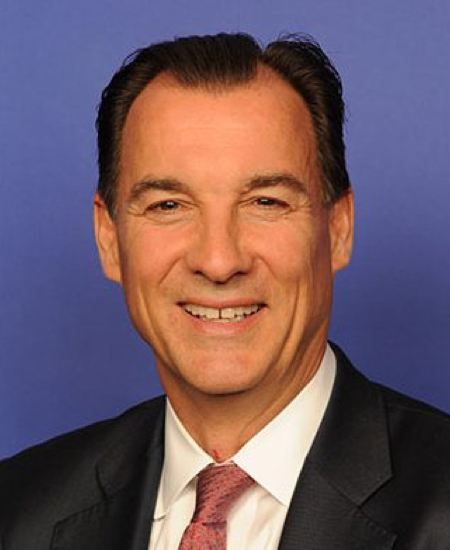
Rep. Thomas R. Suozzi
Sponsored bills
Maddy summaryThis resolution celebrates the historical and ongoing contributions of Hindu Americans to the U.S. economy, culture, and society, including their roles in fields like Ayurveda, yoga, and the arts. It specifically condemns Hinduphobia, anti-Hindu bigotry, hate, and intolerance, addressing rising hate crimes against Hindu places of worship (mandirs) and individuals. As a non-binding symbolic resolution, it does not create new laws or policies but serves to affirm support for Hindu Americans' religious freedom and community.
Maddy summaryHRES 68 is a non-binding House resolution expressing strong disapproval of the President’s announcement to withdraw the U.S. from the Paris Agreement. It commends states, businesses, and citizens supporting the Agreement, urges the President to reverse the withdrawal decision, and calls for Congress to prioritize U.S. climate leadership. The resolution does not create new laws or affect specific groups but formally states the House’s position against withdrawing from the international climate accord. It was introduced by 115 co-sponsors and reflects broad congressional concern about reversing U.S. climate commitments.
Maddy summaryThis bill creates a new above-the-line tax deduction for performing artists (like musicians, actors, and dancers) to deduct work-related expenses directly from their gross income, rather than itemizing deductions. It sets a $100,000 income threshold (adjusted annually for inflation), phasing out the deduction by 10% for every $2,000 earned above this amount. The bill also explicitly includes commissions paid to an artist’s manager or agent as deductible expenses and raises the $200 "nominal employer" threshold for expense deductions to $500 (with inflation adjustments). These changes apply to tax years beginning after December 31, 2024.
Maddy summaryHR 661, the MIRACLE Medical Technology Act of 2025, establishes a formal US-Israel program to coordinate collaboration on developing and delivering healthcare products and services. It directs the Secretary of Health and Human Services to create joint initiatives - including shared research on medical devices and pharmaceuticals, regulatory alignment (like FDA-Israel regulatory data sharing), innovation hubs for startups, and telemedicine infrastructure - leveraging $8 million annually from 2026-2030. The bill directly affects US health agencies (HHS, FDA), Israeli health authorities, and medical technology companies in both countries. Key mechanisms include creating a US-Israel Health Care Collaboration Center, promoting joint manufacturing facilities for biological products, and standardizing data sharing for research. This focuses on concrete policy changes to enhance bilateral medical innovation and healthcare delivery.
Maddy summaryThe Restoring Trade Fairness Act (HR 694) would suspend the United States' normal trade relations (NTR) status with China, ending the "permanent normal trade relations" (PNTR) status China has held since 2001. The bill requires the President to revise tariff rates for Chinese imports to apply minimum duties of 35% for most goods and 100% for specific listed items, with these increases phased in over five years. It also establishes a trust fund to compensate U.S. producers for revenue losses resulting from Chinese retaliation against U.S. exports, while modifying the U.S. Schedule of Concessions to the World Trade Organization.
Maddy summaryThe Protecting First Responders from Secondary Exposure Act of 2025 requires federal funding to provide training and containment devices for first responders, specifically to prevent exposure to fentanyl and other dangerous substances during emergencies. This bill directly affects police, firefighters, and emergency medical personnel who face accidental exposure risks while responding to drug-related incidents. The key provision amends existing federal law to mandate both training resources and the purchase of specialized containment equipment for first responder use. The policy change aims to reduce health risks from secondary exposure without altering drug enforcement or criminal law.
Beaches Environmental Assessment and Coastal Health Act of 2025 or the BEACH Act of 2025 This bill reauthorizes through FY2029 and expands an existing program of the Environmental Protection Agency (EPA) that awards grants to states and local governments to (1) monitor the water quality of coastal recreational waters adjacent to beaches or similar points of access that are used by the public; and (2) notify the public, local governments, and the EPA when the water is not safe for recreational activities. Specifically, the bill expands the program to allow the EPA to award grants for identifying sources of contamination (i.e., pathogens) for coastal recreation waters. It also allows grants to be used for monitoring and notification of contamination in (1) shallow waters upstream from recreational waters, and (2) recreational waters on beaches.
Maddy summaryHR 593 exempts certain health profession loan repayments and scholarship payments from federal income tax. It applies to individuals participating in Public Health Service Act programs (like sections 338B, 846, and 338K) and state programs designed to increase healthcare access in underserved areas. The bill also includes scholarships under the Native Hawaiian Health Care Improvement Act in this tax exclusion. These changes take effect for payments received after the bill's enactment date.
Maddy summaryHR 581, the Child Care Workforce and Facilities Act of 2025, provides $100 million in federal funding (2025-2031) to address childcare shortages in underserved areas called "child care deserts." It authorizes competitive grants to states and tribal entities for two purposes: (1) workforce grants to help child care providers earn portable credentials and improve retention through training and support, and (2) facility grants to construct, expand, or renovate childcare centers and family child care homes. These grants require states to detail how projects will increase affordable, accessible childcare during nontraditional hours in targeted areas. The bill mandates that funds supplement, not replace, existing federal workforce and childcare programs.