

Maddy summaryHCONRES 41 is a non-binding congressional resolution expressing that Congress believes those responsible for the 1999 execution-style murders of U.S. citizens Ylli, Agron, and Mehmet Bytyqi in Serbia should be brought to justice. The bill directly affects the Bytyqi family, U.S. citizens’ rights to due process, and U.S.-Serbia diplomatic relations. It calls on Serbia’s government to prioritize investigating and prosecuting officials linked to the murders - despite no convictions in over 25 years - and urges the U.S. to monitor Serbia’s efforts. The resolution emphasizes that unresolved accountability for these murders remains a key factor in U.S.-Serbia relations.
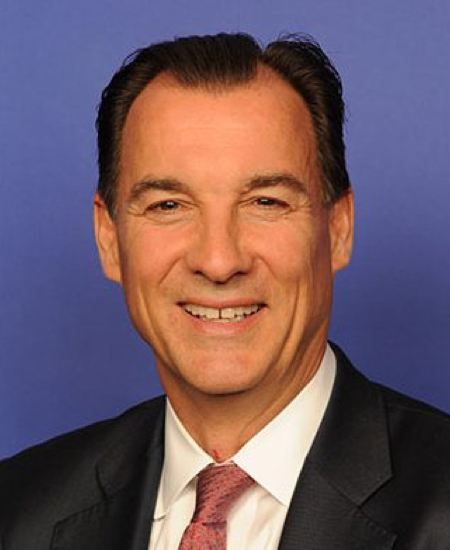
Rep. Thomas R. Suozzi
Sponsored bills
Maddy summaryHRES 575 is a symbolic resolution designating July 10th as "Journeyman Lineworkers Recognition Day." It honors lineworkers who face significant risks daily - working at heights near live wires and responding to disasters like hurricanes and wildfires. The resolution specifically references Henry Miller, an early leader of the International Brotherhood of Electrical Workers, who died on July 10, 1896, while troubleshooting an outage. It encourages the public to recognize these workers' contributions but does not create new laws or allocate funding.
Maddy summaryThe Head Start for Our Future Act amends Section 441(c)(1) of the Higher Education Act of 1965 to replace "literacy training" with "child development and early learning (including Head Start programs and Early Head Start programs carried out under the Head Start Act), literacy training." This technical change formally integrates Head Start and Early Head Start programs into the federal definition of early learning initiatives under the Higher Education Act, while maintaining a separate reference to literacy training. The bill directly affects how federal grants for early childhood education are categorized and administered under the Higher Education Act. It does not alter funding levels, program requirements, or operations but updates administrative terminology to explicitly include Head Start services.
Maddy summaryThis bill requires the Transportation Security Administration (TSA) to create and update guidance within 90 days (and every five years) to ensure hygienic handling of breast milk, baby formula, infant water, juice, and cooling accessories during airport security screening. The guidance must be developed with maternal health organizations and set standards to minimize contamination risks when these items undergo re-screening or additional testing. It also mandates a one-year audit by the DHS Inspector General to assess TSA compliance and evaluate how screening technologies impact the processing of these infant items. The bill directly affects traveling parents and caregivers who transport these essential supplies.
Maddy summaryThis bill requires drug manufacturers to pay rebates to Medicare when their "selected drugs" (cancer and complex therapies subject to negotiated maximum fair prices) are used. Manufacturers must calculate rebates based on the difference between current Medicare payment rates (ASP+6) and new negotiated rates (MFP+6), covering the gap for beneficiaries. This lowers patient coinsurance from the current 20% of ASP+6 to 20% of MFP+6 for these specific drugs during the negotiated price period. The rebates are paid to the Medicare trust fund and apply to Medicare Part B beneficiaries using these drugs, directly affecting drug manufacturers and patients covered under Medicare Part B.
Maddy summaryHR 4281, the Bunker Buster Act of 2025, authorizes the U.S. President to provide military support to Israel to prepare for potential strikes against Iran’s underground nuclear facilities. It enables construction of infrastructure in Israel for heavy ordnance (like the Massive Ordnance Penetrator), storage of such munitions, training for Israeli personnel, and joint research to enhance capabilities for destroying underground targets. The bill requires specific certifications to transfer munitions to Israel, including evidence of Iran’s noncompliance with nuclear safeguards and a dual-control system requiring U.S. presidential approval. It explicitly states the bill does not authorize military action against Iran. The legislation focuses on readiness, not actual strikes, and directly affects U.S.-Israel military coordination.
Maddy summaryThis bill (HR 4286) requires the U.S. State Department to develop a comprehensive strategy within 90 days to address Haiti's security crisis, focusing on strengthening Haitian security forces, countering gang violence, and expanding economic opportunities through programs like Haiti HOPE/HELP. The strategy must assess international coordination, arms trafficking, sanctions impacts on aid, and gang reintegration, while prioritizing Haitian-led solutions. It mandates annual reports to Congress for five years tracking progress on security, governance, and humanitarian efforts, with specific metrics for evaluating U.S. support. The bill directly affects U.S. foreign policy implementation in Haiti and Haitian civil society, security forces, and international partners.
Maddy summaryHRES 564 is a non-binding House resolution calling on the U.S. government to prioritize the return of Ukrainian children abducted by Russia before any peace agreement is finalized. It cites 19,546 confirmed reports of unlawful child deportations to Russia or occupied territories as of April 2025, noting only 1,274 have been returned. The resolution condemns Russia's actions as violations of the Geneva Convention and Genocide Convention, including forced adoptions and Russification policies. It urges that all abducted children be returned prior to concluding peace talks, emphasizing this as a necessary condition for a just resolution to the war. The resolution does not create new law but expresses congressional position on a key issue in U.S. diplomatic efforts.
Maddy summaryThis bill establishes a revolving loan fund to increase middle-class housing supply by providing capitalization loans to states using funds from the release of Federal National Mortgage Association and Federal Home Loan Mortgage Corporation. States will create housing revolving loan funds to provide financing to local governments and non-profits for new construction or rehabilitation of housing that meets affordability standards (80-165% of area median income) for middle-income families. The housing must maintain affordability for at least 15 years, and construction must comply with labor requirements including apprenticeship and prevailing wage standards. The fund will be repaid to the Treasury for deficit reduction after 10 years.
Treat and Reduce Obesity Act of 2025 This bill expands Medicare coverage of intensive behavioral therapy for obesity. Specifically, the bill allows coverage for therapy that is provided by (1) a physician who is not a primary care physician; or (2) other health care providers (e.g., physician assistants and nurse practitioners) and approved counseling programs, if provided upon a referral from, and in coordination with, a physician or primary care practitioner. Currently, such therapy is covered only if provided by a primary care practitioner. The bill also allows coverage under Medicare's prescription drug benefit of drugs used for the treatment of obesity or for weight loss management for individuals who are overweight.