

Frederick Douglass Trafficking Victims Prevention and Protection Reauthorization Act of 2025 This bill reauthorizes programs and activities that combat international trafficking; establishes a new program to help victims of trafficking; and updates various elements of the federal framework to combat international trafficking. Specifically, this bill reauthorizes through FY2029 programs and activities at various federal departments and agencies to combat international trafficking and reduce the prevalence of modern slavery. The bill also reauthorizes International Megan’s Law through FY2029. Among its provisions, the law requires sex offenders to provide certain information about their intended travel outside of the United States. Additionally, the bill authorizes the Department of Health and Human Services to carry out a new program to help victims of trafficking integrate or reintegrate into society. The bill requires the Department of State's Trafficking in Persons Report to include information about trafficking in persons for the purposes of organ removal. With respect to country rankings for anti-trafficking efforts, the bill narrows the types of countries that are listed on the Tier 2 Watch List and increases the length of time a country may remain on the Tier 2 Watch List after being downgraded to the lowest ranking and then reinstated to the watch list. (The Tier 2 Watch List refers to countries that are making efforts to meet international standards for combatting human trafficking but still have a significant number of severe trafficking cases.) Finally, the bill requires counter-trafficking strategies, activities, and efforts to be further incorporated into U.S. foreign assistance.
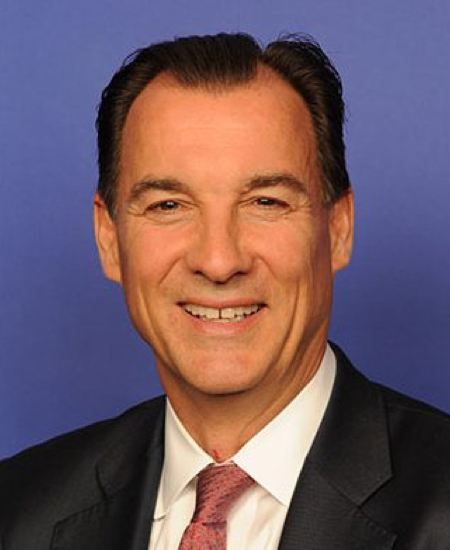
Rep. Thomas R. Suozzi
Sponsored bills
Maddy summaryThe SUPPLY Act establishes a federal program to insure second loans (additional financing) for building accessory dwelling units (ADUs) on single-family properties. This insurance, administered by the Department of Housing and Urban Development, covers up to 30% of a standard one-unit home loan amount or 100% of the property value after construction (with potential increases based on 50% of projected rental income). Homeowners seeking to add ADUs - such as backyard cottages, converted basements, or detached units - can use this insurance to secure financing, with a government premium of up to 1% annually. The bill also requires Fannie Mae and Freddie Mac to purchase and securitize these insured loans, potentially expanding access to ADU financing.
Maddy summaryHRES 588 is a non-binding House resolution condemning the slogan "Globalize the Intifada" as a call to violence against Israeli and Jewish people worldwide. It urges U.S. national, state, and local leaders to publicly denounce the slogan, which the resolution characterizes as undermining safety and security. The resolution cites historical context of violence during past intifadas and recent antisemitic incidents to support its position. As a symbolic measure, it has no legal effect but aims to encourage leaders to reject the slogan.
Maddy summaryThis bill requires electronic communication service providers (like social media platforms) and remote computing services (like cloud storage) to report certain controlled substances violations to the Attorney General. Providers must submit reports within 60 days of discovering fentanyl, methamphetamine, or counterfeit prescription drug sales, including account information and details about the violation. The bill includes penalties for failure to report ($380,000 for repeat violations) and for submitting false reports ($100,000), while exempting broadband and text messaging providers from these requirements. It also mandates annual reports from the Attorney General on the number of reports received, investigations conducted, and how violations were discovered.
Maddy summaryThe CIRCLE Act establishes a 30% tax credit for businesses investing in new or upgraded recycling infrastructure, such as facilities processing materials like electronics (computers, monitors, peripherals) and other recyclables. It directly affects businesses building or modernizing recycling operations by reducing their tax burden for qualifying equipment placed in service after 2025. A 10% domestic content bonus credit is available for investments meeting specific U.S. manufacturing requirements, and the full credit phases out gradually between 2032 and 2037, ending entirely by 2037. The bill aims to boost the U.S. recycling rate from ~30% toward the EPA’s 2030 goal of 50% by incentivizing domestic recycling capacity.
Maddy summaryHR 4473, the BIRD Health Act of 2025, establishes a new U.S.-Israel bilateral program to fund joint research and development of health technologies. It directly affects U.S. and Israeli health institutions, companies, and academic organizations by providing $10 million annually (2026-2032) for collaborative projects in medical devices, telemedicine, diagnostics, pharmaceuticals, genomics, and infectious disease prevention. Key provisions include funding for R&D, commercialization support, health system strengthening, and joint manufacturing of biological products, with projects selected based on innovation, commercial potential, and partnership strength. The program will be administered by the existing BIRD Foundation under U.S. Health and Human Services oversight, aiming to accelerate health technology development and deployment through U.S.-Israel collaboration.
Maddy summaryThis bill establishes federal worker heat protection standards to prevent heat-related illness and injury. It requires employers to provide a workplace free from heat stress hazards, including access to cool water, scheduled rest breaks, shaded cooling areas, and training on heat illness symptoms. The Secretary of Labor must create these standards within one year, incorporating evidence-based practices like engineering controls (e.g., ventilation), administrative measures (e.g., adjusted schedules), and employer-paid personal protective equipment. The law directly affects all employers in high-heat work environments - such as construction, agriculture, and manufacturing - and strengthens whistleblower protections for workers reporting safety violations.
Maddy summary# Summary of "Dignity for Immigrants while Guarding our Nation to Ignite and Deliver the American Dream Act" This comprehensive immigration bill proposes multiple pathways to legal status and permanent residency for undocumented immigrants while creating new employment and workforce development programs. ## Key Provisions: 1. **Dignity Program (Subtitle III)**: - Creates a 7-year program for eligible undocumented immigrants requiring $7,000 in restitution payments to an H-1B fund - Provides deferred action on removal, work authorization, and travel privileges - Requires participants to maintain employment/education, pay taxes, and comply with all laws - Upon completion, participants receive "Dignity Status" valid for 7 years with renewal options 2. **Workforce Development (Division C)**: - Directs restitution payments to fund apprenticeships and work-based learning programs - Establishes industry partnerships to support small- and medium-sized businesses - Focuses on "in-demand industry sectors" with targeted training programs - Requires 12 months of post-employment support services for participants 3. **Family Reunification (Section 3111-3115)**: - Expands discretionary authority for family-based relief - Creates new "family purpose" nonimmigrant visa category (90-day limit) - Modernizes military naturalization for service members - Includes protections for children affected by visa backlogs 4. **Backlog Reduction (Section 3201-3203)**: - Creates premium processing for long-pending cases ($20,000 fee) - Increases per-country caps from 7% to 15% - Protects children from "aging out" of family-based visas 5. **Student and Worker Visas (Section 3301-3305)**: - Modernizes student visa categories with "dual intent" provisions - Recognizes doctoral STEM graduates as "extraordinary ability" - Streamlines visa processing through a new Immigration Agency Coordinator The bill aims to balance immigration reform with workforce development, creating a pathway to legal status while directing funds toward American workers through apprenticeships and training programs in high-demand fields.
Maddy summaryThis bill extends funding deadlines for sport fish restoration and recreational boating programs through 2031, updating prior expiration dates. It clarifies funding for interstate fisheries commissions and adds new definitions for alternative marine fuel infrastructure, including facilities dispensing fuels derived from recycled oils or plant materials. The bill also establishes a 3% tax rate (down from 10%) for portable, electronically-aerated bait containers sold by manufacturers. These changes primarily affect recreational boaters, sport fishing programs, and facilities seeking to install alternative fuel infrastructure.
Maddy summaryHR 4382 authorizes the U.S. Mint to produce commemorative coins for the 2028 Los Angeles Olympics/Paralympics and 2034 Salt Lake City Winter Olympics/Paralympics. It specifies gold, silver, and half-dollar coin designs with defined mintage limits (e.g., up to 100,000 $5 gold coins for each event), all bearing inscriptions like "2028" or "2034" and standard coin features. A surcharge ($5-$50 per coin) is added to sales, with all funds directed to the respective Olympic committees to support event hosting and legacy programs like youth sports. The bill ensures no net cost to the government by requiring surcharge revenues to cover all design, production, and marketing expenses before funds are disbursed.