

Maddy summaryThe CONNECT for Health Act of 2025 expands Medicare telehealth coverage by removing geographic restrictions that limited where patients could receive care, expanding the types of health care providers who can offer telehealth services, and eliminating the requirement for an in-person visit before receiving telemental health services. The bill includes specific provisions to support telehealth use for Native American health facilities, rural health clinics, and Federally Qualified Health Centers. It requires the Centers for Medicare & Medicaid Services to collect and publish data on telehealth usage and impacts, and to develop resources to improve accessibility for people with disabilities and limited English proficiency. Program integrity measures are added to monitor telehealth billing practices and prevent fraud while maintaining coverage for telehealth services during public health emergencies.
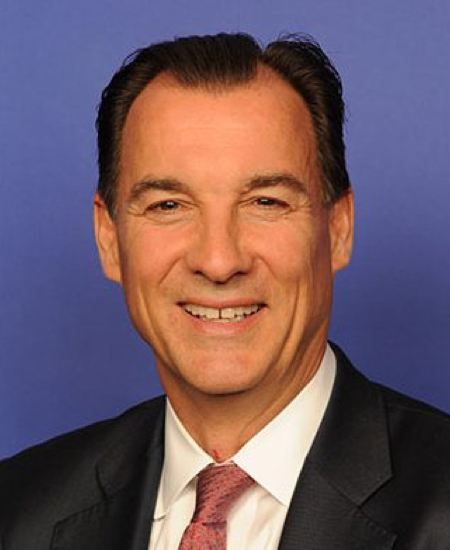
Rep. Thomas R. Suozzi
Sponsored bills
Maddy summaryHR 4212, the SHADE Act, establishes a federal grant program to plant trees in historically underserved urban areas. It directly affects cities and communities in "redlined areas" (low-income neighborhoods historically denied loans) or "intra-urban heat islands" (city zones with high temperatures and low tree cover). The bill authorizes $50 million annually (2026-2036) for grants to states, local governments, tribes, or qualifying nonprofits to fund tree planting, maintenance for 5 years, and community engagement plans. Grants prioritize projects that avoid displacing residents and require planting non-invasive tree species suited to the local environment.
Maddy summaryHR 4180, "Canyon’s Law," prohibits the use of M-44 devices - predator control tools containing highly toxic sodium cyanide - on public lands managed by federal agencies like the National Park Service, Fish and Wildlife Service, and Forest Service. The bill requires all federal, state, and county agencies to remove existing M-44 devices from public lands within 30 days of enactment. It directly affects agencies and land managers who previously deployed these devices, which have caused human poisonings (including incidents involving children), killed over 50 family dogs, and harmed endangered species. The law aims to eliminate the risk of accidental exposure and non-target wildlife deaths by banning the devices' use on public lands.
Maddy summaryThe Women's Health Protection Act of 2025 would protect access to abortion services across the United States by prohibiting states from imposing restrictions that are more burdensome than those on comparable medical procedures. The bill directly affects people seeking abortion care and health care providers by banning restrictions such as mandatory in-person visits, requirements for specific tests, limitations on telemedicine, and rules based on a patient's reason for seeking abortion. It prohibits state laws that single out abortion for unnecessary restrictions while allowing post-viability abortions when necessary to protect a patient's life or health. The bill preempts conflicting state laws and provides enforcement mechanisms through private lawsuits and actions by the Attorney General.
Maddy summaryThis bill prohibits state officials from blocking abortion access for patients traveling from other states, including restricting providers who offer legal abortions in their state to out-of-state patients. It protects people traveling across state lines for legal abortions, those assisting such travel, and the interstate transport of FDA-approved abortion medication. Violations can be challenged by the Justice Department or affected individuals through civil lawsuits seeking injunctions and damages. The law applies broadly across all states, territories, and tribal nations, defining "abortion service" to include both medical procedures and related care.
Maddy summaryThis bill creates federal funding for community-based violence intervention programs in high-violence areas, targeting communities with 35+ homicides annually or 20+ homicides with rates double the national average. It establishes grants for community organizations to implement trauma-informed violence interruption strategies, hospital-based programs for injured patients, and job training for "opportunity youth" (16-25 year olds not in school or work). The legislation authorizes $300 million in 2026, increasing to $700 million annually through 2033, with requirements for evidence-based approaches that reduce violence without contributing to mass incarceration. It creates a National Community Violence Response Center to coordinate data collection, research, and best practices for these programs. The focus is on prevention through economic opportunity, trauma care, and community-driven interventions rather than traditional law enforcement approaches.
Maddy summaryThe Autism Family Caregivers Act of 2025 creates a 5-year pilot program funding grants to community organizations for free, evidence-based skills training for family caregivers of children (ages 0-9) with autism spectrum disorder or other developmental disabilities or delays. The program requires training in communication, social engagement, daily living skills, and caregiver self-care strategies, with emphasis on cultural competence and coordination with local health, education, and community services. Grants must support at least 25 organizations across 15+ states, using $10 million annually (2026-2030), and mandate stakeholder committees including caregivers and local providers. It directly affects families caring for young children with these conditions by expanding access to structured support, while requiring programs to supplement - rather than replace - existing Medicaid, education, or insurance-covered services.
Maddy summaryThis symbolic House resolution (HRES 521) expresses support for Israel’s military actions against Iran’s nuclear facilities, citing Iran’s nuclear enrichment progress (including 60% enriched uranium stockpiles nearing weapons-grade levels) and Iran’s attacks on Israeli civilians. It specifically endorses Israel’s "proportional" strikes on Iranian nuclear sites and military targets following Iran’s rejection of diplomatic efforts, while condemning Iran’s attacks that killed 24 Israelis and wounded 590. The resolution calls on Iran to halt nuclear enrichment and dismantle its program, reaffirms U.S. support for Israel’s security, and urges global condemnation of Iran’s nuclear activities. As a non-binding resolution, it does not enact policy but formally aligns the House with Israel’s actions against Iran’s nuclear program.
Maddy summaryHR 4011, the Community Paramedicine Act of 2025, creates a federal grant program to fund community paramedicine programs in rural areas. It provides grants to eligible entities - such as emergency medical services agencies, local governments, or Tribal organizations - to hire personnel, purchase equipment, cover training costs, and conduct outreach. The bill specifically reserves 15% of annual funding for programs serving Tribal communities and limits grants to $750,000 per entity (or $1.5 million for joint applications) over a maximum 5-year period. These programs aim to reduce unnecessary emergency room visits by using specially trained paramedics to address health issues and improve access to primary care for underserved populations.
Improving Access to Medicare Coverage Act of 2025 This bill deems an individual receiving outpatient observation services in a hospital as an inpatient for purposes of satisfying the three-day inpatient hospital-stay requirement with respect to Medicare coverage of skilled nursing facility (SNF) services. (Generally, individuals must have been an inpatient at a hospital for at least three days in order to qualify for SNF services. An individual's time spent under observation at a hospital for purposes of determining whether the individual should be admitted does not count towards this requirement.)