

Transportation Security Public Health Threat Preparedness Act of 2021 This bill directs the Transportation Security Administration (TSA) to analyze the preparedness of the U.S. transportation security system for public health threats. Additionally, the TSA may provide its personnel to other components of the Department of Homeland Security and other federal agencies to improve coordination with such components and agencies to prepare for, protect against, and respond to public health threats to the transportation security system.
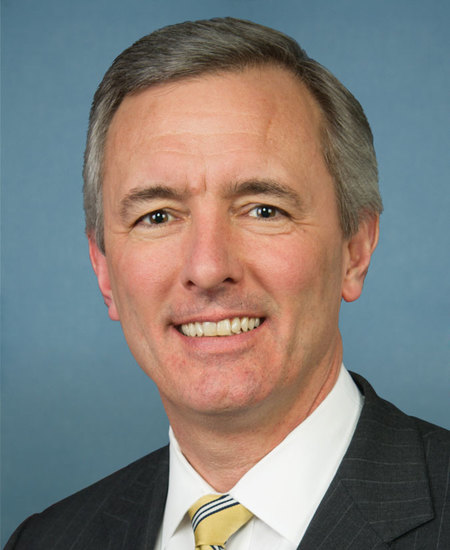
Rep. John Katko
Sponsored bills
Transportation Security Transparency Improvement Act This bill addresses policies of the Transportation Security Administration (TSA) related to sensitive security information and international aviation security. Among other requirements, the TSA must ensure clear and consistent designation of Sensitive Security Information , including reasonable security justifications for such designation; develop and implement a schedule to regularly review and update TSA Sensitive Security Information Identification guidelines; conduct outreach to relevant stakeholders (e.g., air carriers, airport operators, and state and local law enforcement) that regularly are granted access to Sensitive Security Information to raise awareness of the TSA's policies and guidelines governing the designation and use of Sensitive Security Information; and develop and implement guidelines with respect to last point of departure airports to conduct engagement with foreign partners on the implementation of security directives and emergency amendments.
Transportation Security Preparedness Act of 2021 This bill directs the Transportation Security Administration (TSA) to survey its workforce regarding the TSA's response to the COVID-19 pandemic. It must also develop and biennially review a transportation security preparedness plan for addressing future outbreaks of communicable diseases. The Government Accountability Office must submit a report to Congress that contains the results of a study assessing the plan, including an analysis of (1) whether such plan aligns with relevant federal plans and strategies for communicable disease outbreaks, and (2) the extent to which the TSA is prepared to implement the plan.
DHS Industrial Control Systems Capabilities Enhancement Act of 2021 This bill requires the Cybersecurity and Infrastructure Security Agency (CISA) to maintain certain capabilities to identify and address threats to industrial control systems. Specifically, the bill requires CISA's National Cybersecurity and Communications Integration Center to ensure that its activities address the security of both information and operational technology, including industrial control systems. Additionally, CISA must maintain capabilities to identify and address threats and vulnerabilities to products and technologies intended for use in the automated control of critical infrastructure processes by (1) leading efforts to identify and mitigate cybersecurity threats to industrial control systems; (2) maintaining threat hunting and incident response capabilities to respond to cybersecurity risks and incidents; (3) providing cybersecurity technical assistance to stakeholders; and (4) collecting, coordinating, and providing vulnerability information to the industrial control systems community. CISA shall provide to the homeland security committees a briefing on its industrial control systems capabilities at specified intervals. The Government Accountability Office must review and report on implementation of the bill's requirements.
Home for the Brave Act of 2021 This bill excludes from income veterans' service-connected disability or death benefits for purposes of determinations made in connection with the Department of Housing and Urban Development's housing assistance programs.
Technical Reset to Advance the Instruction of Nurses Act or the TRAIN Act This bill modifies the methodology and application of Medicare Advantage nursing and allied health education payments for hospitals. Specifically, for 2010-2019, the bill eliminates the annual cap on total payments and excludes any resulting increase from factoring into calculations for graduate medical education payments for such hospitals. (The Centers for Medicare & Medicaid Services recently issued guidance providing for the recalculation and correction of certain payments to account for the annual payment cap.)
This resolution expresses the sense of the House of Representatives that the Department of Homeland Security (DHS) provides essential protection for our country from foreign and domestic threats and that defunding DHS would be detrimental to our national security.
Pipeline Security Act This bill revises the duties of the Transportation Security Administration (TSA) to include securing pipelines and pipeline facilities against cybersecurity threats, acts of terrorism, and other acts that jeopardize the physical security or cybersecurity of the pipelines or facilities. Specifically, the bill (1) establishes a pipeline security section within the TSA, (2) directs the TSA to develop a personnel strategy for enhancing operations within such section, and (3) requires the TSA to publish updated pipeline security guidelines. The TSA must also convene not less than two industry days to engage with relevant pipeline transportation and pipeline facilities stakeholders on matters related to the security of pipeline transportation and pipeline facilities.
Safe Schools Improvement Act of 2021 This bill requires states to direct their local educational agencies (LEAs) to establish policies that prevent and prohibit bullying and harassment of elementary and secondary school students. In particular, these policies must prohibit bullying and harassment based on race, color, national origin, sex, sexual orientation, gender identity, disability, or religion. Further, LEAs must provide (1) students, parents, and educational professionals with annual notice of the conduct prohibited in their disciplinary policies; (2) students and parents with grievance procedures that target such conduct; and (3) the public with annual data on the incidence and frequency of that conduct at the school and LEA level. The Department of Education must conduct and report on an independent biennial evaluation of programs and policies to combat bullying and harassment in elementary and secondary schools. The National Center for Education Statistics must collect state data to determine the incidence and frequency of the conduct prohibited by LEA disciplinary policies.
Excellence in Mental Health and Addiction Treatment Act of 2021 This bill increases the number of states that may participate in two-year Medicaid demonstration programs that improve access to community mental health services. It also provides for additional grants to certified community behavioral health clinics.