

COVID-19 and Pandemic Response Centers of Excellence Act This bill establishes and provides funding for the COVID-19 and Pandemic Response Centers of Excellence Program Fund. The Department of Health and Human Services (HHS) must use the funds to set up at least 10 centers of excellence at academic medical centers to address issues associated with COVID-19 and future pandemic preparedness and response efforts. In addition, HHS must establish an advisory committee comprised of representatives from relevant federal agencies, each center of excellence, and national organizations that work with populations disproportionately impacted by COVID-19 and other health disparities. The committee must facilitate collaboration, information-sharing, and dissemination of best practices relating to COVID-19 and future pandemic responses.
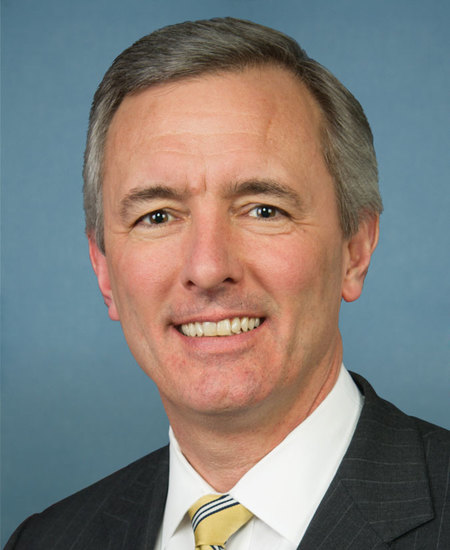
Rep. John Katko
Sponsored bills
This resolution honors the suppliers of the National Aeronautics and Space Administration (NASA) for the work they are doing on the Artemis missions.
Sgt. Ketchum Rural Veterans Mental Health Act of 2021 This bill requires the Department of Veterans Affairs (VA), during FY2022, to establish and maintain three new centers of the Rural Access Network for Growth Enhancement (RANGE) Program in areas with interest from personnel and a need for additional mental health care for rural veterans. The RANGE Program serves veterans in rural areas who are experiencing mental illness. The bill requires the Government Accountability Office to conduct a study and report on whether the VA has sufficient resources to serve rural veterans who need mental health care that is more intensive than traditional outpatient therapy.
Essential Caregivers Act of 2021 This bill requires skilled nursing facilities, nursing facilities, intermediate care facilities for the intellectually disabled, and nearby inpatient rehabilitation facilities to establish an essential caregivers program during a public health emergency. Under the program, facilities must allow each resident to select up to two essential caregivers to provide daily living assistance, emotional support, or companionship during the emergency. Facilities must afford such caregivers 12 hours of access to residents each day (or unlimited access for end-of-life care), and caregivers must agree to follow facility protocols for staff safety. Facilities may deny access to caregivers who violate protocols, subject to certain notification requirements; the Centers for Medicare & Medicaid Services must establish an appeals process relating to such decisions and may take specified enforcement actions against facilities that violate the bill's requirements.
Low-Income Water Customer Assistance Programs Act of 2021 This bill directs the Environmental Protection Agency (EPA) to establish grant programs to assist low-income households in maintaining access to drinking water and wastewater services. Specifically, the EPA must establish a program to assist such households with paying drinking water bills. States and community water systems may apply for grants. In addition, the EPA must establish a program to assist such households with paying wastewater utility bills. States may apply for grants for small community-serving wastewater facilities. Certain municipalities may apply for grants for (1) treatment works for municipal waste, or (2) municipal separate storm sewer systems.
This resolution supports the designations of National Post-Traumatic Stress Injury Awareness Month and National Post-Traumatic Stress Injury Awareness Day. The resolution supports (1) the education of members of the Armed Forces, veterans, their families, and the public about post-traumatic stress; and (2) efforts by the Department of Veterans Affairs and the Department of Defense to foster cultural change around the issue of post-traumatic stress. The resolution also encourages the leadership of the Armed Forces to support treatment of members of the Armed Forces who suffer from post-traumatic stress.
Improving Opportunities for New Americans Act of 2021 This bill requires the Department of Labor to study and report on the factors affecting employment opportunities for immigrants and refugees with professional credentials obtained in other counties, including policy recommendations for assisting those individuals in obtaining skill-appropriate employment in the United States.
Advancing FASD Research, Services, and Prevention Act or the FASD Respect Act This bill expands and establishes programs for fetal alcohol spectrum disorders (FASD). Specifically, it directs the Department of Health and Human Services, the National Institutes of Health, the National Center on Birth Defects and Developmental Disabilities, and the Health Resources and Services Administration to carry out and coordinate research, surveillance, and related activities to diagnose, prevent, and treat FASD. Furthermore, the bill establishes various grant programs to support FASD coalitions and develop systems of care; provide services for individuals affected by FASD and other conditions related to prenatal substance exposure; identify and implement best practices for educating children with FASD; and establish centers for excellence to build relevant capacity for preventing, treating, and responding to the needs of individuals with FASD. The bill also directs the Department of Education and the Department of Justice to develop and disseminate trainings and best practices related to FASD in schools and correctional facilities, respectively.
CBP Workload Staffing Model Act This bill requires the U.S. Customs and Border Protection (CBP) to develop and implement a workload staffing model for each of the U.S. Border Patrol and Air and Marine Operations. Such model shall include (1) consideration for essential frontline operator activities and functions, (2) variations in operating environments, and (3) present and planned infrastructure and technology. The CBP must also develop standard operating procedures for a workforce tracking system, train the workforce on the use of such system, and implement internal controls to ensure timely and accurate scheduling and reporting. The Department of Homeland Security (DHS) must review the model and provide feedback regarding the degree to which it is responsive to certain DHS recommendations.
Safe Skies Act of 2021 This bill directs the Department of Transportation (DOT) to modify a specified DOT final rule relating to flight crew member duty and rest requirements so that the requirements under that rule apply to all-cargo flight crew members to the same extent they apply to air passenger flight crew members.