Erie Canalway National Heritage Corridor Commission Reauthorization Act This bill extends the authority for the Erie Canalway National Heritage Corridor Commission through FY2037. The bill also increases the total amount that may be appropriated for the Erie Canalway National Heritage Corridor.
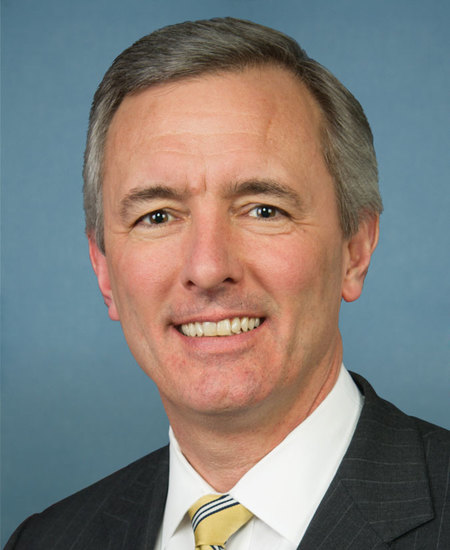
Rep. John Katko
Sponsored bills
School Milk Nutrition Act of 20 21 This bill revises requirements for milk provided by the National School Lunch Program of the Department of Agriculture. The bill permits schools participating in the program to offer students low-fat flavored milk.
This bill repeals the limitation on the amount of distilled spirits excise tax covered over (paid) to the treasuries of the U.S. Virgin Islands and the Commonwealth of Puerto Rico. The bill requires certain amounts of the excise tax paid to the treasury of Puerto Rico to be transferred to the Puerto Rico Conservation Trust Fund.
VOCA Fix to Sustain the Crime Victims Fund Act of 2021 This bill adds a new source of revenue for the Crime Victims Fund and makes changes to formula grants supported by the fund. Specifically, the bill directs revenues collected from deferred prosecution and non-prosecution agreements to be deposited into the Crime Victims Fund. Currently, such revenues are deposited into the general fund of the Treasury. Additionally, the bill increases the percentage—from 60% to 75%—of state compensation payments to crime victims in the prior fiscal year used to calculate formula grants for state victim compensation programs. Finally, the bill directs states to waive the matching requirement for recipients of state victim assistance formula grants during and for one year after a pandemic-related national emergency. It also allows states to waive the matching requirement pursuant to a policy established by the state.
This resolution denounces socialism and opposes the implementation of socialist policies in the United States.
Student Records Protection Act This bill revises the requirements for an accrediting agency to be recognized by the Department of Education (ED) as a reliable authority on the quality of education being offered at an institution of higher education (IHE). It also requires an IHE to establish a records management plan for accreditation purposes. Specifically, an accrediting agency must require an IHE to submit for approval a records management plan upon notification by the IHE that it intends to cease its operations. The plan must include a plan for the custody, continued access, and disposition of student records (e.g., student transcripts, billing, and financial-aid records). Further, the IHE must submit the plan to ED. Under current law, an IHE must be accredited by an accrediting agency to participate in federal student-aid programs.
Tick Identification Pilot Program Act of 2021 This bill authorizes the Centers for Disease Control and Prevention to award grants to states to implement tick-identification programs, which must allow individuals to electronically report tick incidents and receive feedback from experts as to the appropriate follow-up action.
Domains Critical to Homeland Security Act This bill authorizes the Department of Homeland Security (DHS) to conduct research and development to identify U.S. critical domains for economic and homeland security and evaluate the extent to which disruption, corruption, exploitation, or dysfunction of any such domain poses a substantial threat to homeland security. The bill defines United States critical domains for economic security as the critical infrastructure and other associated industries, technologies, and intellectual property, or any combination thereof, that are essential to U.S. economic security. DHS may conduct additional research into high-risk critical domains under specified circumstances.
State and Local Cybersecurity Improvement Act This bill requires the Cybersecurity and Infrastructure Security Agency (CISA) to establish the State and Local Cybersecurity Grant Program to address cybersecurity risks and threats to the information systems of state, local, or tribal organizations. Eligible grant applicants (i.e., states and certain Indian tribes) must submit a cybersecurity plan—to be approved by CISA as a condition of disbursement—that describes how the applicant will use the funds to address cybersecurity risks and threats to their information systems. Grant funds must be used to implement, develop, or revise the applicant's cybersecurity plan or to assist with activities that address imminent cybersecurity risks or threats. CISA must establish a State and Local Cybersecurity Resilience Committee to provide state, local, and tribal stakeholder expertise, situational awareness, and recommendations to CISA on how to address cybersecurity risks and threats. CISA must develop and maintain a resource guide for state, local, tribal, and territorial government officials to assist with identifying, preparing for, detecting, protecting against, responding to, and recovering from cybersecurity risks, threats, and incidents. In addition, CISA must develop and make publicly available a Homeland Security Strategy to Improve the Cybersecurity of State, Local, Tribal, and Territorial Governments. Finally, CISA must assess the feasibility of implementing a short-term rotational program to detail approved state, local, tribal, and territorial government employees to CISA in cyber workforce positions.

DHS Blue Campaign Enhancement Act This bill requires the Department of Homeland Security (DHS) to expand its Blue Campaign, which coordinates DHS actions to identify and prevent human trafficking. The bill requires DHS to (1) provide web-based training for law enforcement and corrections personnel, and (2) establish an advisory board for the campaign.