

Maddy summaryHCONRES 57 is a non-binding concurrent resolution expressing Congress's support for Israel. It states three key points: (1) that Israel is not a racist or apartheid state, (2) that Congress rejects antisemitism and xenophobia, and (3) that the U.S. will remain a steadfast supporter of Israel. This resolution does not create new laws or alter policies - it simply records the expressed sentiment of Congress. It directly affects the U.S. government's public stance on Israel, with no legal effect on citizens or other entities.
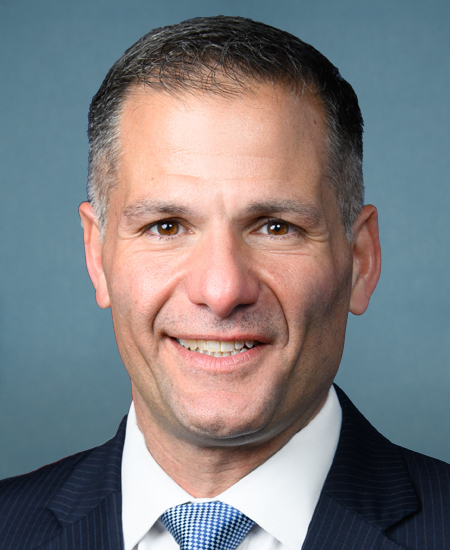
Rep. Marcus J. Molinaro
Sponsored bills
Maddy summaryThis bill establishes the Chesapeake National Recreation Area as a new unit of the National Park System to preserve and promote public access to the Chesapeake Bay watershed. It defines the Recreation Area's boundaries using a specific map, creates an Advisory Commission with 19 members representing Maryland, Virginia, tribal interests, and youth, and outlines how land acquisition and management will occur through donations, purchases, or partner agreements. The legislation requires coordination with existing programs like Chesapeake Gateways and the Bay Program, while emphasizing conservation of natural, recreational, historical, and cultural resources. It directly affects communities, conservation organizations, and local governments in the Chesapeake Bay watershed by creating a formal structure for managing and expanding public access to Bay resources. The bill sets requirements for cooperative agreements with partner sites and mandates a management plan to coordinate activities with neighboring communities and existing conservation efforts.
Family Savings for Kids and Seniors Act This bill provides an annual inflation adjustment after 2023 to the $5,000 tax exclusion for employer-provided dependent care assistance.
Maddy summaryHR 5064, the Public Housing Fire Safety Act, requires the Department of Housing and Urban Development (HUD) to inspect public housing for automatic sprinkler systems and report findings to Congress within three years. It establishes a competitive grant program using $25 million annually (2024-2033) from the Capital Fund to retrofit older public housing projects without sprinklers, excluding newly rebuilt properties. The bill directly affects public housing agencies managing buildings that lack sprinklers, providing funding to install them while clarifying that inspections and grants do not mandate retrofits for all properties. Key provisions include mandatory reporting on fire safety gaps and targeted funding to improve safety in older housing units.
Space Infrastructure Act This bill directs the Department of Homeland Security to designate space systems, services, and technology as a critical infrastructure sector. Under current law, critical infrastructure means systems and assets, whether physical or virtual, so vital to the United States that the incapacity or destruction of such systems and assets would have a debilitating impact on security, national economic security, national public health or safety, or any combination of those matters.
Maddy summaryHR 4963, the Tax Fairness for Workers Act, would restore tax deductions for certain employee expenses. It creates an above-the-line deduction for union dues and expenses paid by wage-earning employees, and allows miscellaneous itemized deductions for other work-related expenses (like uniforms or supplies) that were previously disallowed after 2017 tax law changes. These provisions directly affect employees who pay union dues or incur qualifying job-related costs. The bill amends specific sections of the Internal Revenue Code to make these deductions available for taxable years beginning after December 31, 2022. It does not change tax rates or provide new benefits, only reinstating previously eliminated deductions for eligible workers.
Maddy summaryHR 5058 establishes an interagency working group within 30 days to address semiconductor supply chain disruptions caused by Russia's invasion of Ukraine. The group, chaired by the Secretary of State and including departments like Commerce, Defense, and Energy, must report within 60 days on how Russia's actions impact supplies of palladium, neon gas, helium, and hexafluorobutadiene (C4F6), along with diplomatic efforts to diversify these materials. It also requires annual reports for five years analyzing future geopolitical risks - including conflicts in Taiwan or Europe - that could disrupt semiconductor supply chains, including contingency plans for evacuating technical experts. The bill directly affects U.S. semiconductor manufacturing and national security by focusing on supply chain vulnerabilities tied to Russia's aggression.
This bill allows a deduction from gross income (above-the-line deduction) for expenses incurred by an employee if such expenses are for construction tools, personal protective clothing and gear, and other expenses necessary for the employee to be able to work. This allowance is an exception to the general rule that employee expenses are not deductible business expenses.
Maddy summaryThis bill establishes the New York-New Jersey Watershed Restoration Program to coordinate habitat restoration and water quality improvements across the shared watershed region. It creates a grant program providing competitive federal funding (up to 90% for disadvantaged communities) to state/local governments, nonprofits, and tribes for projects like river restoration, green infrastructure, and community engagement. The program prioritizes environmental justice communities, advances climate-resilient solutions, and requires annual congressional reporting. The bill authorizes $20 million annually from 2024-2029, with a sunset provision ending in 2030.
Maddy summaryThis bill establishes new federal requirements for employers to prevent heat-related illness and injury among workers. It mandates that employers provide safe work environments by implementing specific measures, including access to cool water, scheduled rest breaks in shaded areas, employer-paid cooling equipment, and training for employees and supervisors on recognizing heat illness symptoms. The Secretary of Labor must create these standards within one year, requiring employers in high-heat occupations (like construction, agriculture, and outdoor labor) to adopt engineering controls, administrative schedules, and health protocols. Key provisions include ensuring hydration, rest, and language-accessible training, while preserving existing safety protections and allowing for updates as scientific evidence evolves.