

Maddy summaryThis bill amends the Higher Education Act to provide Pell Grant flexibility for students with disabilities. It allows students whose institution determines a reduced course load is appropriate (due to a disability covered under the Americans with Disabilities Act) to count that reduced load (or 5 credits, whichever is greater) as full-time enrollment for calculating their Pell Grant amount. The change applies only to the grant calculation itself, not to semester eligibility rules. This directly affects qualifying students with disabilities enrolled in postsecondary education who require part-time schedules due to their disability.
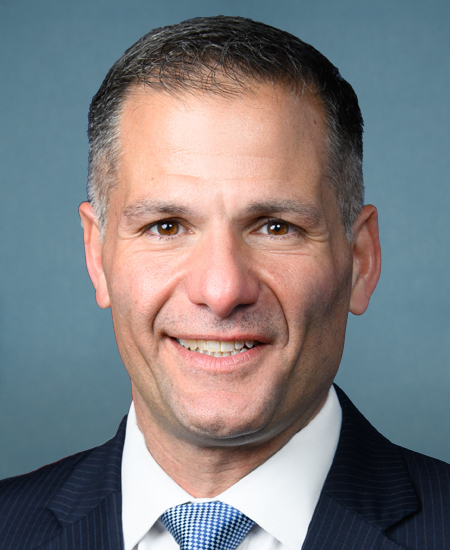
Rep. Marcus J. Molinaro
Sponsored bills
Preserving Family Farms Act of 2023 This bill amends the Internal Revenue Code to increase to $13 million (currently, $750,000) the limitation on the special use valuation for farmland or other trades or businesses for estate tax purposes. The increased amount is adjusted for inflation for estates of decedents dying after 2023.
Maddy summaryThis bill clarifies legal pathways for victims of terrorism to collect judgments against foreign states that sponsor attacks. It removes barriers by updating references in federal law to ensure victims can pursue claims under Section 2333(d)(1) without being blocked by prior legal interpretations. The bill also expands the definition of "national of the United States" to include U.S.-organized entities for these cases, making it easier for more victims to qualify. These changes apply to all pending or future lawsuits filed after the bill's enactment.
Maddy summaryHR 4899, the Housing Financial Literacy Act of 2023, lowers mortgage insurance premiums for first-time homebuyers who complete approved financial literacy counseling. The bill requires that homebuyers finish such counseling before signing a mortgage application or sales agreement. It changes the premium structure so that eligible borrowers pay 0.25 percentage points less than the standard rate set by the Secretary. This directly affects first-time homebuyers participating in designated housing counseling programs. The policy modifies existing National Housing Act provisions to incentivize financial education prior to mortgage application.
Maddy summaryHR 1776, the End Tuberculosis Now Act of 2023, would amend U.S. foreign assistance law to strengthen global tuberculosis (TB) programs. The bill requires U.S. assistance to align with the World Health Organization's End TB Strategy, aiming to reduce TB deaths by 95% and incidence by 90% by 2035. It mandates annual reporting on TB diagnosis and treatment progress, prioritizes research for new diagnostics and treatments, and emphasizes integrating TB services into primary health care. The legislation affects U.S. government agencies, global health partners, and countries with high TB burdens, particularly focusing on low- and middle-income nations.
Maddy summaryThis bill directs the U.S. Treasury to mint commemorative coins marking the Marine Corps' 250th anniversary in 2025. It authorizes three coin types: $5 gold coins (max 50,000), $1 silver coins (max 400,000), and half-dollar coins (max 750,000), with surcharges of $35, $10, and $5 respectively. The surcharge proceeds will fund the Marine Corps Heritage Center's educational programs, with no net cost to taxpayers as the Treasury must recover all minting costs through the surcharges. The coins can only be issued during 2025, and the Treasury must ensure all costs are covered before distributing funds to the Heritage Foundation.
Maddy summaryHR 984, the Commitment to Veteran Support and Outreach Act, authorizes $50 million annually (2024-2028) for grants to states and tribes to improve outreach to veterans and their families. The bill provides funding to hire more county/Tribal veterans service officers, expand existing outreach programs, and ensure equitable access to benefits for vulnerable groups like American Indian veterans, elderly veterans, and women veterans. States and tribes must submit detailed plans, track how quickly veterans receive benefits, and report annually on progress toward outcome measures set by the Veterans Affairs Secretary. Grants must supplement, not replace, existing state/local funding and prioritize areas with critical officer shortages or high veteran suicide rates.
Maddy summaryThis bill amends the Child Nutrition Act to require school food service training programs to be scheduled during regular paid work hours whenever possible. If training must occur outside work hours, schools must compensate staff for attending, explain the necessity, and not penalize staff for missing it. Training must also be offered in-person with hands-on components when appropriate. The law directly affects school food service workers and their employers, mandating specific scheduling and compensation practices for required training.
Food Supply Chain Capacity and Resiliency Act This bill allows the Department of Agriculture (USDA) to expand the Food Supply Chain Guaranteed Loan Program. The program may guarantee loans to support new investments in the start-up or expansion of projects in the United States that will increase U.S. food supply chain capacity to aggregate, process, manufacture, store, transport, wholesale, or distribute food. In awarding loan guarantees under this bill, USDA must give preference to loans for projects that create jobs in economically distressed communities or to help create a more resilient, diverse, and secure U.S. food supply chain. USDA must prescribe such regulations as may be necessary to carry out this program. The bill specifies that USDA must use the amounts made available to carry out this bill to supplement, and not supplant, funds provided under other federal, state, or local law.
Maddy summaryHR 4157, the "Not Just a Number Act," requires the Department of Veterans Affairs (VA) to produce annual reports on veteran suicide rates and their connection to VA healthcare and benefits. The reports must break down suicide rates by age, gender, and race, and examine how engagement with VA services (like Vet Centers, healthcare enrollment, benefits claims, and housing loans) correlates with suicide trends. The bill also mandates a VA toolkit for state/local coroners to improve veteran suicide death reporting, and a study on creating a dedicated VA suicide prevention office. These measures aim to standardize data collection and identify effective prevention strategies, directly affecting VA operations, congressional oversight, and veteran care systems.